
Kitchen Accessories, Kitchen Cabinet
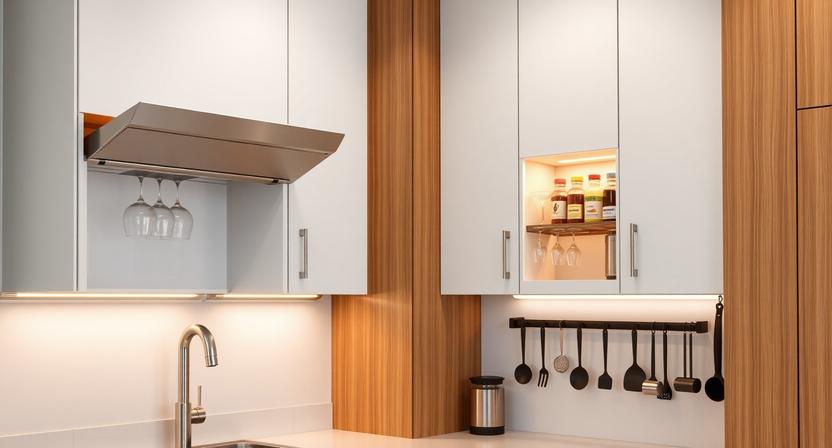
Kitchen wall cabinet accessories have good decorative effects
Jun
For homeowners striving to balance functionality with modern interior design, optimizing vertical storage is a necessity. Incorporating premium kitchen wall cabinet accessories allows you to eliminate countertop clutter, streamline daily meal preparation, and introduce a sophisticated aesthetic to your culinary space.
By transitioning from traditional static shelving to dynamic modular systems, you can fully reclaim underutilized wall areas while dramatically enhancing the visual appeal of your home.
Direct Value Blueprint: Maximizing Wall Cabinet Utility
Optimizing your kitchen wall cabinets requires a structural shift toward ergonomic accessibility and structural balance. Standard wall cabinets often suffer from underutilized height, hard-to-reach top shelves, and a lack of specific sorting mechanisms. To resolve these challenges, modern layouts leverage mechanical pull-downs, dedicated hanging tracking systems, and material-specific racks that protect both your utensils and your cabinetry.
WALL CABINET STRUCTURE
- Top Tier: Seasonally Used Items (Elevator Baskets)
- Mid Tier: Daily Dinnerware & Glassware (Drip Trays & Spice Racks)
- Base/Under-Cabinet: High-Frequency Tools (Hanging Rails & Hooks)
By segmenting your vertical space based on usage frequency, you ensure that vital cooking tools remain accessible without creating visual chaos. The integration of high-grade hardware handles the weight load smoothly, preventing cabinet sagging while adding a polished, showroom-style finish to the room.
5 Essential Accessories for Your Kitchen Wall Cabinets
1. Elevator & Drop-Down Baskets
Top-tier shelves in wall cabinets are notoriously difficult to reach without a step stool, rendering valuable space inefficient.
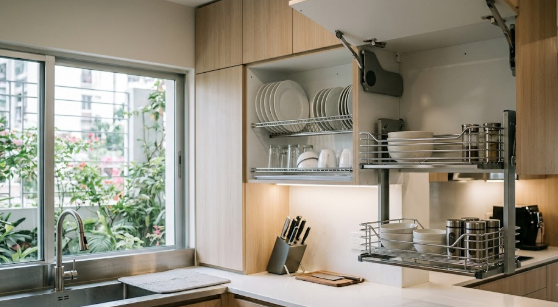
Mechanical pull-down systems, such as a premium elevator plain basket, use gas-spring assisted arms to smoothly lower the entire shelf contents down to eye level. This dynamic accessibility ensures that items like heavy mixing bowls, grain canisters, or small appliances are safely within reach for every family member.
2. Integrated Glass & Plate Racks with Drip Trays
Placing wet dishes directly into wooden or laminated cabinets leads to swelling, mold growth, and delamination.
Utilizing a specialized glass plate rack with drip tray solves this issue by creating a dedicated wet-zone inside the wall cabinet directly above the sink. The removable polymer or stainless steel tray catches water droplets, allowing dishes to air-dry invisibly while protecting the surrounding woodwork.
3. Dedicated Spice & Condiment Organizers
When spice jars are piled haphazardly on flat shelves, finding a specific ingredient mid-cook becomes a major frustration.
Multi-tier wall-mounted or cabinet-integrated spice shelves provide stepped visibility so that every label is instantly readable. This system stops jars from tipping over, optimizes shallow depth spaces, and keeps high-moisture cooking oils safely upright and contained.
4. Wine Glass & Stemware Holders
Stemware takes up an awkward amount of footprint when placed upright on standard shelves, and it is highly prone to tipping and chipping.
Under-cabinet or internal hanging glass channels hold stemware upside down by the base, utilizing the open air-space below or within your cabinets. This setup not only keeps delicate glassware safe from accidental impacts but also mimics the high-end look of a professional lounge.
5. Multi-Functional Rail & Hook Systems
The underside of wall cabinets offers prime real estate for items used throughout the day, such as towels, ladles, and cutting boards.
Installing a heavy-duty steel rail system allows you to slide in various attachments like paper towel holders, foil dispensers, and adjustable hooks. This setup keeps the countertops beneath completely bare and easy to wipe down after food preparation.
Technical Specifications: Material Selection & Weight Capacities
The highly humid climate across Bangladesh requires a strict adherence to moisture-resistant materials for all internal kitchen fixtures. Choosing lower-grade iron or chrome-plated wire racks inevitably results in premature rusting, peeling flakes, and stained cabinetry within a few months of intense use.
| Accessory Category | Recommended Material Grade | Ideal Weight Capacity | Key Structural Benefit |
| Pull-Down Elevators | SUS304 Stainless Steel / Carbon Fiber | 12 kg – 15 kg | Gas-spring dampening prevents sudden drops |
| Dish & Glass Racks | Marine-Grade SUS304 Stainless Steel | 20 kg – 25 kg | High resistance to constant water exposure |
| Hanging Under-Rails | Solid Anodized Aluminum / Solid Steel | 8 kg – 10 kg | Scratch-resistant, non-corrosive finish |
| Spice / Bottle Racks | Thick-Gauge Stainless Wire | 5 kg – 7 kg | Open wire mesh prevents dust and grime build-up |
◆ Pro Tip: Always verify the grade of stainless steel before purchasing. SUS304 is non-magnetic and highly resistant to rust, making it the absolute benchmark for high-humidity environments like kitchens. If a magnet sticks firmly to the rack, it likely contains high iron content and may rust over time.
Architectural Layouts: Adapting to Kitchen Shapes
L-Shaped Kitchen Layouts
In an L-shaped kitchen, the intersection corner is often a dead zone where items go to be forgotten. Wall cabinets meeting at a 90-degree angle should be fitted with specialized corner shelving or revolving swing baskets.
This layout allows you to store light but bulky items, such as cereal boxes or plastic storage sets, and bring them forward with a simple rotation.
Parallel / Galley Kitchen Layouts
Galley kitchens feature narrow walkways where floor space is limited, meaning open base doors can block the entire path. Relying heavily on wall cabinets keeping items at torso and eye level keeps the floor walkway completely clear. Use sliding glass cabinet doors paired with internal step-shelves to keep the room feeling wide and airy without door panels protruding into the aisle.
Open-Concept Straight Kitchens
For minimalist modern apartments, wall cabinets are often highly visible from the living room or dining area. In these spaces, accessories serve an intensely decorative purpose; using a combination of matte-black hanging bars and integrated warm LED strip lighting transforms utilitarian dish storage into a striking architectural feature.
Strategic Storage Solutions for Compact Urban Kitchens
Urban apartments often have tight square-footage limits, meaning every single centimeter of space must be used intentionally. When floor space cannot accommodate large pantry cupboards, your wall cabinets must step up to handle heavy-duty storage needs.
SMALL SPACE MAXIMIZATION
- Vertical Stacking (Utilize full room height up to the ceiling)
- Door-Back Mounting (Attach slim spice or lid racks inside cabinet doors)
- Under-Cabinet Integration (Hang items below the baseboard level)
To maximize a compact kitchen, extend your wall cabinets all the way to the ceiling line rather than leaving a dusty 12-inch gap at the top. Use the highest shelves for seasonal items, accessible via a pull-down mechanism, while reserving the lower edge for daily items.
Additionally, mounting slim wire racks directly to the interior of your cabinet doors turns wasted space into a convenient home for pot lids or spice packets. This method keeps items easily visible without taking away from the main shelving space inside.
Common Installation Mistakes and How to Fix Them
1. Overloading Cabinet Anchors
- The Mistake: Homeowners often pack heavy stone mortar sets or massive stacks of ceramic plates into wall accessories without assessing the wall anchors. This places intense downward stress on the cabinet back panel, which can cause the cabinet to pull away from the wall.
- The Fix: Always secure your wall cabinets directly into concrete block walls or structural wall studs using heavy-duty expansion anchor bolts. Never rely solely on thin drywall anchors or simple wood screws for high-capacity storage units.
2. Ignoring Door Hinge Clearance
- The Mistake: Installing internal pull-out baskets or drop-down racks without measuring the hinge protrusion can block the mechanism from sliding past the open door.
- The Fix: Use zero-protrusion wide-angle hinges (155 to 170 degrees) on your cabinet doors. This allows the doors to swing completely clear of the cabinet opening, giving pull-out accessories a completely unhindered path.
3. Neglecting Vertical Clearance Over the Cooktop
- The Mistake: Hanging open storage racks or wooden wall cabinets too close to an active gas stove or induction cooktop exposes items to direct heat and grease. This creates a serious fire hazard and leads to a sticky buildup that is difficult to clean.
- The Fix: Maintain a minimum vertical clearance of 24 to 30 inches between the top of your cooking surface and the bottom of any wall cabinet or accessory. This leaves plenty of room for an efficient chimney hood to clear smoke and airborne grease.
Future Trends in Modular Kitchen Design
The evolution of interior design emphasizes clean, seamless integration, moving away from cluttered countertops and bulky, mismatched storage units.
[EVOLUTION OF KITCHEN DESIGN]
Old Approach: Bulky plastic counter racks -> Cluttered surfaces -> Limited workspace
Modern Trend: Integrated hidden hardware -> Hidden vertical storage -> Seamless lines
Modern high-end kitchens focus on concealed utility. Motorized touch-to-open wall cabinets featuring silent, soft-closing mechanisms are replacing traditional handle hardware. Homeowners are also opting for hidden asset management systems where dish drying racks are built right into the cabinetry, keeping your everyday items hidden behind elegant, minimalist door faces.
Furthermore, dark matte finishes, brushed brass accents, and tinted glass front doors are growing in popularity across Bangladesh. These elements look fantastic when paired with interior cabinet spot lighting, turning your functional kitchen organization tools into an elegant design feature in the home.
Deep-Dive Comparison: Internal vs. External Wall Accessories
Choosing between internal accessories (installed inside closed cabinet doors) and external accessories (mounted openly on walls or under cabinets) comes down to your personal workflow and kitchen layout.
| Comparison Factor | Internal Wall Accessories | External Wall Accessories |
| Visual Presentation | Clean, minimalist, completely hidden | Open, industrial, highly accessible |
| Maintenance Needs | Low dust exposure; requires occasional wiping | Higher dust and grease exposure; needs frequent washing |
| Access Speed | Requires opening a cabinet door first | Direct, immediate access while cooking |
| Installation Effort | Requires exact internal cabinet measurements | Easy mounting onto open wall space |
| Best Suited For | Delicate glassware, heavy plates, rare spices | Frequently used ladles, knives, daily spices |
Step-by-Step Maintenance Guide for Longevity
To keep your premium stainless steel accessories looking flawless and performing smoothly over the long haul, follow this structured care routine:
Every Week: Wipe Down Surfaces
Mix a few drops of mild dish soap with warm water in a spray bottle. Spray a soft microfiber cloth and wipe down all wire racks, rails, and pull-down handles to remove airborne grease before it hardens. Avoid using abrasive scrubbing pads, which can scratch the smooth protective finish on the steel.
Every Month: Clean the Drip Trays
Slide out the polymer or stainless steel drip trays from beneath your plate racks. Wash them thoroughly with warm, soapy water to remove any mineral deposits or standing water marks. Let the trays dry completely before sliding them back into place to prevent trapped moisture inside the cabinets.
Every Six Months: Inspect and Lubricate Hardware
Check the moving parts on your drop-down elevator baskets and pull-out tracks. Wipe away any accumulated dust from the runners, and apply a thin layer of food-safe silicone lubricant spray to keep the mechanical joints moving smoothly and silently.
Next Steps & Resource Directories
Browse Full Directories
[Main Hub] > [Kitchen Accessories Category]
Related Articles
- Premium Stainless Steel Rice Containers for Smart Storage
- Ergonomic Pull-Down Elevator Baskets for High Cabinets
- Stainless Steel Glass Plate Racks with Removable Drip Trays
