Kitchen Products, kitchen wall organizers
Buy wall hooks Online at Best Price in Bangladesh
Jun
Maximize your kitchen storage instantly with high-durability hardware designed for modern apartments. Integrating premium vertical storage elements eliminates counter clutter, streamlines meal preparation, and creates a highly functional culinary environment. Investing in the right wall organizers ensures long-term resistance to high humidity and heavy daily wear.
Technical Breakdown of Premium Wall Hooks & Load Dynamics
Selecting the right mounting mechanism dictates the performance, stability, and weight threshold of your vertical kitchen setup. Choosing incompatible hardware leads to structural sagging or unexpected wall damage.
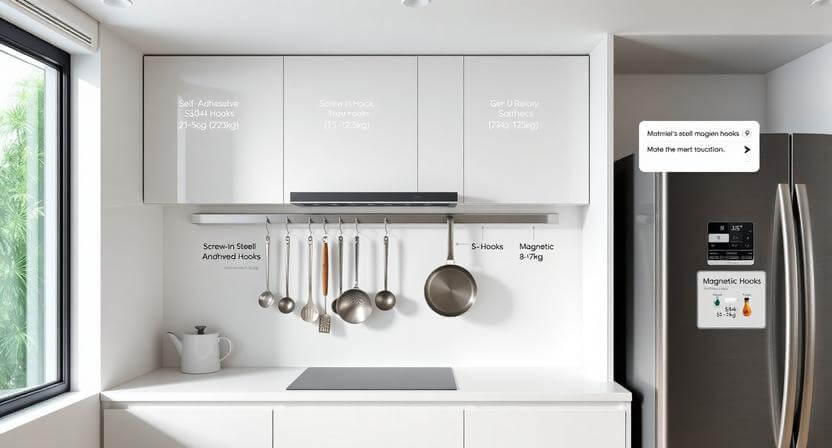
The table below breaks down the technical profiles of the primary wall hook categories available for Bangladeshi households:
| Hook Type | Ideal Substrate / Wall Surface | Weight Rating (per unit) | Primary Mechanical Benefit |
| Self-Adhesive Hooks | Smooth ceramic tiles, polished glass, laminate | 2kg to 5kg | No-drill installation, damage-free removal |
| Screw-In Anchored Hooks | Concrete walls, solid wood cabinetry, brick | 15kg to 25kg | Maximum load tolerance, anti-sag stability |
| S-Hooks (Rail-Hung) | Stainless steel hanging rails, wire mesh grids | 8kg to 12kg | Dynamic lateral positioning, instant reconfiguration |
| Magnetic Hooks | Ferrous metal surfaces, refrigerator side panels | 3kg to 7kg | Tool-free relocation, zero surface residue |
Self-Adhesive Hooks
Premium self-adhesive varieties leverage heavy-duty acrylic compound polymers that cure upon application. These are perfect for rental properties in Dhaka where drilling into pristine backsplashes is restricted. They resist minor moisture exposure but require a thoroughly degreased surface during initial setup to achieve full rated adhesion.
Screw-In Anchored Hooks
For heavy cast-iron skillets, heavy-duty pots, or large cutting boards, mechanical anchor systems are mandatory. These utilize a nylon wall plug expansion sleeve paired with a stainless steel core screw. This design evenly distributes tension deep within concrete or masonry, avoiding structural cracks or hardware pull-out.
S-Hooks (Rail-Hung)
Operating as a modular ecosystem, a standard hook double s hangs seamlessly from a fixed horizontal wall pipe. This configuration allows you to slide utensils sideways to make room for larger items, keeping your workspace fluid.
The Strategic Importance of Kitchen Organization in Urban Bangladesh
High-density living in cities like Dhaka and Chittagong has forced a dramatic shift in interior layouts. Modern apartment configurations heavily compromise on kitchen square footage, making smart vertical engineering a structural necessity rather than a stylistic choice.
Countertop Optimization
When blending, chopping, and meal prepping occur on a single counter, every square inch reclaimed alters your daily efficiency. Elevating items like tongs, ladles, and spice scissors onto dedicated wall tracks frees up premium workspace. This spatial recovery accelerates meal prep workflows by creating dedicated zones for raw ingredient processing and final plate assembly.
Moisture Control & Pest Mitigation
The tropical environment of Bangladesh brings high ambient humidity, which accelerates mold spores and rust on improperly stored cooking items. Stacking wet dishes or damp frying pans directly inside dark, closed base cabinets creates micro-climates that attract household pests. Suspending items on open wall tracks ensures consistent air circulation, promoting rapid evaporation and maintaining strict hygienic standards.
Protecting Carcass Cabinetry
Water pooling on counter lips eventually seeps into sub-counter woodwork, causing premium wood laminates or particle boards to swell and delaminate. By diverting wet utensils to a specialized wall-mounted station or a wall hook system set over a drainage zone, you actively extend the operational lifespan of your underlying modular kitchen investment.
Step-by-Step Installation Protocols for Maximum Load Security
To guarantee your newly purchased heavy-duty wall hooks don’t fail under load, execute installation according to strict material guidelines.
Heavy-Duty Adhesive Application Method
- Surface Decontamination: Clean the target ceramic tile using an isopropyl alcohol wipe to completely isolate and strip away grease films, cooking oils, and carbon residue.
- Thermal Activation: Use a hair dryer on a medium heat setting to gently warm the adhesive pad for 15 seconds, increasing the initial tackiness of the polymer sheet.
- Compression Curing: Press the hook firmly against the wall for a full 30 seconds, forcing out air bubbles to ensure complete structural contact.
- The Curing Window: Leave the hook completely unweighted for 24 hours to let the adhesive bond fully cross-link with the wall surface.
Anchor-Drilled Hook Installation Method
- Substrate Assessment: Use a digital stud finder or manual tapping to verify the drilling location is free of hidden electrical conduits or water supply lines.
- Precision Boring: Use a carbide-tipped masonry bit matching the wall plug diameter and drill straight at a 90° angle.
- Anchor Seating: Insert the expansion sleeve into the bored hole, ensuring the outer collar sits flush with the plaster or tile surface.
- Hardware Torque: Pass the stainless steel screw through the mounting plate of the hook assembly and drive it firmly into the plug until tight.
Warning: Never use standard plastic drywall anchors in soft brick walls or old lime mortar common in older Dhaka properties. Always specify heavy-duty nylon expansion anchors to prevent structural crumbling under load.
Material Selection Criteria for High-Humidity Kitchen Environments
Kitchen environments experience intense mechanical stress, extreme thermal fluctuations, and constant chemical exposure from cleaning agents and spices. Choosing the correct alloy composition prevents premature hardware failure.
Chromium-Nickel Alloy Engineering (SS304 vs SS201)
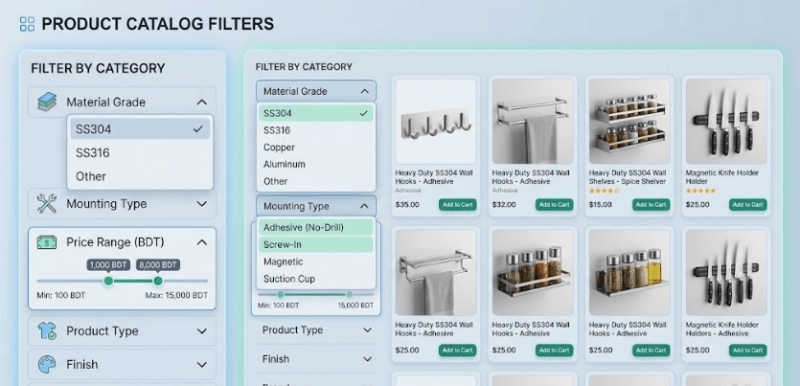
Always verify the metal composition grade when browsing online catalogs. Authentic Stainless Steel 304 (SS304) contains a minimum of 18% chromium and 8% nickel. This precise atomic blend creates an invisible, self-healing chromium oxide layer across the hook surface, blocking salt and airborne water molecules from oxidizing the underlying iron.
Low-grade SS201 substitutes manganese for nickel; while cheaper initially, it develops dark pit corrosion and structural flaking when exposed to steam in Bangladeshi kitchens.
Solid Brass Accents
For premium, classic interior aesthetics, solid brass hooks provide exceptional structural longevity. Brass is naturally immune to rust and features innate antimicrobial properties, making it an excellent material choice for high-touch culinary zones.
Space-Grade Anodized Aluminum
Anodized aluminum options feature an electrochemically thickened oxide layer. This treatment yields an exceptionally hard, scratch-resistant matte finish that resists fingerprint smudges and matches modern handleless cabinetry profiles perfectly.
Common Spatial Mistakes & Easy Engineering Fixes
Improper hardware placement can disrupt your kitchen’s workflow and lead to early product failure.
Mistake 1: Placing Hook Arrays Directly Above Cooktops
Suspending plastic-handled tools or wooden ladles directly over a high-output gas stove exposes them to direct thermal updrafts and fine grease vapor.
- The Fix: Shift your wall rail or hook assembly at least 18 inches horizontally away from the edge of the stove. This keeps your tools easily accessible while preventing heat damage and grease buildup.
Mistake 2: Overloading Structural Weight Limits
Hanging a heavy 5kg cast-iron skillet onto an adhesive hook rated for light cutlery causes the adhesive backing to peel away unexpectedly, potentially cracking your ceramic tiles or damaging your cookware.
- The Fix: Always reserve adhesive hooks exclusively for lightweight towels, silicone spatulas, and small wire strainers. For heavy cookware, use deep screw-anchored hooks mounted directly into solid walls.
Mistake 3: Blind Corner Wastage
Ignoring the open vertical walls hidden inside deep corner spaces wastes premium storage real estate.
- The Fix: Install an adjustable wall rail system along the dead wall space of a corner, or pair it with a specialized interior 360 degree revolving basket to maximize storage depth.
Future Design Trends: Smart Modular Kitchen Layouts in BD
As interior architecture trends lean toward clean lines and high functional density, wall hooks are shifting from isolated utility items into deeply integrated system components.
Concealed Track Configurations
Modern premium kitchens increasingly feature recessed structural tracks cut directly into the backsplash material. These tracks allow matching minimalist hooks to sit flush with the wall face, letting you add, slide, or remove individual elements seamlessly without exposing unsightly mounting plates.
Textured Matte Finishes
The traditional high-gloss chrome aesthetic is giving way to sophisticated matte black, brushed champagne gold, and muted gunmetal tones. These non-reflective surfaces mask water spots and oils, preserving a polished look even during high-heat cooking sessions.
Multi-Tier Functional Hubs
Homeowners are moving away from scattered single hooks toward dense, multi-tier wall-mounted systems. These units combine dedicated utensil hooks, an integrated paper towel holder, and small spice shelves onto a single vertical frame, centralizing your storage footprint.
Next Steps & Resource Directories
Browse Full Directories
Related Articles
- How to Choose Durable Kitchen Accessories for High-Humidity Spaces
- Optimizing Blind Corners in Compact Apartment Layouts
- S-Hook Configurations for Dynamic Utensil Organization
