
Kitchen Cabinet
Trash Can Cabinet Ideas for a Clean, Tidy Kitchen
Aug
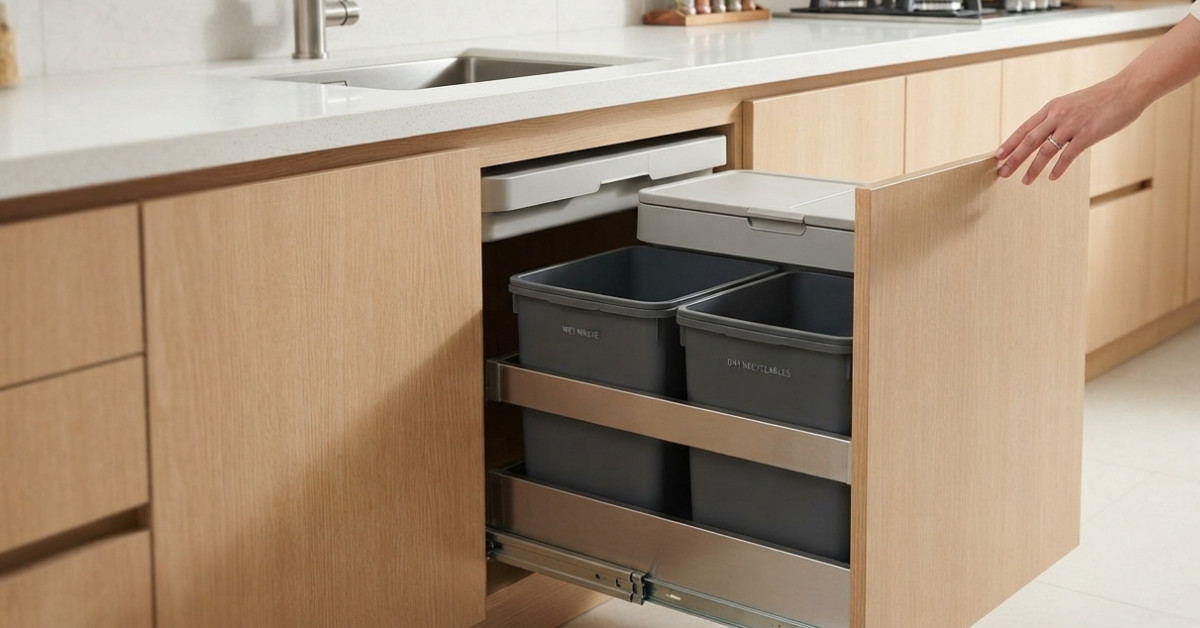
Trash can cabinet Managing daily organic waste in a high-humidity environment demands an intelligent, concealed approach to home sanitation.
Tropical cooking routines generate significant food scraps—from fish scales and meat trimmings to vegetable peels and spice pouches—that spoil rapidly when exposed to open air.
Technical Architectural Layout for Cabinet-Integrated Waste Systems
Positioning your pull out trash can cabinet directly adjacent to your primary food preparation counter and sink establishes an ergonomic waste management triangle.
+——————————————————————-+
| LOWER BASE CABINETRY LAYOUT |
+————————————+——————————+
| [ Pull Out Trash Can Cabinet ] | [ Primary Cooking Zone ] |
| – Heavy-Duty Soft-Close Runners | – Built-in Gas Stove/Hob |
| – Dual Compartment Bin (Wet/Dry) | – Deep Cutlery Drawers |
| – Integrated Odor-Sealed Lids | – Oil & Spice Pull-Out |
+————————————+——————————+
| [ Under Sink Trash Cabinet ] | [ Corner Storage System ] |
| – Plumbing Cutout Clearance | – 180° Revolving Basket |
| – Moisture-Proof Base Guard | – Heavy Pot & Pan Storage |
+————————————+——————————+
Integrated Waste System Specifications
- Door-Mounted Pull Out Trash Can Cabinet: Attaches directly to the cabinet fascia, sliding outward on full-extension ball-bearing runners upon opening.
- Under Sink Trash Cabinet: Utilizes awkward, plumbing-restricted spaces under the sink support frame, featuring a top-recessed frame that clears drainage traps.
- Dual-Bin Organizer Assembly: Features two independent polypropylene buckets suspended on a rigid frame to separate wet compostable scraps from dry recyclables.
Why Modern Kitchen Organization Matters in Urban Homes
Trash can cabinet Urban floor plans in major metro regions prioritize open-concept dining and kitchen areas.
- Microbial & Pest Containment: A sealed hidden waste bin forms a physical barrier against fruit flies, ants, and cockroaches attracted to tropical food waste.
- Cabinetry Preservation: Closed containment prevents airborne moisture and corrosive organic decay fumes from swelling plywood and MDF cabinet carcass boards.
- Ergonomic Floor Optimization: Tucking bins inside lower cabinetry clears walking paths, simplifying floor sweeping and mopping.
Essential Accessories for an Engineered Kitchen Setup
Trash can cabinet To build a fully integrated cooking space, pair your concealed waste system with heavy-duty modular kitchen accessories BD built for high-moisture environments.
Cabinet & Pull-Out Waste Systems
Trash can cabinet Installing a pull out bin organizer inside lower base cabinets removes floor obstructions while offering hands-free or soft-touch access.
Drawer Baskets & Storage Organizers
Trash can cabinet Pairing waste units with multi-tiered drawing dustbin pvc ss and stainless steel drawer baskets creates dedicated zones for cutlery, cutting boards, and cleaning supplies.
Wall-Mounted Racks & Backsplash Shelving
Trash can cabinet Utilizing vertical wall space keeps countertops clear of clutter. Installing a hanging plate hook rack or dish rack directly above the sink lets freshly washed items drip dry straight into the basin.
+——————————————————————-+
| WALL & BASE ACCESSIBLE STORAGE MATRIX |
+———————-+——————–+———————–+
| Zone | Recommended System | Operational Benefit |
+———————-+——————–+———————–+
| Wall Backsplash | Wall Racks & Hooks | Zero counter footprint|
| Mid-Level Base | Multi-Drawer Baskets| Instant utensil reach |
| Under Sink/Plumbing | Hidden Waste Bin | Uses dead plumbing space|
+———————-+——————–+———————–+
Sink & Drainage Management Solutions
Trash can cabinet Placing an under sink trash cabinet alongside a solid sink support rack optimizes the plumbing cabinet.
High-Suction Chimney Hoods
Trash can cabinet Heavy spice blends and oil frying require active mechanical ventilation to prevent sticky air residue from settling on cabinetry.
Smart Storage Configurations for Small-Footprint Kitchens
Trash can cabinet When managing small apartment layouts, optimizing every cabinet opening is essential for maintaining smooth traffic flow during meal preparation.
- Corner Blind Pull-Outs: Maximize deep, awkward corner void spaces by installing an articulated magic corner right unit to store large biryani pots and heavy cookware.
- Ultra-Narrow Spice Pull-Outs: Mount a 150mm wide 3 shelf pull out frame beside the cooktop to keep cooking oils and spice containers organised without cluttering work surfaces.
- Door-Mounted Waste Containers: For ultra-compact sink cabinets with tight plumbing clearances, mount a slim hidden waste bin directly to the inside face of the cabinet door to save shelf space.
- Vertical Tall Pantry Units: Utilize floor-to-ceiling space by integrating a six layer tall unit basket system, holding dry food supplies in a slender vertical footprint.
Technical Material Selection Guide
Trash can cabinet Selecting durable kitchen fittings requires evaluating physical material standards. Tropical humidity accelerates rust on low-grade metals and warps inferior particle boards.
| Hardware Category | Recommended Material Standard | Key Engineering Benefit | Ideal Placement Zone |
| Pull Out Trash Can Cabinet | SS304 Frame & Heavy ABS Buckets | Acid resistance, non-porous & odor-sealed | Base cabinet adjacent to sink |
| Drawer Basket Assemblies | Food-Grade SS304 Stainless Steel | Zero rust risk under high weight loads | Main prep drawers & base units |
| Corner Revolving Systems | Chrome-Plated Alloy / ABS Trays | Smooth 360-degree rotation under load | L-shaped blind corner base units |
| Wall-Mounted Drying Racks | Electro-Polished Solid Stainless Steel | High tensile strength & water corrosion safety | Backsplash area directly above sink |
Pro Tip: Always specify SS304 grade stainless steel over electroplated chrome wire. SS304 contains 18% chromium and 8% nickel, providing structural protection against rust, moisture, and chemical cleaning agents.
Advanced Trends in Concealed Kitchen Systems
Trash can cabinet Modern architectural layouts favor clean lines, minimalist facades, and hidden functional fittings.
+——————————————————————-+
| CONCEALED DESIGN vs TRADITIONAL OPEN SETUP |
+———————————–+——————————-+
| Concealed Architectural Design | Traditional Open Setup |
+———————————–+——————————-+
| – Flush, handle-less doors | – Exposed plastic bins on tile|
| – Integrated dual-bin sorting | – Unsorted single waste pile |
| – Soft-close hydraulic dampening | – Manual lid lifting |
| – Odor containment gaskets | – Exposed ambient odors |
+———————————–+——————————-+
Handle-Less Cabinet Interfaces
Integrated push-to-open and servo-drive touch mechanisms allow homeowners to nudge a pull out trash can cabinet open with a knee or hip when their hands are full during meal prep.
Sustainable Waste Sorting
Trash can cabinet Modern kitchen waste management relies on multi-compartment internal bins. Modern layouts use dual or triple pull-out buckets to separate organic food scraps, dry paper/plastic packaging, and glass containers directly at the point of disposal.
Critical Installation & Maintenance Mistakes to Avoid
- Ignoring Plumbing & Mechanical Clearances: Failing to measure internal cabinet dimensions, door hinge projections, and sink drainage pipes before buying hardware.
- Choosing Low-Grade Electroplated Metals: Installing budget metal frames that rust quickly from humidity and moisture exposure.
- Exceeding Runner Load Ratings: Overloading trash units or deep drawer slides beyond their rated capacity, causing track misalignments and binding cabinet doors.
- Skipping Soft-Close Hydraulic Slides: Omitting soft-close runners causes cabinet doors to slam shut, which can spill bin contents and loosen cabinet joints over time.
- Neglecting Liner and Bin Sanitation: Forgetting to use leak-proof liners and failing to wash ABS plastic bins weekly, allowing odorous bacteria to build up.
Step-by-Step Installation Guide for Pull-Out Trash Units
Trash can cabinet Installing a cabinet-mounted waste system requires precise positioning to ensure smooth travel and proper lid alignment.
1.Measure Cabinet Clearance & Verify Depth:Accurate interior measurements prevent mechanical interference.
Measure the inner width, height, and depth of the target base cabinet. Subtract 20mm from total internal width to clear side hinges and ensure smooth slide movement.
2.Mount Bottom & Side Telescopic Runners:Precision leveling prevents binding during full extension.
Position the telescopic runner frame onto the cabinet floor or side walls, securing it with stainless steel screws. Use a spirit level to ensure the tracks are parallel and level.
3.Attach & Align Front Cabinet Door Brackets:Ensures a flush cabinet facade when fully closed.
Fasten the adjustable door brackets to the interior face of your cabinet door panel. Align the bracket hooks with the pull-out slide mechanism and tighten the adjustment screws until the door rests flush against the cabinet frame.
4.Drop Bin Containers into the Support Frame:Establishes stable positioning for everyday waste disposal.
Insert the dual ABS plastic buckets into the suspended metal frame. Check that the integrated lids or top gasketing plates fit snugly over the containers to seal in ambient odors.
Investing in durable, well-engineered modular kitchen accessories BD transforms messy waste disposal into a seamless, hygienic, and aesthetically pleasing routine.
Next Steps & Resource Directories
- Sink Care & Plumbing > Sink Support Racks
- Ventilation Systems > Kitchen Hood Collection
Related Articles
- Single Bowl Vs. Double-Bowl Sinks in the Kitchen: Choosing the Right Option for Your Home
- Sink Waste Kit: Smart Kitchen Upgrade Guide
- Kitchen Sink Cabinet Organizer Ideas for Neat Kitchen Use
- Hanging Wrap Organizer for Clutter-Free Kitchens Tips 2026!
