
Kitchen Accessories, Kitchen Basket, Kitchen Cabinet
Kitchen Plate Rack – Glass Rack – Drip Tray
Jun
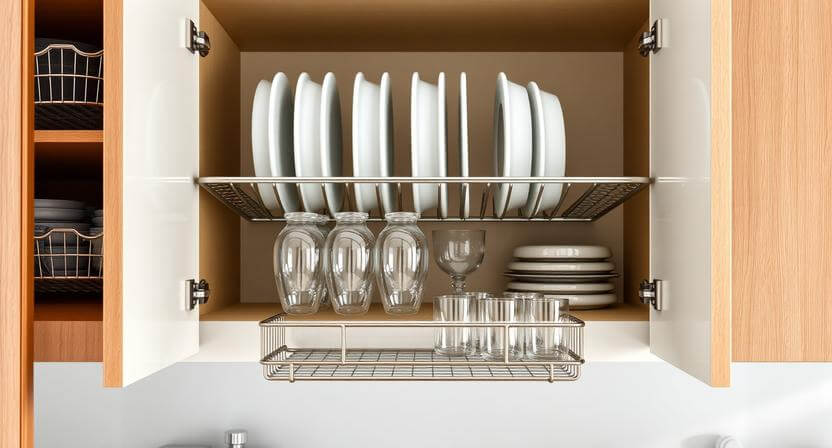
Optimizing a high-moisture cooking space requires smart hardware engineered to handle wet dinnerware efficiently. Integrating an advanced kitchen plate rack with a drip tray eliminates water pooling on premium woodwork while keeping everyday utensils perfectly organized. This technical blueprint breaks down the structural, material, and spatial configurations needed to establish a hygienic, high-performance culinary environment.
Technical Anatomy of an Optimal Dish Management System
An efficient dish management layout relies on structural harmony between weight distribution, moisture isolation, and rapid accessibility.
Standard installations fail when wet plates drain directly onto cabinet surfaces, causing wood swelling, laminate peeling, and mold colonization. A professional-grade system solves this by segregating storage zones and managing runoff mechanically.
The Upper Plate Section
The top tier must feature heavy-duty vertical slot dividers designed to anchor heavy porcelain, ceramic, and clay dinnerware securely.
Deep, precision-engineered profiles prevent large traditional platters from tilting forward or clashing against adjacent items during retrieval.
The Integrated Glass Rack
Positioned directly beneath the plate section, the secondary tier uses flat or low-profile grid designs optimized for cups, mugs, and glassware.
Specialized side rings or integrated hanging tracks serve as a dedicated kitchen glass holder rack, protecting fragile rims from chipping.
The Removable Drip Tray
The baseline defense mechanism is a heavy-duty, slide-out drainage tray made of high-impact PVC or anti-rust stainless steel.
This component captures 100% of gravitational water runoff, allowing users to empty collected moisture into the sink with a single motion.
The Realities of Bangladeshi Kitchen Environments
In humid cities like Dhaka and Chattogram, moisture and daily cooking can damage low-quality storage hardware. A kitchen plate rack with drip tray keeps dishes organized, improves drying, prevents bacteria buildup, protects countertops from water stains, and maximizes limited kitchen space by turning unused cabinet areas into efficient storage zones.
Comprehensive Guide to Modular Cabinet & Pull-Out Storage
Maximizing space efficiency across a compact layout requires a strategic mix of base-cabinet mechanics, vertical organizers, and specialized corner systems. Implementing the correct basket architecture ensures that every square inch of your cabinetry operates at maximum efficiency.
Base Cabinet Pull-Out Systems
Standard deep cabinets often turn into disorganized storage voids where items at the back remain forgotten for years. Installing heavy-duty cabinet pull-out baskets featuring telescopic soft-close runners allows full-depth access with minimal physical effort. These systems pull heavy cast-iron pans and bulk spice containers completely into the light, reducing physical strain during peak cooking hours.
Specialized Internal Drawers
Replacing standard wooden drawers with modular stainless steel wire variations optimizes airflow and prevents stale odors from trapping inside dark compartments.
Utilizing specialized configurations like a high-capacity thali plate basket ensures heavy local cooking vessels remain perfectly upright and organized. Custom dividers can be adjusted to isolate small cutlery items, preventing friction damage to premium finishes.
Maximizing Blind Corner Voids
Blind corners are notoriously difficult to utilize in L-shaped and U-shaped configurations, often resulting in massive amounts of wasted space.
Installing an advanced mechanical magic corner right pull-out mechanism brings deep, hidden storage racks forward when the cabinet door is opened. This engineering solution provides immediate access to large serving bowls and small appliances without requiring uncomfortable reaching or bending.
High-Volume Vertical Larder Units
For homes requiring extensive grocery and dry-goods storage within a minimal floor footprint, tall pull-out larder towers offer an exceptional solution.
Integrating a heavy-duty six-layer tall unit basket system utilizes the full vertical height of your kitchen architecture. These units glide out smoothly on reinforced floor tracks, presenting organized rows of ingredients accessible from both sides.
Material Selection Matrix: SS 304 vs. Chrome-Plated Iron
Selecting kitchen hardware based solely on surface aesthetics can lead to rapid structural failure within high-moisture environments. The base metallurgy of your organizers dictates their lifetime durability, load capacity, and resistance to chemical corrosion.
| Feature / Specification | Premium Stainless Steel (SS 304) | Economy Chrome-Plated Iron |
| Chemical Composition | High Chromium & Nickel content | Carbon steel base with thin exterior electroplating |
| Rust & Corrosion Resistance | Lifetime elemental protection; self-healing oxide layer | Highly susceptible; rust blooms occur when plating scratches |
| Weight Load Capacity | Exceptional; resists bending under heavy stone cookware | Moderate; prone to sagging over extended periods |
| Maintenance Profile | Simple wipe-down with a damp cloth; chemical-resistant | Requires specialized dry wiping; prone to pitting |
| Long-Term ROI | High; single upfront investment eliminates replacement costs | Low; requires complete replacement every 12–24 months |
Investing in a premium glass plate rack with drip tray manufactured from solid SS 304 guarantees that the unit will never contaminate clean dishes with rust flakes.
WARNING: Avoid harsh chemical cleaners containing bleach or industrial acids on your modular hardware. Even premium stainless steel can experience surface pitting if exposed to highly abrasive chlorochemicals for extended periods.
Step-by-Step Selection Matrix for Modular Storage
To maximize the efficiency of your investment, map your specific storage needs against the architectural layout of your kitchen using this optimized specification framework:
1. Architectural Fit and Dimensions
Always measure the clear internal cabinet dimensions rather than the exterior door panel width. A standard 600mm external module typically provides only 564mm of internal clearance once side-panel thicknesses are subtracted. Ensure your chosen drawer systems match these inner clearances exactly to prevent track binding.
2. Weight and Loading Dynamics
Calculate the total weight load of your daily dinnerware sets before finalizing runner selections. Upper cabinet dish racks should comfortably support at least 25kg of wet porcelain, while deep base-cabinet pot baskets require heavy-duty runners rated for 45kg or higher.
3. Surface Maintenance and Hygiene Profiles
Opt for wire baskets featuring electro-polished surface smooth finishes that resist grease accumulation. Smooth wire cross-sections prevent cooking oils and fine spices from baking onto the metal, cutting weekly cleaning times in half.
Wall-Mounted vs. Built-In Storage Architecture
Deciding between exposed wall-mounted systems and concealed built-in cabinet hardware depends heavily on your daily workflow and aesthetic preferences. Both configurations offer distinct functional advantages when tailored to your kitchen’s specific layout.
Exposed Wall-Mounted Systems
Wall-mounted racks are ideal for high-speed, high-frequency cooking environments where tools must be grabbed instantly without opening doors. These systems leverage unused vertical backsplash spaces, positioning essential items directly above the main sink workstation. The open-air design ensures exceptional ventilation, allowing washed items to dry rapidly under natural room airflow.
Concealed Built-In Systems
Concealed cabinet installations are perfect for achieving a clean, ultra-minimalist aesthetic. They hide wet dishes completely out of sight behind seamless, handleless cabinet doors, keeping the kitchen looking pristine for guests.
This approach requires precise mechanical coordination with premium soft-close hinges to ensure smooth, moisture-safe operation over time.
Ventilation and Moisture Management Dynamics
Effective moisture control involves looking at the kitchen as an interconnected system rather than evaluating individual accessories in isolation. High-heat local cooking releases massive volumes of oil-laden steam that can settle on hardware, trapping moisture and accelerating wear.
Pairing your dish drying zone with a high-extraction chimney hood ensures that ambient grease particles are removed before they can bond with wet metal surfaces. This ventilation dynamic keeps your modern modular kitchen accessories in Bangladesh looking brand new while preventing sticky residues from forming on clean plates.
Additionally, ensuring a consistent airflow pathway around your upper dish cabinets prevents internal humidity spikes. Incorporating small ventilation grilles into the top or bottom panels of your cabinetry allows warm air to escape, ensuring your plates dry rapidly and hygienically.
Fatal Installation Mistakes and How to Prevent Them
Ignoring Internal Cabinet Depth Standards
Many homeowners mistakenly purchase European-standard internal hardware without cross-checking the actual internal depth of local cabinetry. European fittings often require a minimum clear depth of 550mm, whereas many regional apartment cabinets are built to a shallower 500mm or 450mm standard. Always measure the clear space behind closed doors to avoid buying incompatible systems.
Omitting Sub-Basket Drip Protection
Installing wire organizers directly above premium wood or moisture-sensitive medium-density fiberboard (MDF) panels without a protective barrier is a recipe for disaster. Over time, stray water droplets cause wood fibers to swell, warp, and split, destroying expensive custom cabinetry from within. Always ensure that every upper or mid-tier wet storage unit is fitted with a durable, form-fitting plastic drip tray.
Overloading Standard Hinges and Runners
Mounting heavy pull-out systems onto standard, non-reinforced cabinet side walls can cause structural sagging and door misalignment within months. Heavy storage units require reinforced mounting plates and premium, side-stabilized drawer glides to distribute weight safely across the cabinet carcass.
Maintenance Protocols for Lifetime Performance
To ensure your modular stainless steel hardware maintains its pristine finish and smooth mechanical operation for decades, establish a simple, consistent maintenance routine.
Weekly Surface Wipe-Downs
Wipe down all wire sections using a soft microfiber cloth dampened with warm water and a mild, pH-neutral liquid dish soap. Pay special attention to the weld points where moisture can collect, ensuring these areas are wiped clean of any soap residue or hard-water deposits.
Monthly Drip Tray Sanitization
Slide out the PVC or stainless steel collection trays and wash them thoroughly with warm water and a vinegar-based solution to eliminate mineral scaling. Dry the trays completely before sliding them back into their tracks to keep the cabinet interior completely free of trapped humidity.
Bi-Annual Mechanical Lubrication
Apply a small drop of food-grade silicone lubricant to the internal tracks of your soft-close runners and corner swivel mechanisms. This simple step keeps your drawer baskets sliding effortlessly while protecting the precision ball bearings from airborne kitchen grease.
Next Steps & Resource Directories
Browse Full Directories
Related Articles
- High-Capacity Stainless Steel Thali Basket Configurations
- Optimizing Blind Corners with Advanced Right Magic Corner Systems
- Maximizing Vertical Space via Six-Layer Tall Larder Units
