
Kitchen Hood
How to Choose the Best Slim Kitchen Hood for Your Kitchen?
Aug
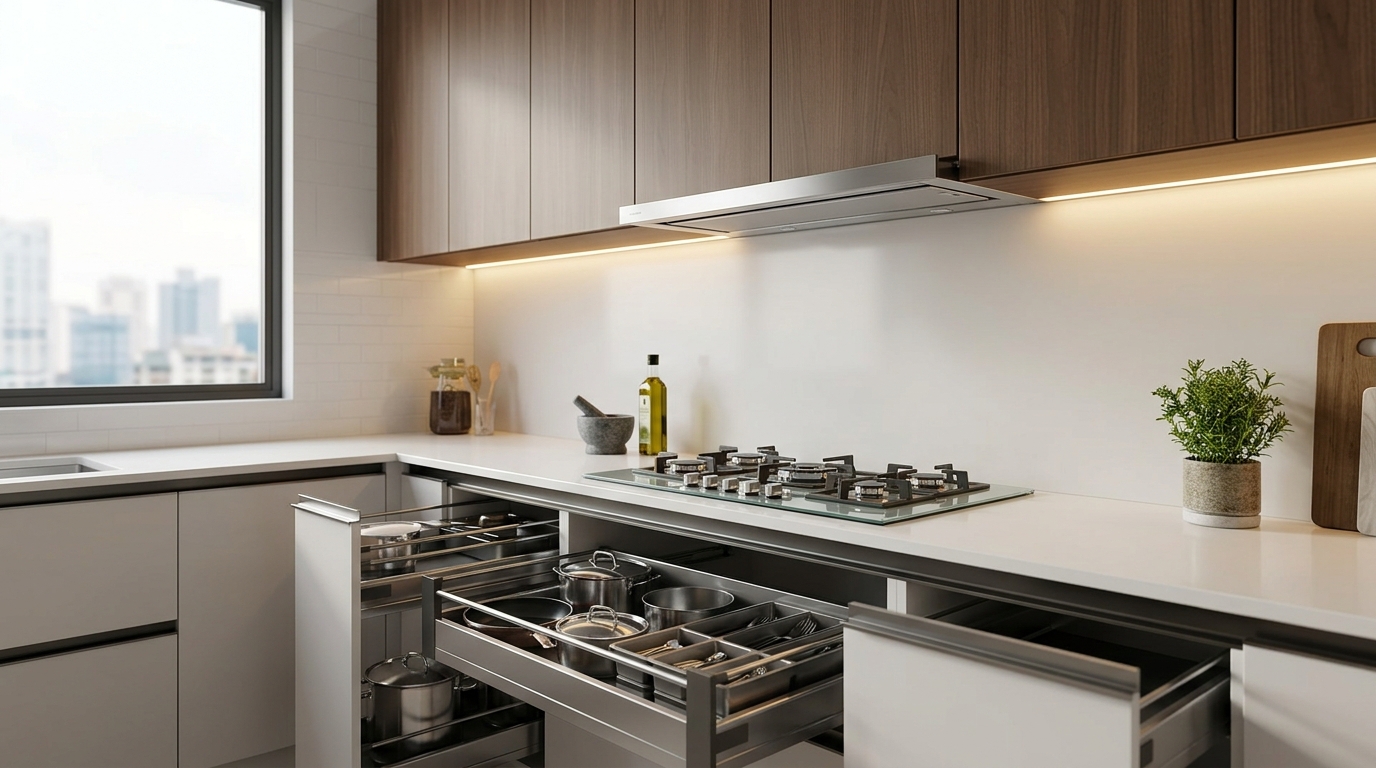
Upgrading to a slim kitchen hood is the fastest way to eliminate lingering cooking fumes, grease buildup, and heat in modern Bangladeshi apartments. This guide provides an actionable framework to select the perfect ventilation system while integrating high-efficiency modular storage to maximize your limited kitchen square footage.
Understanding the Role of Kitchen Ventilation in 2026
Modern cooking involves high-heat frying and aromatic spices that produce significant airborne particulates. Without proper ventilation, these particles settle on your cabinetry, tiles, and ceilings, leading to long-term structural degradation. A slim kitchen hood is designed to fit seamlessly under wall cabinets, offering a minimalist aesthetic without sacrificing suction power.
Effective ventilation does more than just clear the air; it protects your home’s interior finishes from yellowing and sticky residue. By prioritizing air extraction, you create a healthier indoor environment that remains fresh even after cooking heavy meals.
Step-by-Step Selection Criteria for Slim Hoods
When selecting a hood, prioritize these technical specifications to ensure it matches your kitchen layout and cooking frequency.
- Measure Your Hob Width: Always ensure your hood is at least as wide as your gas stove. A 60cm hood is standard for small kitchens, while 90cm is ideal for larger setups.
- Evaluate Suction Capacity (m³/h): Look for a suction power of at least 800–1000 m³/h to effectively manage smoke from high-heat Bangladeshi cooking.
- Filtration Type: Choose stainless steel baffle filters. They are superior to charcoal filters for catching heavy oil droplets and are easily removable for cleaning.
- Noise Level: Modern models should operate between 50–60 dB. Anything higher may become disruptive in open-plan apartment layouts.
Maximizing Space with Modular Kitchen Accessories
A slim hood is only one part of the equation. True kitchen efficiency comes from organizing your workflow using specialized hardware.
Implementing Smart Storage Solutions
Deep base cabinets are often the biggest source of kitchen frustration. By replacing fixed shelves with drawer baskets, you can transform “dead zones” into accessible storage. These systems allow you to pull out heavy pots and pans with minimal effort, saving your back and keeping your counters clear.
Utilizing Vertical Wall Space
If your countertop is cluttered, look upward. Wall-mounted racks are essential for keeping frequently used spices, mugs, and utensils within arm’s reach. This simple move prevents the common “countertop creep” where items accumulate and slow down your meal preparation process.
Comparison: Ventilation and Storage Solutions
| Accessory Type | Best For | Key Benefit | Typical Load/Rating |
| Slim Kitchen Hood | Ventilation | Grease & Smoke Removal | High (1000 m³/h) |
| Pull-Out Basket | Base Storage | Accessibility | High Capacity |
| Hanging Racks | Vertical Utility | Counter Space | Medium Load |
| Drawer Organizers | Cutlery & Tools | Clutter Reduction | Organizational |
Addressing Humidity and Durability in Bangladesh
The climate in Dhaka and Chattogram is notoriously humid, which is the primary enemy of kitchen hardware. Low-grade metal will rust, seize, and fail within a single monsoon season. Always insist on high-grade 304 stainless steel for all modular kitchen accessories.
When inspecting hardware, check the weight capacity of the drawer slides. A heavy-duty slide should glide smoothly even when loaded with cast iron pans. If the hardware feels “sticky” or flimsy in the showroom, it will inevitably fail under the weight of daily use.
Design Trends: The Minimalist Approach
The trend for 2026 is “Hidden Utility.” Homeowners want high-functioning kitchens that look like high-end furniture. A slim hood fits this trend perfectly because it hides discreetly beneath cabinetry. When paired with push-to-open mechanisms for your cupboards, the visual noise of the kitchen is reduced, making small apartments feel significantly more spacious.
Common Pitfalls During Renovation
Avoid these frequent mistakes to save money and frustration:
- Ignoring Ducting: Ensure your hood has a clear path for exhaust ducting. If you cannot vent outside, ensure your model has a high-quality charcoal recirculation mode.
- Poor Placement: Mounting the hood too high or too low ruins efficiency. The ideal height is between 65cm to 75cm from the cooktop surface.
- Underestimating Weight: Never assume standard hinges can handle custom-made deep baskets. Always use the manufacturer-recommended heavy-duty sliders.
Maintaining Your Modular Investment
To keep your kitchen running smoothly, perform a quarterly “maintenance check.” Wipe down your slides with a dry cloth, tighten any loose screws on your racks, and ensure the hood’s motor intake is clear of dust. By treating your modular system with the same care as your appliances, you ensure a decade or more of seamless operation.
-
- Next Steps & Resource DirectoriesBrowse Full DirectoriesKitchen Storage Solutions > Modular Accessories > Hardware & Fittings
Related Articles
- Next Steps & Resource DirectoriesBrowse Full DirectoriesKitchen Storage Solutions > Modular Accessories > Hardware & Fittings
