
Kitchen Organization
Corner Shelf Organizer for Smart Kitchen Storage Solutions
Aug
A smart corner shelf organizer transforms wasted dead space into an ultra-accessible storage powerhouse for modern kitchens. By optimizing challenging angles, it declutters countertops and ensures your cooking essentials are always within arm’s reach.
Understanding the Anatomy of Kitchen Dead Space
Kitchen corners are notorious space-wasters. Traditional shelving leaves deep, dark voids where items get pushed back and forgotten. A dedicated corner shelf organizer fundamentally alters this dynamic by bringing hidden items directly into your field of view.
When designing a compact or medium-sized kitchen, every square inch counts. Standard cabinets fail to utilize the triangular depth of ninety-degree angles efficiently. Integrating specialized hardware like a double corner rack changes how you interact with your cooking station, converting passive architecture into active, functional workspace.
Furthermore, ergonomic access prevents physical strain. Instead of bending awkwardly or reaching deep into dark lower cabinets, a well-placed corner shelf system brings spices, oils, and cookware straight to the front. This ergonomic shift reduces cooking prep time and protects your posture.
Core Types of Corner Organizers and Their Best Use Cases
Different kitchens require different mechanical solutions based on layout constraints and storage volume. Choosing the right configuration prevents clutter before it starts.
Multi-Tiered Corner Racks
Multi-tiered variants utilize vertical verticality to stack plates, bowls, or condiments. These are ideal for upper walls or open countertops where accessibility takes top priority over hidden storage.
Revolving and Magic Corner Systems
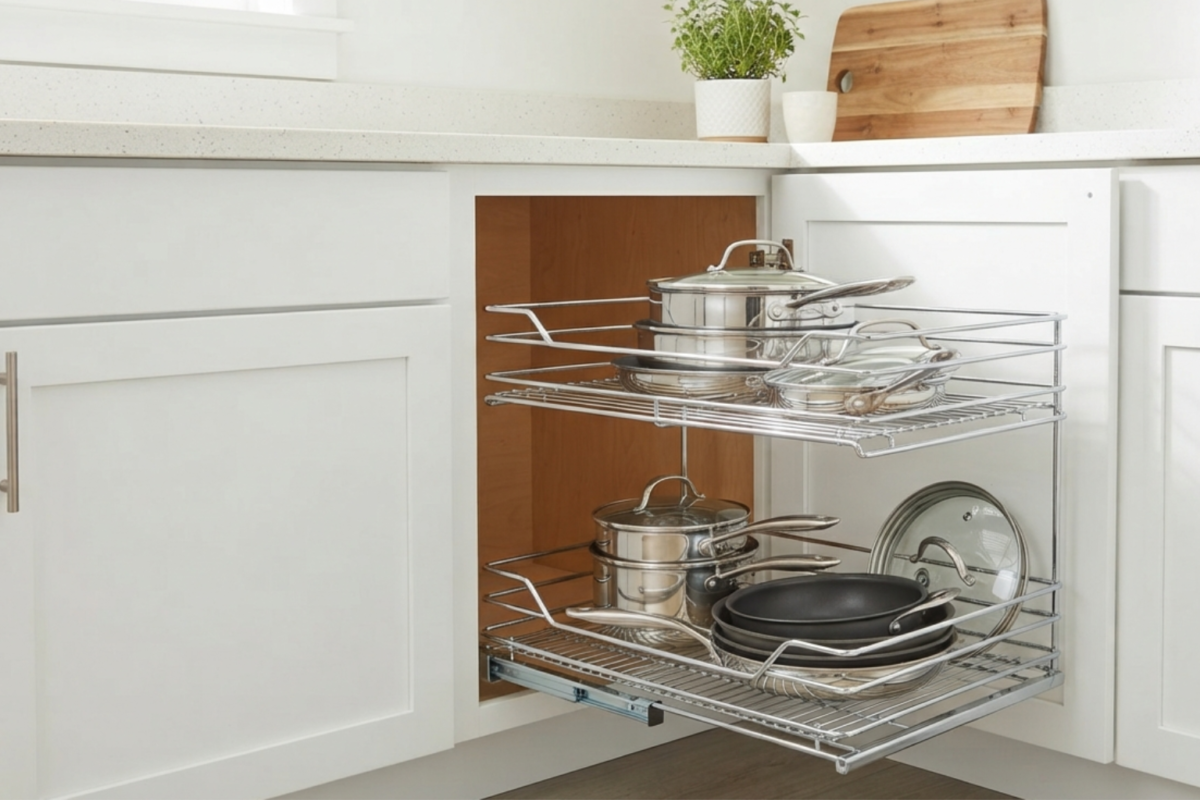
For lower base cabinets, revolving mechanisms or articulating pull-outs are supreme. They swing or slide out smoothly, exposing items stored deep within the framework. Products like the triple corner rack maximize vertical capacity inside lower dead zones, holding heavy pots and pans securely.
Floating Corner Shelves
Open floating shelves offer aesthetic charm and rapid access for daily-use mugs, saucers, or decorative jars. They keep walls feeling open while expanding your storage footprint.
Pro Tip: Match your choice of corner organizer to the weight of your items. Heavy cast-iron cookware demands reinforced multi-layered framing, whereas lightweight spices only require basic wire or plastic racks.
Maximizing Small Kitchen Layouts with Smart Storage Solutions
Small kitchens suffer most from surface clutter. When counter space vanishes, cooking becomes stressful and inefficient.
Implementing smart kitchen storage solutions begins with vertical integration. Corners provide an unexploited vertical highway that can support multiple shelving units without blocking walkways. By moving small appliances and spice collections off the main counters, you immediately create a safer, more productive prep zone.
Additionally, consistent organization minimizes food waste. When you can see every jar and container clearly, you are less likely to buy duplicates or let ingredients expire in hidden depths.
Step-by-Step Installation Guide for Corner Storage Units
Proper installation guarantees long-term durability and prevents structural sagging under heavy loads. Follow these core steps for a secure setup:
- Clear and Measure: Completely empty the target corner area. Measure both wall spans and internal cabinet depths twice to ensure exact dimensional alignment.
- Locate Studs: For wall-mounted racks, use an electronic stud finder to locate structural wall supports. Securing shelves directly into drywall will cause failure under weight.
- Assemble the Framework: Build the organizer frame according to the manufacturer guidelines before attempting mounting. Keep screws loosely fitted until alignment is verified.
- Level and Secure: Use a spirit level across the shelves. Once level, tighten all mounting hardware completely. Test stability with moderate weight before loading final items.
Common Mistakes to Avoid When Organizing Kitchen Corners
Even the best hardware can fail if subjected to poor usage habits. Watch out for these frequent pitfalls:
- Overloading Weight Capacities: Exceeding the specified load limit of a pull-out or revolving mechanism can warp tracks and break alignment hinges.
- Ignoring Vertical Clearance: Failing to measure the height of tall bottles or pots before placing them on intermediate shelves leads to jammed mechanisms.
- Neglecting Regular Maintenance: Grease and moisture accumulate rapidly in kitchen corners. Neglecting to wipe down wire racks and tracks leads to sticky sliding mechanisms.
Comparing Corner Storage Options: Fixed vs. Mobile Systems
| Feature | Fixed Corner Racks | Revolving / Magic Corners | Floating Open Shelves |
| Accessibility | Moderate (Front items easy, back items require reaching) | High (Brings entire contents outward) | Maximum (Open visual access) |
| Installation Complexity | Low to Moderate | High (Requires precise cabinet fitting) | Low |
| Best For | Upper walls & pantries | Deep base cabinets | Everyday dishware & decor |
| Weight Capacity | High | High | Moderate |
Future Trends in Kitchen Ergonomics and Smart Organization (2026)
Kitchen design in 2026 places unprecedented emphasis on seamless automation and sustainable materials. Modern corner organizers increasingly incorporate soft-close dampening technology, antimicrobial coatings, and modular wire configurations that adapt as your kitchen needs evolve.
Furthermore, smart lighting integration is transforming storage units. Miniature motion-activated LED strips integrated into corner racks illuminate dark cabinet interiors automatically upon opening, completely eliminating shadowy blind spots.
As urban living spaces shrink, manufacturers are focusing heavily on tool-free modular adjustments. Homeowners can now reconfigure shelf heights within minutes without tools, making custom kitchen organization accessible to everyone.
Essential Maintenance and Cleaning Protocols
To keep your storage systems operating smoothly for years, establish a routine maintenance schedule.
Wipe down metal wire frames weekly using a damp microfiber cloth and mild dish soap to remove grease splatter. Avoid harsh chemical abrasives that can strip protective chrome or powder-coated finishes from the steel framework.
For mechanical tracks, apply a light coat of food-safe silicone lubricant once every six months. This ensures silent, effortless gliding action and prevents premature wear on moving joints.
Expert Strategies for Long-Term Clutter Control
Maintaining an organized kitchen goes beyond initial installation. Adopt these daily habits to preserve your space:
- The One-In, One-Out Rule: Whenever you introduce a new cooking tool or spice jar, evaluate whether an older item can be discarded or donated.
- Group by Frequency: Place daily-use items on the easiest-to-reach middle tiers, reserving top and bottom tiers for seasonal or occasional cookware.
- Utilize Clear Containers: Decant dry goods into uniform clear canisters with visible labels to streamline identification and save precious corner space.
Final Footer Block
Kitchen Museum > Kitchen Storage Accessories
Related Articles:
