
Kitchen Organization
Best Sink Organizer Ideas to Keep Your Kitchen Neat Always
Aug
Maintaining a clean and orderly cooking space begins right where the water flows, as a disorganized wet zone leads to clutter, bacteria growth, and wasted time searching for tools. By incorporating smart layout strategies, you can transform a chaotic counter into a streamlined hub.
Core Solutions for Immediate Sink Area De-Cluttering
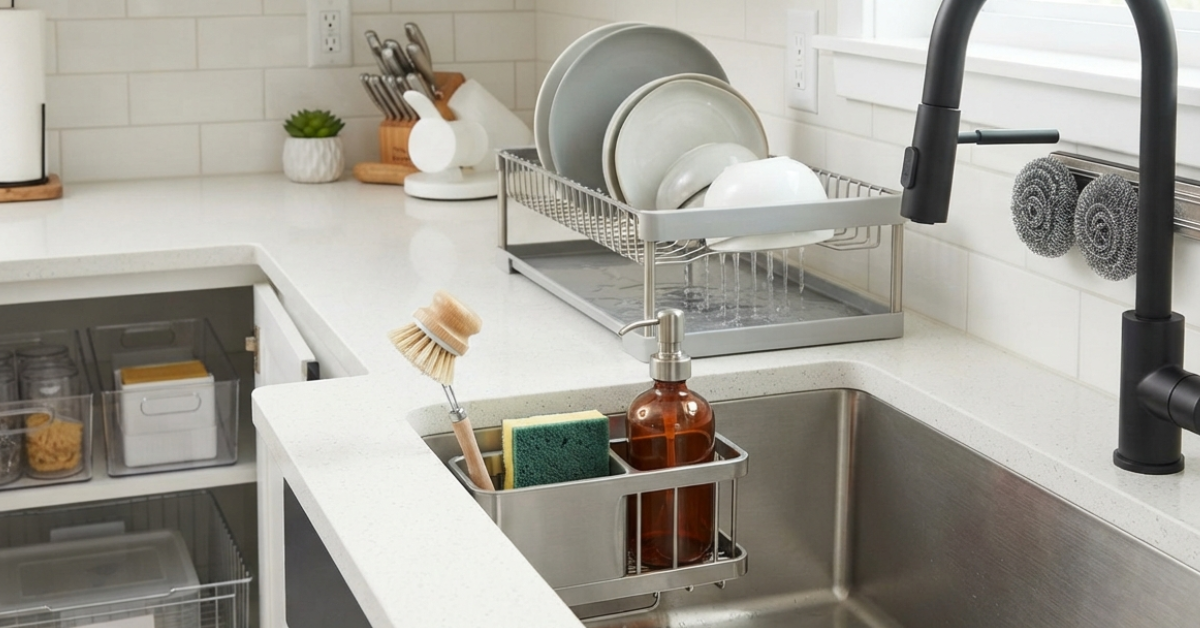
Tackling the wash station requires targeting two main zones: the exposed counter ledge and the hidden cavern underneath. Start by clearing every item out to evaluate what truly belongs near the faucet, ensuring your chosen Sink Organizer handles daily essentials like dish soap, sponges, scrub brushes, and hand lotion within arm’s reach, while everything else finds a designated home elsewhere.
For the exposed counter ledge, swap out messy plastic bottles for matching refillable glass dispensers. Mount a dedicated draining rack directly to the wall or partition to let wet items dry naturally without pooling water on your countertops, utilizing hanging mechanisms to clear flat surfaces completely.
Underneath the basin, the plumbing traps often create awkward obstacles that waste usable square footage. Modular shelving units designed specifically to slide around pipes completely change how you utilize this lower cavity, allowing you to group cleaning supplies into labeled plastic bins so you can pull out an entire category at once.
Maximizing Under-Sink Storage Solutions
The cabinet space beneath your water basin represents prime real estate that is frequently wasted. Transform this dark zone into an organized pantry for cleaning agents and surplus supplies. Install sliding wire drawers or multi-tiered pull-out racks to eliminate the need to crawl on the floor searching for items in the back, making every installed Sink Organizer easy to access.
Hanging spray bottles from a tension rod installed horizontally across the cabinet doors frees up crucial floor space inside the unit. Attach small wire baskets to the interior doors to hold dishwasher tablets, scrub pads, and trash bags, labeling every container clearly to maintain order among family members.
Protect the bottom of your cabinet with a waterproof silicone mat to catch accidental leaks from plumbing fixtures. This simple addition prevents warping of wooden panels and makes cleanup effortless, combining base protection with stackable bins to maximize vertical height.
Essential Countertop Accessories and Drying Racks
Your sink’s perimeter experiences heavy daily traffic, making durability and smart material choices critical. Stainless steel or rust-resistant coated wire accessories withstand constant moisture exposure without deteriorating. Choose modular units that combine soap storage and brush holders into a single compact footprint.
When dealing with washed dishes, a standard flat mat often leaves items damp and promotes mildew. Upgrade to an over-the-sink rolling mat or a dedicated glass plate rack with drip tray that funnels excess moisture straight back into the basin, keeping your surrounding counters completely dry and safe from water damage.
Pro Tip: Always choose organizers with removable drip trays or slanted bottoms, because stagnant water breeds bacteria and creates unpleasant odors around your food preparation areas.
Position your dish-drying infrastructure close to the dominant hand side of your prep station to minimize movement. If space permits, utilize a vertical multi-tier rack to dry bowls, plates, and cutlery simultaneously within a narrow footprint.
Advanced Space-Saving Accessories for Small Kitchens
Compact cooking areas demand innovative fixtures that tuck away when not in use. Multi-functional bridging racks span directly across the basin rim, providing an instant platform for washing vegetables or holding colanders, creating extra workspace without claiming valuable counter square footage.
Consider integrating a pull-out wire system or a specialized sink support rack to reinforce heavy utility bowls and heavy-duty basins. These support structures prevent sagging over time and provide additional storage stability underneath.
Utilize magnetic strips along the backsplash adjacent to your sink zone for metal scrubbing tools and small implements. Keeping metal items off damp surfaces prevents rust stains from forming on your countertops and stone tiles.
Practical Benefits of Upgrading Your Wet Zone Layout
Investing time into optimizing your sink setup yields immediate dividends for your daily culinary routine. A well-organized environment reduces meal prep times by eliminating the frustration of hunting for misplaced sponges or dish soaps, turning kitchen cleanup from a chore into a seamless extension of cooking.
Furthermore, proper airflow design around drying accessories drastically cuts down on mildew accumulation. Elevated wire frames and slanted trays ensure that moisture evaporates quickly or drains directly into the basin, protecting your cabinets from standing water and safeguarding your home infrastructure against costly wood rot.
Comprehensive Comparison of Sink Organization Materials
Selecting the right build material determines the longevity and aesthetic coherence of your kitchen wet zone. Different materials respond uniquely to constant water exposure, cleaning chemicals, and heavy daily impacts.
| Material Type | Corrosion Resistance | Maintenance Effort | Aesthetic Appeal | Best Recommended Use |
| Stainless Steel | High (Grade 304) | Low | Modern / Industrial | Drying racks, under-sink pull-out frames |
| Coated Wire | Medium-High | Low | Clean / Minimalist | Cabinet door baskets, sponge caddies |
| Rigid Plastic / Acrylic | High | Medium | Versatile / Neutral | Storage bins, drawer dividers |
| Solid Wood / Bamboo | Low-Medium | High | Warm / Natural | Decorative accents, keeping away from direct water |
Device-Specific Guides: Tailoring Storage to Your Kitchen Footprint
Every kitchen layout presents unique spatial challenges that dictate how you should deploy your organization tools. For single-bowl farmhouse sinks, the perimeter offers wide ledges that accommodate expansive multi-purpose caddies. You can anchor a heavy-duty multipurpose board holder right alongside your faucet to keep cutting boards and washing screens upright and dry.
Conversely, double-bowl configurations require a more surgical approach to preserve functional washing space on both sides. Dedicate one basin exclusively to active washing while reserving the secondary divider for an integrated drying rack or colander bridge, installing slim-profile sliding wire baskets beneath a split-drain plumbing layout to bypass central pipes.
Selecting a reliable Sink Organizer for these tight spaces requires careful measurement of your plumbing lines before purchasing.
Common Sink Organization Mistakes and How to Fix Them
Many homeowners attempt to organize their kitchen wet zone without auditing their actual usage patterns. Storing rarely used items under the main basin crowds out daily essentials like dish soap and trash bags, so you should keep only active cleaning items in this primary zone.
Another frequent error is ignoring vertical height, since stacking items on top of each other creates unstable piles that tumble down whenever you reach for a specific sponge. Install risers and vertical dividers to keep every item independently accessible, ensuring your chosen Sink Organizer maximizes vertical space correctly.
Failing to measure your plumbing layout before purchasing organizational inserts leads to frustrating returns, meaning you must always measure the clearance between your water pipes, garbage disposal unit, and cabinet doors before buying pull-out drawers or vertical shelves.
Step-by-Step Guide to Maintaining a Clutter-Free Basin Zone
Achieving a tidy wash station requires establishing daily micro-habits rather than massive monthly cleaning overhauls. Follow this straightforward routine to keep your setup pristine year-round:
- Clear at Day’s End: Empty all dirty dishes from the basin every evening, so you wake up to a clean slate.
- Wipe Down Surfaces: Run a microfiber cloth across the counter ledge and faucet base, eliminating water spots and soap residue.
- Purge Expired Items: Once a month, review your under-sink storage, discarding empty bottles and expired cleaning formulas.
- Sanitize Holders: Run your sponge caddies and drying racks through the dishwasher, or wash them in hot soapy water weekly.
By adhering to these simple steps, your kitchen organization will remain immaculate without requiring hours of intense scrubbing and sorting later on, proving that a quality Sink Organizer simplifies daily upkeep.
Future Trends in Modern Kitchen Organization
As kitchen design evolves, smart technology and ergonomic layouts take center stage. Integrated sensor-activated soap dispensers and touchless faucets reduce physical contact, keeping your sink area cleaner and free from messy drips.
Modular aluminum and matte black finishes dominate modern hardware choices, offering sleek aesthetics that resist fingerprint smudges. Manufacturers now design accessories with antimicrobial coatings, actively inhibiting mold growth in damp environments.
Customized drawer inserts with built-in charging stations for waterproof electronic cleaning tools represent the next wave of functional kitchen design. Anticipating these shifts helps you build a timeless, adaptable space that handles future demands effortlessly.
Next Steps & Resource Directories:
[Main Hub] > [Sink & Kitchen Organization Category]
Related Articles:
- Kitchen Pull Out Basket: Maximize Storage With Ease Today
- Pull Out Kitchen Basket: Smart Space Storage Solutions
- Best Pull Out Baskets for Kitchen Wall Cabinets Guide
- Bottle Pull Out Basket: Maximize Kitchen Storage Space
