
Kitchen Cabinet
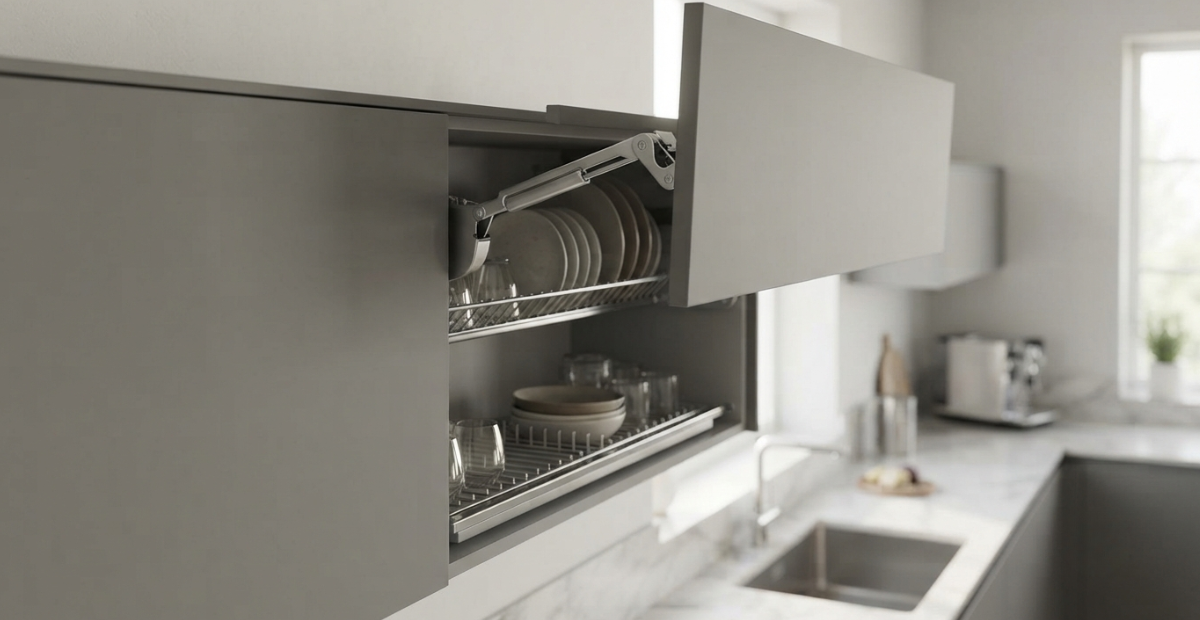
Cabinet Lift Mechanism: Smart Storage for Modern Kitchens
Jul
TL;DR: Upgrading your kitchen with a premium cabinet lift mechanism maximizes hard-to-reach vertical spaces while eliminating awkward bending. By integrating hydraulic lift systems and ergonomic pull-out units, modern homes achieve effortless accessibility and sleek organization. These specialized hardware solutions transform standard cabinetry into high-functioning, space-efficient storage hubs.
The Technical Anatomy of a Cabinet Lift Mechanism
A modern cabinet lift mechanism functions as the engineering backbone of high-tier kitchen ergonomics. Unlike traditional standard cabinet hinges that swing outward into your walking paths, vertical lift systems utilize precise mechanical leverage to shift doors completely out of the way.
Understanding how these engineering components interact helps you choose the correct payload capacity and tension settings for daily kitchen tasks.
Core Structural Components
- Mechanical Counterbalance Arms: Heavy-duty steel structural elements that govern the travel path of the cabinet door.
- Gas-Charged Hydraulic Struts: Pressurized cylinders that absorb door weight to provide weightless, smooth movement during operations.
- Tension Adjustment Screws: Calibration points situated directly on the mechanism body used to balance hardware response based on varying door panel weights.
- Soft-Close Dampening Pistons: Fluid-filled capsules integrated into the arm pivot points that prevent forceful slamming during closure.
Tension Tuning Framework
Proper operation relies entirely on balancing mechanism tension with structural door weight. When the tension is set too loose, heavy wooden cabinet doors will fail to stay open and drop down unexpectedly. Conversely, setting the tension too high causes lightweight acrylic panels to snap upward rapidly, straining your cabinetry frames.
To calibrate safely, always adjust the side tension screws in small half-turn increments symmetrically across both the left and right mechanical arms.
Direct Architectural Comparisons: Vertical Feature Blocks
Selecting optimal storage hardware requires mapping mechanical configurations directly to your spatial limitations and structural layouts.
Cabinet Lift Mechanism
- Best For: Upper cabinetry installations, appliance garages, and over-the-sink storage structures.
- Key Engineering Benefit: Transitions storage access fully to eye level, minimizing facial collision hazards during meal preparation.
- Ideal Architectural Scale: Optimized for small to medium kitchen layouts with vertical clearance.
Kitchen Pull Out Systems
- Best For: Deep base cabinets, under-counter blind corners, and specialized floor-level pantry frameworks.
- Key Engineering Benefit: Pulls hidden components entirely out of deep dark recesses to eliminate physical back bending.
- Ideal Architectural Scale: Universally adaptable to any size kitchen requiring enhanced lower accessibility.
Hydraulic Lift Up System
- Best For: Extra-wide overhead storage doors and integrated microwave enclosing panels.
- Key Engineering Benefit: Offers smooth, space-saving vertical lifting that holds position securely at any open angle.
- Ideal Architectural Scale: Highly recommended for small, narrow galley layouts where standard door clearance is restricted.
Cutlery Organizer Inserts
- Best For: Shallow top drawers located near primary food preparation countertops.
- Key Engineering Benefit: Prevents chaotic tool shifting, eliminates internal drawer clutter, and shields delicate utensil edges.
- Ideal Architectural Scale: Universally critical across all kitchen footprints to streamline cooking workflows.
Deep-Dive: Maximizing Lower Cabinet Spaces with Pull Out Infrastructure
While upper cabinets rely on vertical overhead lifts, base cabinetry demands structural pull-out technology to stop manual reaching strains. Transitioning lower cabinets into sliding drawer configurations increases usable volume by ensuring every inch is reachable.
+——————————————————————-+
| PRO TIP: Structural Load Calculations |
| Before mounting a multi-tier pantry pull-out system, calculate |
| the total combined weight of your stored goods. Standard side- |
| mounted soft-close runners support up to 35kg, whereas heavy-duty |
| bottom-mounted undermount slides handle up to 70kg safely. |
+——————————————————————-+
Integrating dynamic lower storage requires analyzing layout objectives. Heavy cookware and dry pantry items require tailored configurations to ensure proper operation:
- Pantry Storage Organization: Utilizing multi-tiered towers allows your entire dry goods inventory to slide outward under a smooth, fluid motion. For comprehensive floor-to-ceiling organization, consider implementing a dedicated six-layer tall unit basket to maximize your vertical pantry efficiency.
- Cookware Stabilization: Storing heavy cast-iron skillets or large stainless steel pots inside deep drawers prevents counter clutter. Specialized sliding bases such as an engineered thali plate basket keep specific dining wares upright and safely anchored during transit.
- Corner Void Reclamation: Blind corner cabinets traditionally turn into dead, unusable kitchen real estate. Installing articulating tray configurations allows hidden shelves to pivot clear of the cabinet opening, exposing overlooked storage space.
Advanced Upper Cabinet Ergonomics and Over-the-Sink Management
Upper cabinetry requires hardware solutions that focus on safety and smooth accessibility. Implementing drop-down shelves and high-lifting vertical doors creates an accessible workspace safe from projecting corners.
Managing the immediate wet zone directly above or surrounding kitchen sinks requires specialized moisture-resistant configurations. Wet plates and glasses should sit over integrated catchment surfaces to protect lower countertops:
- Active Dish Draining: Mounting open-bottom rack systems directly above your washing area lets residual moisture drain straight into the sink basin. Incorporating a robust glass plate rack with drip tray forms a clean, organized, and rust-resistant drying zone.
- Ergonomic Downward Extraction: Drop-down mechanical baskets use gas-assisted mechanical springs to pull upper shelves downward and outward. This design allows short users to safely handle heavy glassware sets without needing dangerous step stools.
- Horizontal Overhead Clearance: Bi-fold lift systems fold cabinet doors in half horizontally as they rise upward. This keeps the lower edge of the door well above your head, allowing you to move freely along the counter while unpacking groceries.
Strategic Appliance Integration and Countertop Ventilation
A functional modern kitchen balances hidden storage engineering with cooking power and ventilation placement. Incorporating structural appliance lifts creates clean, minimalist spaces without compromising on heavy tool utility.
- Heavy Stand Mixer Lifts: Spring-loaded heavy-duty mechanical lifts easily elevate 15kg food processors up to countertop level, locking into place securely to handle high-vibration mixing cycles.
- Retractable Microwave Enclosures: Utilizing a smooth hydraulic lift up system creates clean concealment panels that glide vertically, hiding small utility appliances when they are not actively in use.
- Ventilation Alignment: High-performance cooking zones demand proper overhead extraction systems to clear grease and moisture. Installing a sleek TV hood directly above your range creates an open cooking space while removing fumes efficiently.
Common Hardware Installation Mistakes and Diagnostic Fixes
Even premium cabinet lift mechanisms can underperform if improperly installed or aligned. Avoid these frequent installation errors to ensure a long operational lifespan for your custom cabinetry.
1. Symmetrical Alignment Discrepancies
- The Issue: The cabinet door lifts unevenly, creates crooked gaps along outer frame margins, or binds midway through its opening cycle.
- The Fix: Use a digital level to confirm left and right mounting brackets sit on identical horizontal planes. Adjust the integrated alignment screws on the mounting arm to correct millimeter-level tilting.
2. Over-Torqued Tension Settings
- The Issue: The door rises too quickly, forcing the cabinet box to shake, or requires substantial manual effort to pull back down.
- The Fix: Locate the main tension calibration screw on both mechanical units. Turn the adjustment screw counterclockwise in small increments until the door rests motionless at any position.
3. Disregarding Spatial Clearance Parameters
- The Issue: The lifting arm or ascending door strikes overhead ceiling beams, protruding light fixtures, or adjacent decorative molding.
- The Fix: Install mechanical angle restriction clips directly inside the hinge pivot casing. These physical blocks reduce maximum door travel angles from 110 degrees down to 90 or 75 degrees.
2026 Future Trends: The Evolution of Intelligent Kitchen Architecture
The kitchen landscape in 2026 centers on tactile simplicity, multi-functional automation, and ultra-silent mechanical operations. Hardware design has moved past loud, manuallatches into smart, low-profile kinetic systems.
Motorized Push-to-Open Automation
Voice-controlled and touch-activated motorized lifting systems are altering modern accessibility standard norms. A gentle tap on a handleless cabinet front signals an electric servo motor to silently lift heavy wooden panels out of your way.
Silent Kinetic Dampening Material Science
Advanced carbon-fiber composite materials and self-lubricating synthetic polyoxymethylene gears are replacing traditional heavy steel components. This material evolution eliminates metallic clicking, creating completely silent movement profiles.
Architectural Space Optimization
As urban homes move toward smaller footprints, multi-functional hardware becomes a necessity. Future layouts use flexible mechanical components that adjust to changing storage needs, seamlessly turning a workspace into a minimalist entertainment area.
High-tier sliding runners and lift components require minimal maintenance but should be wiped clean of kitchen dust, loose flour, and grease build-up every six months. Avoid spraying harsh chemical degreasers directly onto the mechanical arms, as this strips the factory-applied internal dampening lubricants.
Optimizing your workspace with a premium cabinet lift mechanism creates an ergonomic, accessible, and highly efficient kitchen environment for years to come.
Next Steps & Resource Directories
Browse Full Directories
Main Hub > Kitchen Accessories
Related Articles
- Premium Multi-Tier Pantry Pull-Out Systems Selection Guide
- Optimizing Over-the-Sink Organization and Drainage Workflows
- Modern Cooking Zone Ventilation and Cooktop Layout Planning
