
Kitchen Racks
Best Spice Rack Ideas for Organized Kitchen
Aug
Stop wasting time searching for ingredients in a cluttered cupboard. This guide provides actionable, professional-grade strategies to maximize your kitchen storage, ensuring every spice, utensil, and accessory has a functional, accessible home.
Solving the Spice Storage Challenge: A Technical Approach
The biggest mistake homeowners make is treating spice storage as an afterthought. In modern, compact apartments, your spice rack must balance accessibility with preservation. Heat, moisture, and light are the enemies of longevity for your spices.
When planning your storage, prioritize these three factors:
- Frequency of Use: Your most-used spices (turmeric, chili powder, cumin) should be at eye level or within immediate reach of your stove.
- Environmental Shielding: Ensure your storage area is away from direct heat sources like your gas stove to prevent moisture buildup.
- Visual Inventory: Use clear, labeled containers that allow you to identify contents without moving them.
Optimizing Your Cabinet Organizers
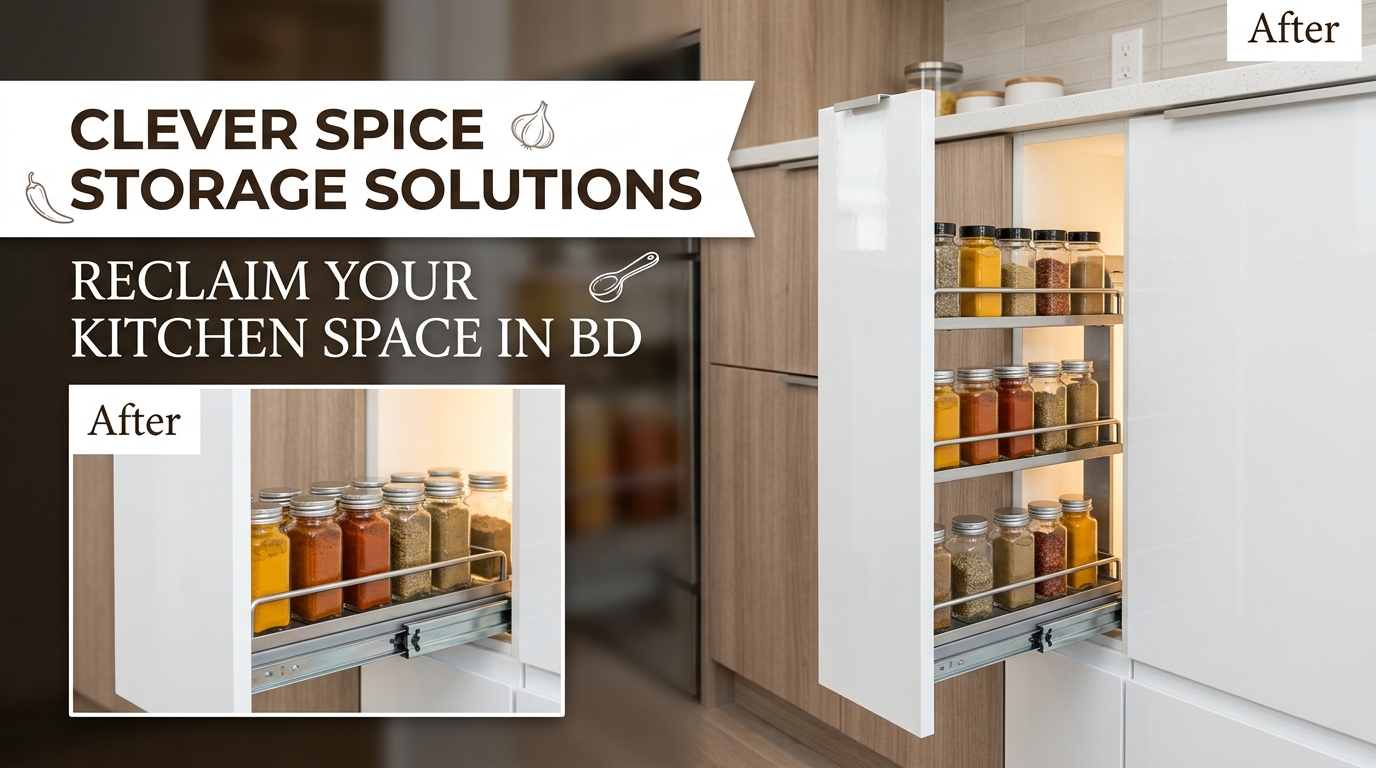
Effective cabinet organizers are the backbone of any functional kitchen. Instead of stacking jars, utilize vertical space with tiered shelving or pull-out systems. If you have deep cabinets, the back corners often become “dead space” where items are forgotten. Installing a 180-degree revolving basket turns these unreachable corners into prime real estate for bulk spice jars or heavy bottles.
The Role of Modular Kitchen Design
True efficiency in a modern kitchen comes from a cohesive modular kitchen design. In 2026, the trend is shifting toward integrated storage that hides the clutter of daily life.
By utilizing custom-fitted units, you ensure that every square inch of your cabinetry serves a specific purpose. For those tight on space, incorporating a dedicated spice bottle rack directly into a pull-out spice unit near the cooking area creates a seamless, professional workflow.
Essential Kitchen Storage Solutions for 2026
You do not need a massive kitchen to have a massive impact on your organization. The goal is to move items off the countertop and into structured, secure locations.
Vertical Storage Maximization
Wall-mounted systems are your best friend in a smaller floor plan. A simple hanging glass rack or a tiered shelf above your prep area can save your countertops from becoming crowded. This keeps your workspace clear for actual cooking, which is vital for safety and speed.
Stainless Steel Fittings for Durability
In the humid climate of Bangladesh, material choice determines the lifespan of your kitchen. Always opt for high-grade stainless steel fittings. They resist corrosion from cooking steam and provide the structural integrity needed to hold heavy cast-iron cookware or fully stocked spice racks. Cheap plastic alternatives often crack under pressure and degrade within months.
Advanced Drawer Management
Drawers are frequently underutilized. Most people throw utensils into a single drawer, creating a tangled mess. Implementing a structured cutlery basket or adjustable divider system allows you to separate your spoons, knives, and prep tools by frequency of use.
Troubleshooting Common Organization Pitfalls
Even with the best hardware, you can run into issues if the layout is poor. Here is how to fix common problems:
| Issue | Root Cause | Solution |
| Cramped Countertop | Lack of vertical storage | Install wall-mounted racks |
| “Dead” Cabinet Corners | Poor hardware choice | Use revolving corner baskets |
| Rusted Hardware | Low-quality materials | Upgrade to 304-grade stainless steel |
| Difficult Access | Items stored too deep | Install full-extension pull-outs |
Ventilation and Atmosphere Control
An organized kitchen is also a clean one. If your kitchen suffers from grease buildup, your storage systems will eventually become sticky and difficult to clean. A robust chimney hood is essential. It pulls smoke and grease particles out of the air before they can settle on your spices or inside your cabinets, significantly reducing the frequency of deep-cleaning sessions.
Designing for Workflow: The Golden Triangle
Interior designers focus on the “Golden Triangle” the path between your stove, sink, and refrigerator. Your storage should be placed along this path.
If you are seasoning a dish, your spice rack should be located between the stove and the prep area. Placing it across the room forces unnecessary movement, increasing the likelihood of spills and slowing down your cooking rhythm.
Future Trends in 2026 Kitchen Hardware
As we look deeper into 2026, the focus is on “invisible storage.” Homeowners are moving away from open shelving (which collects dust) toward handleless, soft-close cabinet systems.
These systems look cleaner and offer a more sophisticated aesthetic. Pairing these with interior motion-sensor lighting ensures that you can see exactly what you need, even in the back of a deep pantry.
Maintaining Your Kitchen Systems
A system is only as good as its maintenance.
- Monthly Wipe-Down: Use a damp, soft cloth to clean stainless steel fittings. Avoid harsh chemicals that can strip the protective layer of the metal.
- Weight Audits: Don’t overload your baskets. Even the strongest steel can bow if weight limits are consistently exceeded.
- Check Alignments: Every six months, check the screws on your hinges and pull-out tracks to ensure they are tight and properly aligned.
Pro Tips for Success
- Label Everything: Even if you think you know which jar is which, consistent labeling saves seconds during high-pressure cooking.
- Use Uniform Jars: Replacing mismatched original spice containers with uniform glass jars makes your storage area look twice as large and organized.
- Go Up, Not Out: Whenever possible, use your wall height for storage rather than taking up floor or counter space.
A well-organized kitchen is the foundation of a stress-free home. By selecting the right storage solutions and prioritizing quality materials, you can create a cooking space that is both visually stunning and incredibly efficient.
- Next Steps & Resource DirectoriesBrowse Full Directories
Kitchen Storage Solutions > Modular Accessories > Hardware & Fittings
Related Articles
