
Kitchen Hood
Kitchen Hood Vent Guide: Types, Benefits, Plus Smart Tips!
Aug
In 2026, the modern kitchen hood vent has evolved from a simple exhaust fan into a sophisticated air-management system essential for home health and design. This guide provides the technical expertise needed to select, install, and maintain the perfect ventilation solution for your specific kitchen layout.
Why Your Kitchen Needs a Professional-Grade Hood Vent
Modern home ventilation is essential for indoor air quality. Cooking generates dangerous airborne toxins, carbon monoxide, and fine particulate matter that linger inside living spaces.
Installing an efficient kitchen hood vent actively protects your respiratory health, stops stubborn grease buildup on surrounding cabinetry and walls, ensuring a significantly safer and cleaner home cooking environment today.
Beyond health, a high-quality hood vent prevents your smoke alarm from being triggered by routine cooking. By maintaining a clean, grease-free environment, you significantly reduce the time spent on deep cleaning and prolong the lifespan of your surrounding kitchen surfaces.
Choosing the Right Hood Based on Kitchen Size
Selecting the correct size is the most common technical error homeowners make. The rule of thumb for 2026 is simple: the hood should be at least as wide as your cooking surface to ensure total capture of fumes.
| Kitchen Size | Recommended Hood Type | Key Technical Benefit |
| Small | Under-Cabinet / Slimline | Space-saving, low profile |
| Medium | Chimney Wall-Mount | Strong suction, aesthetic appeal |
| Large | Island / Pro-Style Hood | High CFM for heavy-duty cooking |
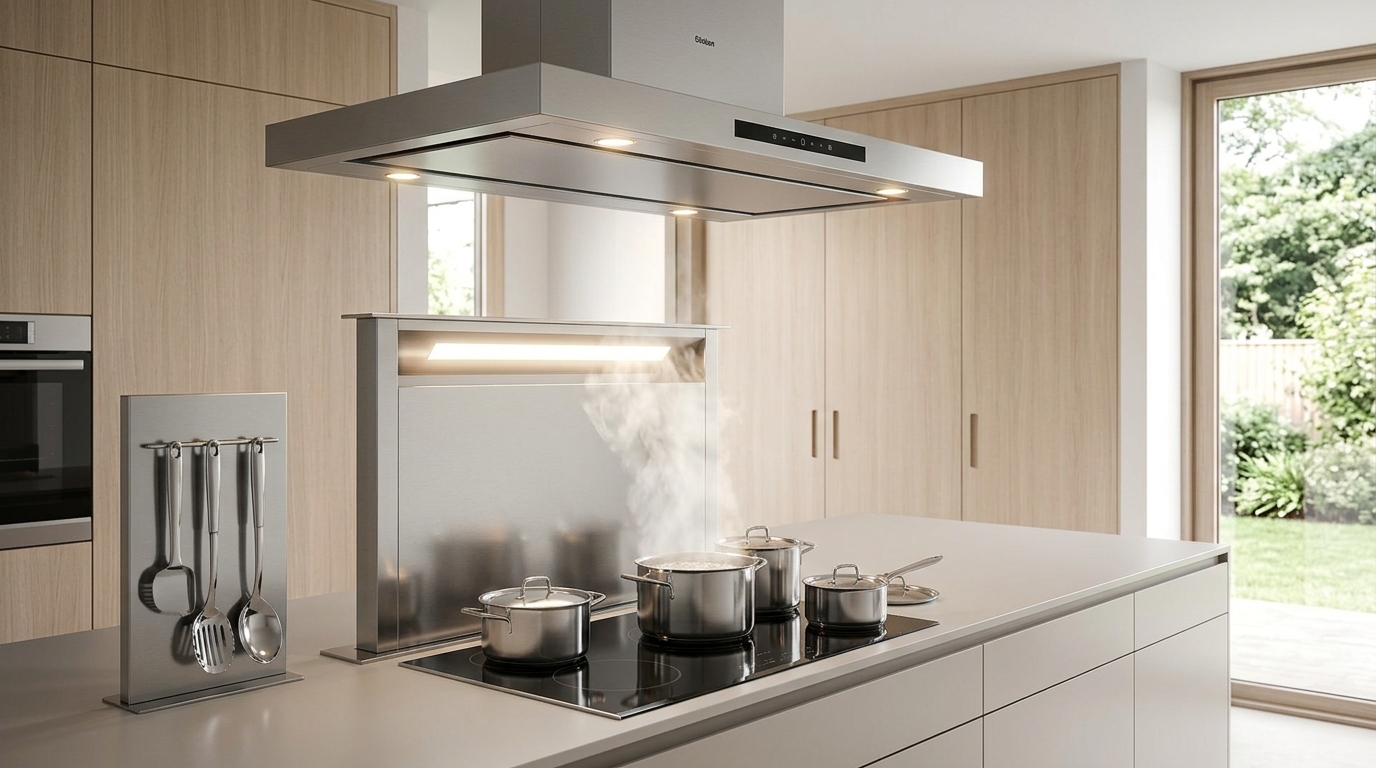
For those with limited space, a hood-1-0000 offers a compact profile without sacrificing necessary airflow. If you have an open-concept layout, consider an island or chimney-style unit that acts as a design centerpiece while providing high-performance ventilation.
Understanding Ventilation: Ducted vs. Ductless Systems
The “heart” of your ventilation system determines its efficiency.
- Ducted (Vented): This system physically removes air, smoke, and moisture to the outside of your home. It is the gold standard for high-BTU gas burners and heavy stir-fry cooking.
- Ductless (Recirculating): This method uses charcoal filters to scrub the air before returning it to your kitchen. It is ideal for apartments or homes where exterior ducting is structurally prohibited.
The 2026 Smart Kitchen Evolution
Modern technology completely transforms the kitchen hood vent.Contemporary models feature touchless gesture-control interfaces, letting you adjust fan speeds without greasy hands.
Advanced optical smoke sensors automatically ramp up suction power the exact moment smoke or steam is detected, removing guesswork so you can enjoy cooking with total peace of mind every single day.
Essential Maintenance for Longevity
A vent hood is only as effective as its filters. Grease buildup can drastically reduce suction and increase motor noise.
Pro Tip: Make it a habit to soak your metal mesh filters in a hot water and degreasing solution every two weeks. For charcoal filters in ductless models, replace them every 3–6 months to maintain optimal air scrubbing performance.
If your unit’s suction seems sluggish, check the ducting for blockages or consider upgrading to a hood-5-0000 that supports higher static pressure, which is vital for homes with long duct runs.
Common Mistakes to Avoid
- Installing too high: For gas stoves, keep the hood between 65–80 cm above the surface. Too high, and the smoke escapes; too low, and you risk heat damage.
- Ignoring CFM ratings: If you have a large kitchen, ensure your CFM (Cubic Feet per Minute) matches your stove’s output. A weak motor in a large space is essentially useless.
- Neglecting Makeup Air (MUA): In very tight, energy-efficient homes, a powerful hood might struggle if there is no path for replacement air. Ensure your kitchen has a source of fresh air intake.
Integrating Storage for a Seamless Kitchen
While you optimize your air quality, consider the physical organization of your space. A clutter-free kitchen allows for better airflow around your appliances. Incorporating a spoon-rack or a spice-bottle-rack keeps your countertops clear, which is a major trend for 2026’s “invisible kitchen” aesthetic.
Future Trends: The “Invisible” Kitchen
The goal in 2026 is visual calm. Appliances are becoming quieter and more integrated. The rise of “disappearing” ventilation such as downdraft units that rise from the counter allows you to maintain an unobstructed view in your kitchen. This approach keeps your work zone functional while ensuring the room feels like an extension of your living space rather than just a utility area.
By prioritizing these ventilation and organization strategies, you turn your kitchen into a sanctuary of health, efficiency, and timeless style.
-
Next Steps & Resource Directories
Browse Full Directories
Related Products & Storage Solutions
