
Kitchen Organization & Maintenance
How to Maintain Elevator Basket Kitchen Cabinets: 2026 Guide
Jul
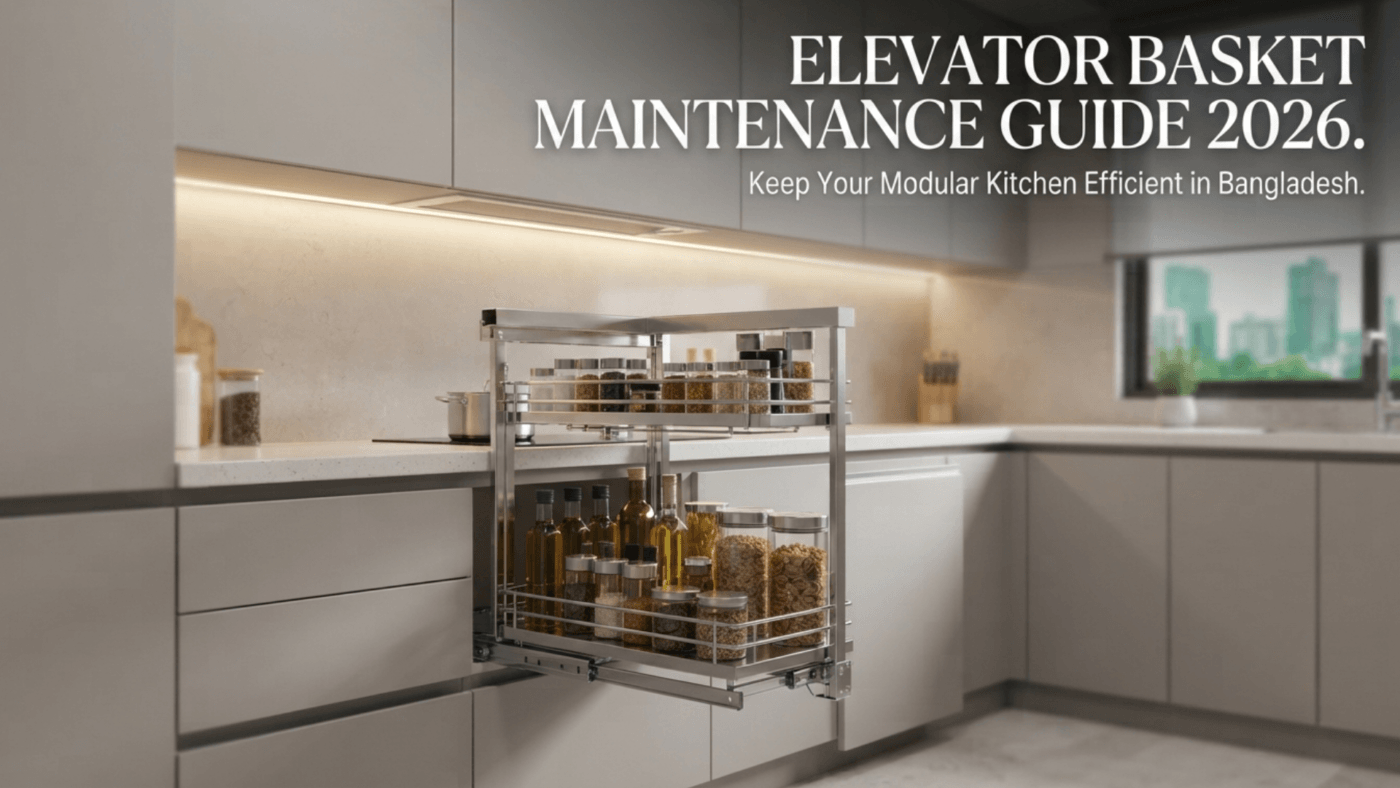
Elevator baskets,often referred to as pull-down or lift-up storage systems,represent the pinnacle of ergonomic kitchen design. In the dense urban landscape of Bangladesh, where every square inch of kitchen space directly impacts your quality of life, these systems are no longer a luxury; they are a necessity for modern apartment living.
By transforming deep, dark, and unreachable base or wall cabinets into highly accessible storage hubs, elevator baskets minimize physical strain and maximize efficiency.
However, these sophisticated mechanical systems are not “install-and-forget” units. They operate on complex hinges, dampeners, and track systems that require diligent care. This 2026 guide serves as your authoritative resource for maintaining these systems, ensuring your kitchen remains a high-performance sanctuary for years to come.
The Critical Importance of Kitchen Storage Organization in 2026
Modern kitchens are evolving into the high-tech hubs of the home. In cities like Dhaka, where real estate costs are high and kitchen footprints are often compact, organizational integrity is vital. A chaotic, disorganized kitchen leads to several hidden costs: damaged ingredients, warped cabinet doors, and premature failure of expensive stainless steel cabinet fittings.
Properly maintained storage systems do more than just look clean. They promote hygiene by ensuring proper airflow around your appliances and dry goods, preventing the buildup of mold and mildew in our humid environment. When you invest in a modular storage solution, you are investing in a system designed to streamline your daily workflow. The challenge lies in sustaining that functionality amidst daily heavy usage.
Understanding the Anatomy of Your Elevator System
To maintain your baskets, you must understand how they function. Most elevator baskets utilize a scissor-lift mechanism or a high-tension gas-spring system.
1. The Rail and Slide System
The backbone of your basket is its sliding track. This is where most mechanical failures begin. Dust, food particles, and aerosolized cooking grease settle into these tracks, creating a gritty surface that acts like sandpaper against the bearings.
2. The Dampening Hardware
The “soft-close” feature of your basket is controlled by a hydraulic dampener. If this part fails, the basket will slam shut, sending shockwaves through your cabinetry that can weaken the mounting screws over time.
3. The Structural Frame
The basket itself is usually high-grade steel, but it is supported by mounting brackets attached to your wooden carcass. The tension here is delicate; if the basket is overloaded, these brackets can shift, causing the entire unit to become misaligned.
Step-by-Step Maintenance Routine for Maximum Longevity
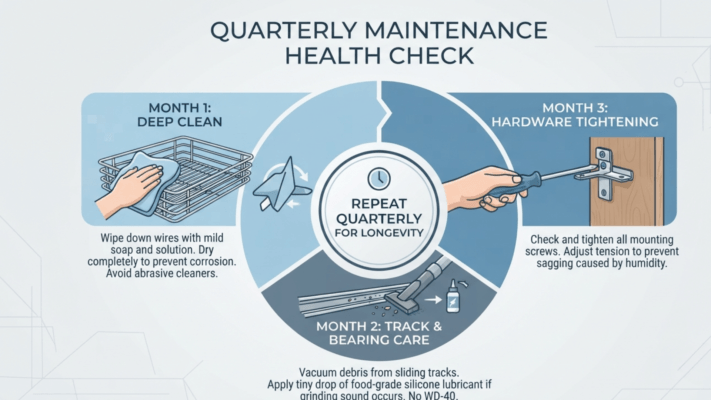
Consistency is the secret to a long-lasting kitchen. We recommend a “Quarterly Health Check” for all moving kitchen parts.
Month 1: The Deep Clean
Remove every item from your elevator basket. Use a soft, non-abrasive cloth and a mild soap-and-water solution to wipe down the wires. Avoid bleach or heavy-duty industrial cleaners, as these can pit the stainless steel. Ensure the unit is completely dry before reloading it, as trapped water leads to corrosion.
Month 2: Track and Bearing Care
Use a vacuum with a narrow crevice tool to suck out any debris from the sliding tracks. If you hear a faint grinding sound, apply a tiny drop of food-grade silicone lubricant to the track. Do not use WD-40 or heavy axle grease, as these will eventually attract dust and create a thick sludge that will jam your system.
Month 3: Hardware Tightening
With a screwdriver that matches the head size of your mounting screws (to prevent stripping), check every point where the system attaches to the cabinet wall. Humidity fluctuations in Bangladesh can cause wood to expand and contract, which subtly loosens screws over time. A quick tighten prevents the basket from “sagging.”
Expert Strategies for Small Apartment Kitchens
Small kitchens require a different approach to storage. If you are struggling with a tiny footprint, use these kitchen storage organization tips to optimize your space:
- Vertical Prioritization: Store your most frequently used items (oils, salt, spices) at eye level in your elevator basket.
- Use a spice bottle rack to keep these organized rather than letting them clutter your countertops.
- Corner Optimization: The “dead corner” is a kitchen’s greatest enemy.
- Installing a 360-degree revolving basket allows you to access items that would otherwise be lost in the back of the cabinet.
- The Sink Zone: Moisture is the enemy of all cabinets.
- Keep your sink area dry by using a glass plate rack with drip tray so that water drains directly into the basin rather than onto your cabinet base.
The “Modular Kitchen Maintenance BD” Checklist
Modular kitchens are excellent, but they require a different mindset than traditional carpentry. Here is your quick-reference table for long-term efficiency:
| Component | Frequency | Action |
| Baskets & Racks | Monthly | Wipe with microfiber cloth; check for rust spots |
| Slide Rails | Quarterly | Vacuum debris; apply silicone lubricant if needed |
| Hinges/Dampeners | Bi-Annually | Test the soft-close; tighten mounting screws |
| Ventilation (Chimney) | Monthly | Wash or replace filters; clean external residue |
| Weight Load | Ongoing | Ensure you are not exceeding the max kg capacity |
Common Mistakes That Ruin Your Kitchen Fittings
Even expensive, high-end hardware will fail if used incorrectly. Avoid these common pitfalls to protect your investment:
1. Overloading the System
Every elevator basket has a manufacturer-specified weight limit. When you overload these units, the hydraulic dampeners have to work twice as hard to stabilize the basket. Over time, this “bottoms out” the piston, causing the basket to slam or become stuck in the “down” position.
2. Ignoring “Tea Staining”
Stainless steel is “stain-less,” not “stain-proof.” If you live near high-traffic areas or coastal regions, salt and pollutants can land on the surface of your plate and dish holder. If left uncleaned, these microscopic particles cause brown spots. Clean these immediately with a dedicated stainless steel polish.
3. Misaligned Installation
This is a critical error. If a basket is installed even 2mm off-center, the weight distribution is uneven. This puts asymmetrical stress on the bearings, leading to premature track wear. If your basket feels like it “pulls” to one side, have a professional re-align the brackets immediately.
Future Trends: The Smart Kitchen of 2026
The kitchen of 2026 is moving toward total integration. We are seeing a rise in:
- Integrated Lighting: High-quality modular baskets now feature battery-operated LED motion sensors that illuminate the basket as soon as it is pulled out, making it easier to see items in the back.
- Push-to-Open Systems: Moving away from handles, the latest trends in BD involve clean, flat-front cabinets that open with a gentle push, reducing the external clutter of handles and knobs.
- Anti-Bacterial Finishes: New hardware is being coated with nano-level protective layers that inhibit bacterial growth—a major win for modern hygiene-conscious homes.
Troubleshooting: Quick Fixes Before You Call a Pro
Before spending money on a technician, try these three professional-grade troubleshooting steps:
- The “Stutter” Fix: If your basket stutters while moving, it is almost certainly debris. Take a flashlight and look deep into the track. Even a small piece of loose plastic or a dried spice spill can obstruct the ball bearings.
- The “Slow” Fix: If the basket rises too slowly, the dampener may be cold (common in winter) or dirty. Gently cycle the basket up and down 5-10 times. If that doesn’t work, ensure the track is lubricated.
- The “Squeak” Fix: Squeaks are rarely mechanical failures; they are usually friction issues. Clean the track first. If the noise persists, apply a tiny amount of dry-film lubricant—not oily grease—to the contact points.
Pro Tip: Never use abrasive scrubbers like steel wool on your baskets. They will scratch the protective oxide layer of the stainless steel, inviting rust to form in those exact scratches within weeks. Always use a soft cloth or a specialized non-scratch nylon pad.
Why Quality Matters: The Hidden Cost of Cheap Hardware
We have all seen it: the “budget” kitchen renovation that looks perfect on Day One but falls apart by Year Two. The difference is the hardware. When selecting your long-lasting kitchen accessories, prioritize:
- Material Certification: Look for high-grade steel. If the supplier cannot tell you the grade (e.g., 304 stainless steel), avoid it.
- Weight Capacity Testing: Ask to see the spec sheet for the basket. A good unit will handle at least 15-20kg without bowing.
- Warranty Support: A local brand that offers a 2-year warranty on mechanical parts is far superior to a “no-name” import that offers none.
Creating a Sustainable Kitchen Culture
Ultimately, a functional kitchen is about more than just the cabinets; it is about the culture you create within your home. Teaching every family member to treat the hardware with respect—not slamming drawers, not overloading baskets, and cleaning spills immediately—is the final and most important step in maintenance.
Your kitchen is a complex machine. Treat it with the same care you would a car or a computer. When you maintain your elevator baskets and modular fittings, you aren’t just protecting metal and wood; you are ensuring that your daily life is efficient, organized, and stress-free.
Final Summary: Your Action Plan
- Check: Inspect your tracks and hinges for debris or misalignment this weekend.
- Clean: Establish a monthly schedule for wiping down all stainless surfaces.
- Optimize: Re-evaluate your storage layout every six months to ensure high-use items are easily reachable.
- Connect: Follow local kitchen storage experts for updates on new modular solutions that fit your specific apartment layout.
By following this guide, your kitchen will continue to serve as the heart of your home, looking and functioning as perfectly in 2030 as it does today.
Next Steps & Resource Directories
Browse Full Directories
[Kitchen Main Hub] > [Cabinet Hardware] > [Elevator & Pull-out Systems] > [Sink & Ventilation Solutions]
Related Articles
- How to Properly Maintain Your Kitchen Sink for Longevity
- Best Kitchen Baskets & Modular Kitchen Design Accessories
- A Comprehensive Guide to Buying the Best Gas Burner Online
- How Kitchen Drawer Baskets Can Simplify Your Life
