Kitchen Dustbin
Best Kitchen Dustbin 2026: Your Guide to a Hygienic Home
Jul
Modern kitchens in Bangladesh require more than just a place to toss scraps; they demand a sophisticated waste management strategy that counters our unique humid climate. This guide explores the most effective, hygienic, and space-saving dustbin solutions to ensure your cooking environment remains organized, pest-free, and remarkably odor-free.
Choosing the Right Dustbin: A Technical Breakdown
Selecting the best dustbin for kitchen utility starts with understanding your specific space constraints and waste volume. In 2026, the industry has shifted from simple containers to integrated, smart-handling systems that prioritize ergonomics.
- Assess Your Volume: For large families, prioritize high-capacity bins with secure, air-tight lids to contain moisture and odors effectively.
- Measure Your Cabinetry: If opting for a pull-out model, ensure your base cabinet dimensions allow for full extension and easy access without interfering with plumbing.
- Material Integrity: Always select stainless steel or high-density, moisture-resistant polymers to prevent rust and bacterial growth, which are prevalent in our high-humidity environment.
- Lid Mechanism: Touch-free or pedal-operated lids are non-negotiable for hygiene, as they prevent cross-contamination during meal preparation.
Why Kitchen Waste Management Matters in BD
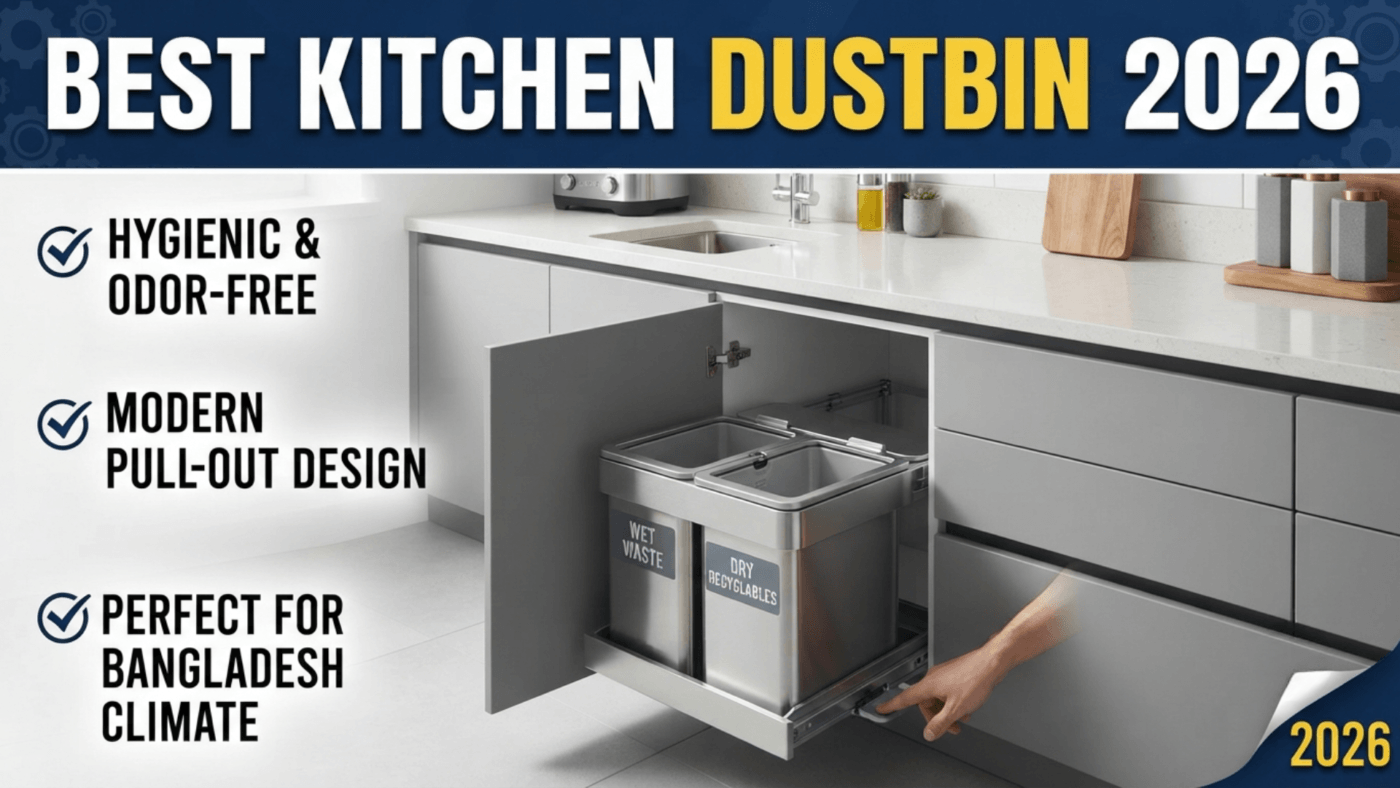
In urban environments like Dhaka, managing organic waste is your primary defense against pests and humidity-driven decay. Proper disposal prevents the accumulation of moisture, which is the leading cause of cabinet board swelling and structural damage in tropical climates. By utilizing modern pull-out systems, you create a dedicated “disposal zone” where waste is processed instantly rather than accumulating on counters.
Designing a Hygienic Workflow
A truly efficient kitchen workflow dictates that the waste disposal point must be within arm’s reach of your primary prep zone. When your bin is located beneath the sink or adjacent to your sink support rack, you minimize the distance between chopping boards and the disposal unit. This simple layout adjustment significantly reduces the chance of food particles falling onto your floor or workspace.
The Ergonomic Triangle
Think of your kitchen as a workspace. The most efficient layout creates a “triangle” flow between your storage, preparation, and waste areas. By embedding your waste management system into the lower cabinetry, you keep your floor space clear, making it easier to sweep and mop—a critical necessity in any clean home.
Comparison: Open vs. Integrated Bins
Understanding the functional difference between traditional and modern systems is vital for long-term kitchen health.
| Feature | Open Waste Bin | Integrated Pull-Out Bin |
| Hygiene | Low (exposed waste) | High (contained & sealed) |
| Space | Consumes floor area | Consumes cabinet space |
| Aesthetics | Visible/Cluttered | Seamless/Hidden |
| Convenience | High accessibility | Requires cabinet movement |
Essential Components for Modern Organization
- Pull-Out Bin Systems: Hidden, floor-clearing solutions that maintain a minimalist aesthetic and keep waste out of reach from pets or children.
- Multi-Compartment Bins: Critical for separating dry recyclable materials from wet organic waste, which is the cornerstone of responsible home management.
- Ventilated Bins: Specifically designed to increase airflow, which prevents the build-up of fermentation odors, especially useful in the peak of the monsoon season.
Common Mistakes to Avoid
The most frequent error homeowners make is ignoring cabinet dimensions. Before purchasing, verify the internal clearance of your cabinets, accounting for hinges and existing plumbing pipes.
Another mistake is opting for low-grade plastic that absorbs odors over time; always prioritize non-porous surfaces that are easy to sanitize with a vinegar solution. Finally, ensure your bin is never placed directly next to the gas stove, as heat can accelerate material degradation and odor production.
Future Trends in 2026: The Invisible Kitchen
The design philosophy for 2026 centers on “invisible utility.” We are seeing a significant rise in automated, soft-close mechanisms and hydraulic pedal systems that require zero hand contact. Homeowners are increasingly choosing units that integrate seamlessly into multi-drawer racks, keeping the visual field clear and the kitchen experience focused entirely on the art of cooking.
Pro Tips for Odor Prevention
- Layering: Place a small amount of baking soda or activated charcoal at the bottom of the bin to naturally neutralize pungent odors.
- Liners: Always use high-density, heavy-duty liners to prevent leaks that can damage the base of your cabinetry.
- Sanitization: Sanitize your bin interior weekly with a natural vinegar solution. During the monsoon, consider leaving the bin in a well-ventilated area for an hour after cleaning to ensure it is bone-dry before inserting a new liner.
Conclusion
Investing in the best dustbin for kitchen use is a fundamental step toward a more hygienic, organized, and modern home. By prioritizing durable materials, ergonomic placement, and integrated designs, you can transform your kitchen into a functional space that stands the test of time.
Resource Directories
- [Main Hub] > [Modular Accessories] > [Waste Management Systems]
- [Sink Support & Care] > [Modern Kitchen Sinks]
- [Organizational Racks] > [Drawer & Basket Systems]
