
Kitchen Products
Kitchen Exhaust Chimney Buying Guide for Modern Homes
Jul
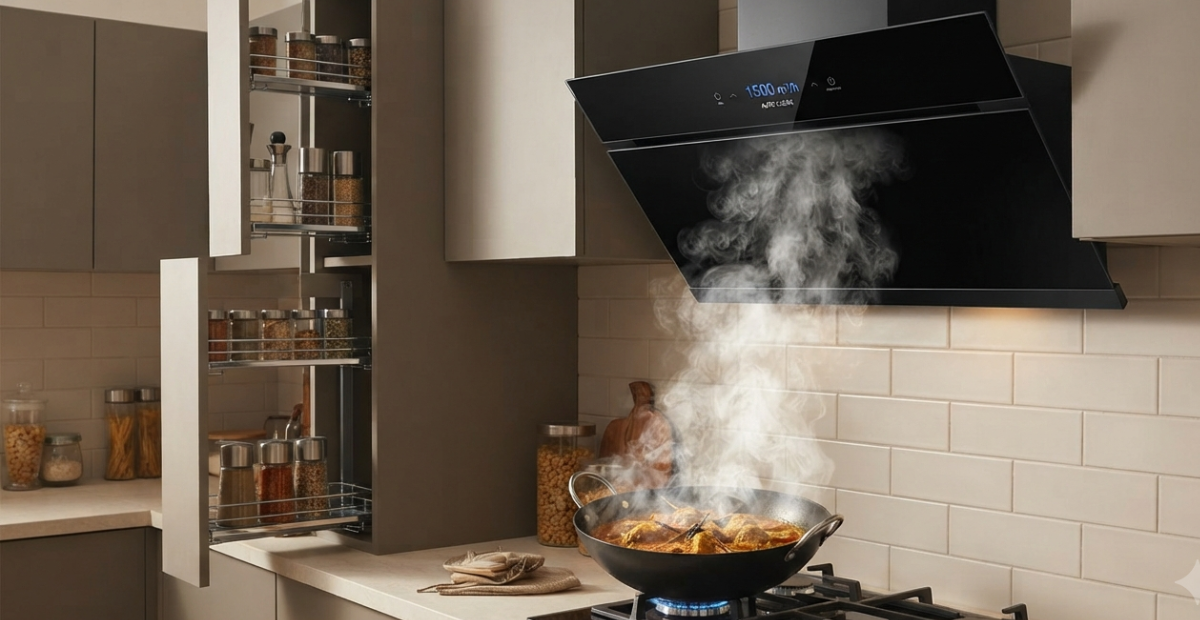
Installing a high-performance kitchen exhaust chimney eliminates toxic smoke, airborne grease, and oppressive heat from your cooking space within seconds. Modern Bangladeshi cooking involves high-heat mustard oil frying, heavy spice roasting, and long simmering sessions that rapidly degrade indoor air quality and coat cabinetry in sticky grime.
This comprehensive guide analyzes suction metrics, auto-clean technology, modular storage integration, and current local pricing so you can select the perfect ventilation system for your home.
Technical Breakdown: Matching Suction Power to Cooking Styles
Selecting the correct airflow capacity is the most critical factor when investing in an electric kitchen hood. Ventilation efficiency is calculated in cubic meters per hour (m3/h), representing the total volume of air the exhaust motor processes every sixty minutes. Standard Western cooking setups often suffice with 500 m3/h to 800 m3/h, but traditional South Asian culinary techniques require significantly higher motor power.
+————————–+————————+————————————-+
| Cooking Intensity | Typical Dishes | Recommended Suction Power ($m^3/h$) |
+————————–+————————+————————————-+
| Light / Boiling | Tea, Rice, Soups | 800 – 1000 m³/h |
| Medium / Light Frying | Vegetables, Eggs, Fish | 1100 – 1300 m³/h |
| Heavy / Deep Frying | Beef Bhuna, Deep Fry | 1400 – 1800+ m³/h |
+————————–+————————+————————————-+
For homes utilizing heavy oil and dry spice tempering (baghar), a unit with a suction power kitchen chimney rating between 1200 m3/h and 1600 m3/h is necessary. High suction ensures that aerosolized grease particles are drawn into the filtration system before settling on walls, ceiling plaster, or cabinet finishes.
Pro Tip: Calculate your kitchen’s total volume in cubic meters (Length×Width×Height). Multiply that number by 12 to find the minimum m3/h capacity required to refresh your room air twelve times per hour.
Evaluating Kitchen Hood Filter Types for Indian & Bangladeshi Spice Cooking
Understanding kitchen hood filter types prevents frequent motor maintenance and clogged airflow pathways. Modern ventilation systems rely on three distinct filtration mechanics to separate suspended particulates from the exhaust stream.
Baffle Filters: The Gold Standard for Local Culinary Needs
Baffle filters consist of overlapping curved steel plates engineered to create sharp, forced airflow direction changes. As heavy, oily air passes through these curves, inertial force separates the heavy oil droplets from the air stream, causing the grease to drain downward into a designated collection trough.
- Maintenance Requirements: Requires cleaning every 3 to 4 weeks using boiling water and detergent.
- Performance Stability: Does not restrict air intake even when holding accumulated surface grease.
- Suitability: Recognized as the best chimney for Bangladeshi cooking due to its resistance to clogging under heavy spice vapor.
Mesh and Cassette Filters
Cassette filters feature multiple layers of fine aluminum mesh wire stacked together. While effective at capturing microscopic dust and light mist, fine mesh pores rapidly choke when exposed to continuous turmeric and oil fumes, causing motor strain and dramatic airflow loss.
Filterless Suction Technology
Filterless designs eliminate internal metal barriers altogether. Instead, a high-speed centrifugal motor housing flings airborne grease directly outward against sealed internal walls, channeling the runoff down into a central tray while maintaining unhindered suction.
Thermal Auto-Clean Technology and Market Pricing in Bangladesh
Self-cleaning functionality extends motor lifespan and reduces manual maintenance in humid environments. Heat-assisted auto-clean systems feature an integrated heating element wrapped around the internal fan motor casing.
At the press of a button, the heating coil warms the motor chamber to approximately 80°C to 85°C for 10 to 15 minutes. This thermal process liquifies viscous, hardened grease deposits accumulated on the impeller blades. The liquified residue smoothly channels down internal ramps into a removable stainless steel or glass oil collection cup positioned at the bottom rear of the unit.
+—————————–+————————–+———————————+
| Appliance Tier | Primary Features | Auto Clean Chimney Price in BD |
+—————————–+————————–+———————————+
| Entry-Level / Compact | 60cm Width, Push Buttons | ৳12,500 – ৳18,000 |
| Mid-Range Smart Units | Touch Control, Sensors | ৳18,500 – ৳28,000 |
| Premium / High-Suction | Slanted Glass, SS Body | ৳28,500 – ৳45,000+ |
+—————————–+————————–+———————————+
Evaluating the latest auto clean chimney price in BD reveals options across various budget tiers. Basic entry-level auto-clean models start around BDT 12,500, while premium high-suction smart chimneys equipped with motion sensors ranges between BDT 28,000 and BDT 45,000.
Why Modern Kitchen Ventilation Systems Matter for Urban Homes
Urban apartments in Dhaka, Chattogram, and Sylhet frequently feature open-plan layouts or compact enclosed spaces. Without an isolated kitchen ventilation system, volatile organic compounds (VOCs), combustion byproducts like carbon monoxide (CO), and elevated moisture levels distribute freely across living rooms and bedrooms.
High ambient humidity combined with cooking steam degrades internal wall paint, promotes mold growth on wooden furniture, and creates persistent odors in upholstery. Installing a dedicated modern kitchen chimney BD unit creates localized negative pressure right over the cooktop, capturing airborne pollutants before they migrate into adjacent living quarters.
Additionally, proper exhaust capture reduces ambient temperatures inside the cookzone. Working over gas burners during summer months without localized extraction exposes cooks to dangerous heat buildup and degraded air quality.
Architectural Sizing, Height Clearance, and Ducting Protocols
Achieving maximum performance from your kitchen exhaust chimney requires adherence to precise installation dimensions during cabinet construction or wall mounting.
Matching Cooktop to Hood Dimensions
Exhaust hoods must be at least as wide as the stove surface beneath them. Standard 60 cm wide chimneys fit standard 2-burner or 3-burner gas cooktops. If operating a larger 4-burner cooktop or wide built-in glass hob, install a 90 cm hood to prevent side spillage of smoke plumes.
Critical Mounting Heights
Position the bottom intake of your electric hood between 26 inches and 30 inches (65 cm to 75 cm) above the gas stove surface.
- Positioned Too High (>30 inches): Cross-drafts disperse smoke before it reaches the intake zone, significantly reducing suction efficiency.
- Positioned Too Low (<26 inches): High heat from gas burners can damage electronic display panels, melt touch switches, or pose a fire risk from grease accumulation.
[ External Air Vent ]
^
|
[ Smooth 6-inch Rigid Pipe ]
|
+———————–+
| Exhaust Chimney |
+———————–+
|
26″ to 30″ Gap
|
+———————–+
| Gas Cooktop Hob |
+———————–+
Ductwork Pipe Optimization
Ducting choices directly impact operational noise and air velocity. Always install rigid PVC or smooth metal ducting with an outer diameter of 6 inches (150 mm).
Avoid using low-cost, flexible corrugated foil ducting across long spans. Flexible pipes feature internal ridges that create turbulence, cut effective suction by up to 30%, and dramatically increase motor fan noise. Keep the total ducting run under 10 feet and restrict total elbow bends to a maximum of two 90-degree turns.
Integrating Storage Accessories Around Your Kitchen Chimney
A well-planned cooking area balances high-capacity ventilation with rapid access to ingredients and cooking utensils. Placing high-use organizers near the cooktop streamlines workflow and keeps countertops free of clutter.
Pull-Out Racks and Spice Storage
Mounting a slim, double-tier stainless steel 3-shelf pull-out frame inside base cabinets directly adjacent to the stove allows cooks to retrieve oils, sauces, and spices instantly without leaving the cooking zone.
Dedicated Cookware and Lid Storage
Utilize heavy-duty drawer units equipped with a triple drawer basket mechanism directly below the cooktop. Storing saucepans, cast iron skillets, and frying pans in smooth-sliding lower drawers maximizes ergonomic efficiency. Pair these lower drawers with a dedicated lid holder to prevent pan covers from cluttering workspace tops.
Wall-Mounted Hanging Accessories
Keep spatulas, ladles, and skimmers elevated off counters by installing stainless steel hanging rails along splashback tile walls. Utilizing durable s-hook single hardware allows tools to hang neatly beneath the chimney line where residual air currents assist in drying freshly washed tools.
Material Selection Standards for Humid Bangladeshi Kitchens
Kitchen environments expose hardware fittings to harsh conditions, including heat, steam, atmospheric salt, and airborne grease. Selecting resilient materials prevents premature rust, drawer runner failure, and cosmetic discoloration.
+—————————+——————————+—————————————+
| Hardware Component | Ideal Material Grade | Operational Benefit |
+—————————+——————————+—————————————+
| Internal Wire Baskets | SS 304 Stainless Steel | Corrosion resistant, zero rusting |
| Chimney Front Panels | Toughened Tempered Glass | Thermal shock resistant, easy cleaning|
| Drawer Runner Tracks | Soft-Close Zinc-Plated Steel | Smooth movement, handles heavy loads |
| Under-Sink Framework | Anodized Aluminum / SS 304 | Impervious to dampness and leaks |
+—————————+——————————+—————————————+
Prioritize grade SS 304 stainless steel for all internal wire racks, drawer slides, and wall brackets. Lower-grade SS 201 steel or chrome-plated iron wire quickly develops surface pitting and red rust when exposed to moist Bangladeshi air and ambient cooking spices.
Latest Modern Design Trends in Kitchen Appliances and Layouts
Contemporary urban homes prioritize minimalist aesthetics, clean lines, and smart touch-free interactions. Incorporating these emerging trends transforms functional cooking spaces into stylish home features.
+————————–+————————————-+———————————–+
| Design Trend | Core Operational Advantage | Aesthetic Impact |
+————————–+————————————-+———————————–+
| Inclined Glass Chimneys | Maximize head clearance over stove | Futuristic, low-profile look |
| Gesture Motion Sensors | Hands-free power & speed toggling | Keeps glass panels smudge-free |
| Concealed Built-In Hoods | Hides exhaust machinery in cabinets | Seamless, unbroken cabinet lines |
| Dark Matte Finishes | Disguises subtle grease splatters | Pairs elegantly with quartz tops |
+————————–+————————————-+———————————–+
Inclined Slanted Glass Designs
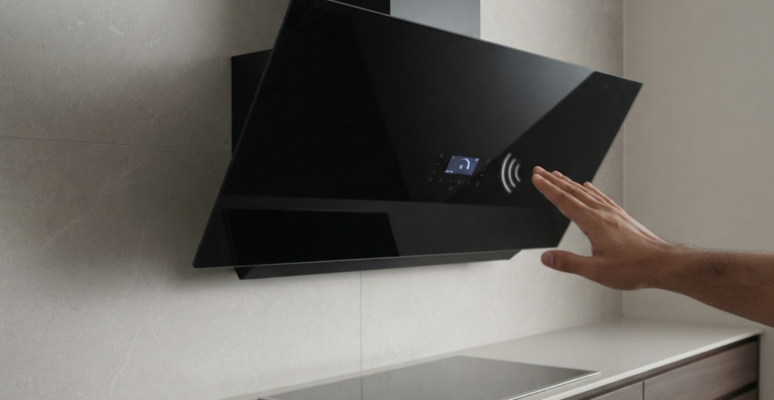
Slanted wall-mounted chimneys sit at an angle rather than projecting horizontally out over the stove. This design provides open head clearance for cooks, reducing accidental head bumps while directing rising steam into the intake area.
Wave-to-Control Motion Sensors
Modern smart hoods feature infrared gesture sensors embedded behind the front glass panel. Waving a hand from left to right turns on the unit and increments fan speeds, while waving from right to left decreases speed or shuts off power. This hands-free control prevents transferring cooking grease onto touchscreens.
Seamless Handleless Cabinetry
Minimalist kitchen interiors utilize concealed profile handles and push-to-open mechanisms across all storage units. Pairing clean handleless cabinets with dark tempered glass appliances creates a sleek, uncluttered workspace.
Critical Installation and Maintenance Mistakes to Avoid
Avoiding operational errors ensures consistent suction power and prevents premature motor burnout in your kitchen exhaust chimney.
- Mistake 1: Utilizing Excessive Pipe Bends. Running exhaust pipe through three or four sharp 90-degree turns drastically chokes airflow, creates backpressure, and leads to noisy operation. Keep exhaust duct runs as short and straight as possible.
- Mistake 2: Neglecting the Oil Collector Tray. Allowing auto-clean oil collector cups to overflow leaks liquified grease onto backsplashes and cooktops. Empty and wash collector cups every two weeks.
- Mistake 3: Running the Hood Without External Makeup Air. Operating a high-powered 1500 m3/h exhaust motor in a completely sealed, airtight kitchen causes negative pressure, dampening suction output. Keep a side window cracked open slightly to allow fresh air replacement.
- Mistake 4: Overloading Cabinet Drawer Runners. Exceeding recommended basket weight capacities strains telescopic slides, causing lower drawers to sag and misalign over time.
- Mistake 5: Using Abrasive Cleaners on Glass Panels. Cleaning tempered glass fascia panels with steel wool or harsh chemicals causes permanent micro-scratches. Use soft microfiber cloths with mild glass cleaner or dilute dish soap instead.
Step-by-Step Maintenance Routine for Peak Exhaust Efficiency
Establishing a systematic maintenance schedule keeps your ventilation hardware operating smoothly year-round.
- Weekly Exterior Wipe-Down: Spray front glass surfaces and stainless steel outer housings with mild degreaser. Wipe clean using a warm, damp microfiber cloth to remove surface oils before they harden.
- Bi-Weekly Baffle Cleaning: Unlatch stainless steel baffle filters. Submerge them in a basin filled with hot water, concentrated dishwashing liquid, and two tablespoons of baking soda. Let soak for 20 minutes, scrub lightly with a soft plastic brush, rinse thoroughly, and dry completely before reinserting.
- Monthly Auto-Clean Activation: Run the automated heat clean function prior to washing the unit. Allow the internal heater to run its complete cycle, let the motor cool down, then remove, empty, and clean the oil tray.
- Biannual Duct Inspection: Inspect the outer external wall louvers or duct cap to ensure insect screens are free of lint and leaf buildup. Clean out any external blockages that restrict outgoing air.
Installing a high-suction kitchen exhaust chimney alongside durable SS 304 wire storage hardware keeps your cooking area fresh, clean, and organized. Selecting correct suction power, maintaining proper installation clearances, and following regular filter cleaning schedules protects your home interior while providing a comfortable cooking space for years to come.
Next Steps & Resource Directories
Browse Full Directories
[Kitchen Museum Main Hub] > [Kitchen Storage Directories]
Related Products
