
Kitchen Products
Best Food Storage Containers for Kitchen Organization
Jul
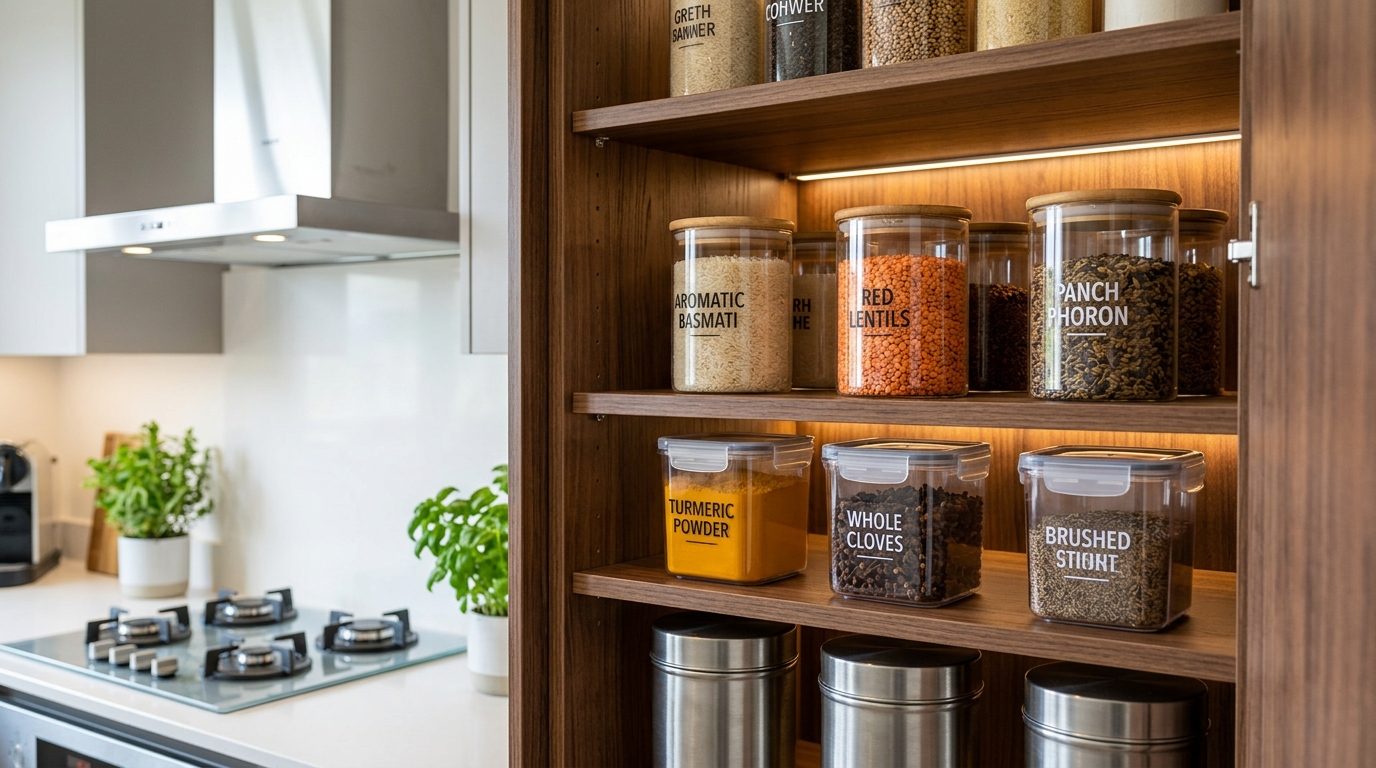
Managing a modern Bangladeshi kitchen requires balancing tight apartment layouts, high humidity, and heavy spice usage without creating countertop chaos. Installing a high-performance food storage container setup alongside kitchen organization accessories instantly preserves dry staples.
Selecting the Ultimate Food Storage Container: Material & Function Breakdown
Food Storage Container Choosing the correct container material directly impacts food safety, ingredient longevity, and cabinet cleanliness.
High-Grade Borosilicate Glass Containers
- Best For: Hot leftovers, meal preps, acidic sauces, and visible pantry displays.
- Key Advantage: Non-porous surface that never absorbs stubborn turmeric stains, pungent spice aromas, or harsh oil residues.
- Thermal Range: Safe from -20°C in freezer units up to 400°C in standard baking ovens and microwave setups.
- Moisture Protection: Features medical-grade silicone gaskets that create an impenetrable barrier against humid air.
Food-Grade BPA-Free Polypropylene (PP) Containers
- Best For: Bulk dry goods, upper shelf storage, daily lunch boxes, and lightweight pantry stacking.
- Key Advantage: Shatterproof durability with zero toxic chemical leaching into warm grains or cooked pulses.
- Space Efficiency: Designed with standard modular bases that allow stable, vertical stacking inside high cabinets.
- Maintenance: Features removable perimeter seals that pop out easily for thorough washing and drying.
Stainless Steel Food Containers & Canisters
- Best For: Light-sensitive spices, heavy rice stocks, lentils, flour, and tea leaves.
- Key Advantage: Total light blockage that stops essential oils and natural flavors from degrading over time.
- Durability: Heavy-gauge 304 stainless steel resists denting, rusting, and chemical reaction with atmospheric moisture.
- Local Adaptation: Ideal for raw staple storage in high-temperature prep environments near active cooktops.
Humidity Control & Pest Defense in Bangladeshi Kitchens
Food Storage Container Managing humidity is the primary challenge for food preservation across urban Bangladesh.
Why Coastal and Riverine Moisture Degrades Staples
Food Storage Container Ambient atmospheric moisture penetrates standard unsealed plastic jars within days. When humidity mixes with dry grains, fungi thrive, producing unpleasant odors and accelerating spoilage.
Airtight Locking Systems: Comparing Seal Engineering
Selecting the right mechanism prevents silent air leakage across stored dry goods:
- 4-Hinge Snap-Lock Lids: Utilizes downward leverage to compress thick hollow-center silicone rings against container lips. Offers maximum leak-proof security for liquids and fine powders.
- Twist-&-Lock Silicone Caps: Uses internal rotary threads to expand a central gasket outward against jar walls. Ideal for quick single-handed access during fast-paced cooking sessions.
- Push-Button Vacuum Seals: Depresses a top-mounted valve to purge internal air volume, creating a partial vacuum. Superior choice for delicate whole-leaf teas, roasted coffee beans, and roasted nuts.
Preventing Rice Weevils and Grain Mold
Food Storage Container Dry grains like Minikit rice, aromatic Kalijira, and red lentils require specialized storage environments. Storing bulk grains in loosely covered buckets leads to destructive weevil (Chaal er Poka) infestations.
Food Storage Container Transitioning from flimsy sacks to a dedicated rice container keeps ambient air out while allowing measured, hygienic dispensing.
Smart Modular Pantry & Cabinet Organization Strategies
Food Storage Container Modern urban apartments across Dhaka, Chattogram, and Sylhet often feature compact, L-shaped kitchen layouts.
+———————————————————————–+
| MODULAR PANTRY CAPACITY MAXIMIZER |
+———————————————————————–+
| [Upper Wall Space] --> Wall-Mounted Floating Spice & Glass Racks |
| [Mid Prep Counter] --> Airtight Stackable Clear Container Grid |
| [Deep Base Cabinets] --> Multi-Layer Stainless Steel Pull-Out Baskets|
| [Corner Dead-Zones] --> 360/270-Degree Revolving Lazy Susan Units |
+———————————————————————–+
Deep Drawer Layouts: Integrating Pull-Out Wire Baskets
Food Storage Container Standard deep cabinets suffer from unreachable dark back zones where forgotten items expire.
Food Storage Container Pairing customized wire baskets with uniform pantry storage containers allows you to scan your entire stock in seconds.
Vertical Stacking & Clear Container Inventory Systems
Food Storage Container Uniformity is the foundation of space optimization. Mixing random container shapes leaves up to 40% of shelf volume empty.
- Standardized Heights: Select container series built on fixed modular dimensions (e.g., 0.5L, 1.0L, 1.5L, 2.0L) that share identical lid footprints.
- Visual Line-of-Sight: Store clear glass or transparent plastic units at eye level to assess ingredient quantities instantly before grocery shopping.
- Top-View Labeling: When storing containers in deep pull-out drawers, place waterproof vinyl labels directly on top lids rather than container sides.
Corner Cabinet Optimizations: Revolving Baskets & Magic Corners
Food Storage Container Blind corner cabinets often become chaotic collection points for unused kitchen items.
Integrating a 270 degree revolving basket transforms blind corner voids into accessible storage carousels. These multi-tier wire units sweep forward smoothly when cabinet doors open, bringing stacked airtight kitchen containers straight to your fingertips without awkward reaching.
Tactical Guide: Organizing Spices, Condiments, and Dry Essentials
Food Storage Container Bangladeshi cooking relies heavily on complex combinations of ground spices, whole aromatics, mustard oils, and pastes.
+————————————————————————+
| SPICE & CONDIMENT ZONING SYSTEM |
+————————————————————————+
| Tier 1 (Daily Prep) : Mustard oil, turmeric, salt, chili, garlic |
| Tier 2 (Weekly Essentials) : Panch Phoron, cumin, coriander, whole clove |
| Tier 3 (Bulk Refills) : Unopened spice packets, extra oil bottles |
+————————————————————————+
The Ultimate Spice Station Setup
Avoid placing plastic spice jars directly beside active gas burners. Radiated cooking heat breaks down volatile spice oils, while airborne grease forms sticky surface coatings.
- Pull-Out Counter Units: Mount a dedicated spice bottle rack inside a narrow base cabinet adjacent to your cooktop. This keeps spices sheltered from direct flame heat while ensuring rapid access during frying.
- Tiered Drawer Organizers: Slanted interior tray inserts lay small spice jars flat in rows, keeping all labels legible without taking up counter real estate.
- Moisture Absorbers: Place food-safe silica gel packets or raw dry rice grains inside spice shakers to prevent clumping during monsoons.
Condiment & Liquid Storage Architecture
Food Storage Container Viscous cooking liquids like mustard oil, soy sauce, and ghee present constant drip hazards. Store liquid dispensers on removable stainless steel trays with raised lips.
Pairing liquid bottles with drip-proof pour spouts stops oil rings from permanently staining costly granite or marble countertops.
Raw Utensil & Cutlery Separation Tactics
Wet cutlery and unorganized prep tools introduce ambient moisture into closed cabinet spaces, promoting bacterial growth.
Integrating a dedicated cutlery basket within top prep drawers isolates forks, knives, silicone spatulas, and wooden ladles into dry, hygienic compartments equipped with perforated mesh drainage bases.
Modular Storage vs. Traditional Jars: Structural Comparison
Food Storage Container Upgrading from traditional non-standardized containers to engineered space-saving kitchen organizers completely changes pantry capacity and maintenance routines.
| Architectural Feature | Traditional Glass/Plastic Jars | Engineered Modular Storage Systems |
| Volume Utilization | Low (30–45% wasted vertical/lateral space) | High (85–95% optimized grid packing) |
| Sealing Efficiency | Basic push-fit or threaded lids (air leaks) | Multi-hinge silicone compression / Vacuum latch |
| Pest Resistance | Moderate (vulnerable to tiny mites/weevils) | Absolute (airtight, insect-impermeable seal) |
| Stack Stability | Poor (high risk of slippage or tipping) | Superior (interlocking lid-to-base grooves) |
| Impact Resistance | Variable (brittle glass or cheap plastic) | Industrial BPA-free PP or Borosilicate Glass |
| Cleaning Ergonomics | Narrow openings, fixed non-washable seals | Wide mouths with fully removable silicone rings |
| Cabinet Integration | Loose, random arrangement | Tailored to standard modular pull-out drawers |
Common Mistakes When Buying Kitchen Accessories (And How to Avoid Them)
Investing in kitchen cabinet storage solutions requires clear spatial planning. Avoiding common purchasing mistakes saves time, prevents structural damage, and protects your home investment.
Pro Tip: Always measure internal cabinet dimensions twice before buying pull-out hardware. Account for internal door hinges, gas pipe lines, and water drain pipes that protrude into back cabinet spaces.
Mistake 1: Buying Storage Without Measuring Clearances
Homeowners often purchase pull-out baskets based purely on external cabinet width, forgetting that door hinges, frame lip overlaps, and internal gas piping restrict interior clearance.
- The Fix: Measure net internal width (between side panels), net internal depth (from front frame to back wall or pipe), and net height (accounting for overhead shelf supports).
Mistake 2: Choosing Non-Airtight Lids to Save Initial Costs
Selecting cheap snap-on covers without inner silicone rings allows humid local air to seep into dry goods within hours.
- The Fix: Test seals before buying by closing the empty container and applying light top pressure. An airtight unit will resist compression without leaking air around the seal edges.
Mistake 3: Overloading Shelf and Pull-Out Weight Limits
Stacking heavy cast iron cookware or bulk liquid containers on thin wire racks can bend metal rails and damage cabinet side walls.
- The Fix: Verify weight capacity ratings on all hardware. Use heavy-duty double-slide drawer mechanisms rated for at least 30 kg for heavy flour, rice, and glass storage.
Mistake 4: Neglecting Kitchen Ventilation and Grease Management
Exposing open pantry shelves or clear storage containers to airborne grease residue creates sticky surfaces that trap dust and cooktop soot.
- The Fix: Pair your open shelf arrangement with a powerful overhead chimney hood. Installing an efficient chimney hood extracts grease, smoke, and moisture before they settle on container surfaces.
Future Trends in Modern Bangladeshi Kitchen Design
Food Storage Container Kitchen architecture across urban Bangladesh is shifting toward clean minimalism, hidden hardware, and smart organization.
Hidden Storage & Minimalist Exteriors
Food Storage Container Flat-panel handleless cabinets with push-to-open hardware create uncluttered visual spaces.
Smart Pantry Lighting & Motion Sensing
Installing low-profile LED light strips inside deep pantries and pull-out cabinets improves accessibility. Magnetic motion sensors illuminate interior shelf levels instantly when drawers slide open, eliminating dark corners and making item identification effortless.
Sustainable & Eco-Friendly Materials
Food Storage Container Eco-conscious homeowners are moving away from single-use plastics in favor of sustainable materials like natural bamboo lids, high-grade stainless steel canisters, and recyclable borosilicate glass containers.
Elevating Your Culinary Space with Long-Term Storage Architecture
Combining high-performance best food storage containers BD options with modular hardware transforms messy kitchens into efficient, organized workspaces built for everyday cooking.
Next Steps & Resource Directories
Browse Full Directories
Kitchen Storage Solutions > Modular Accessories > Hardware & Fittings
Related Articles
