
Kitchen Accessories
Best Brushed Nickel Kitchen Faucet: Expert Buying Guide
Jul
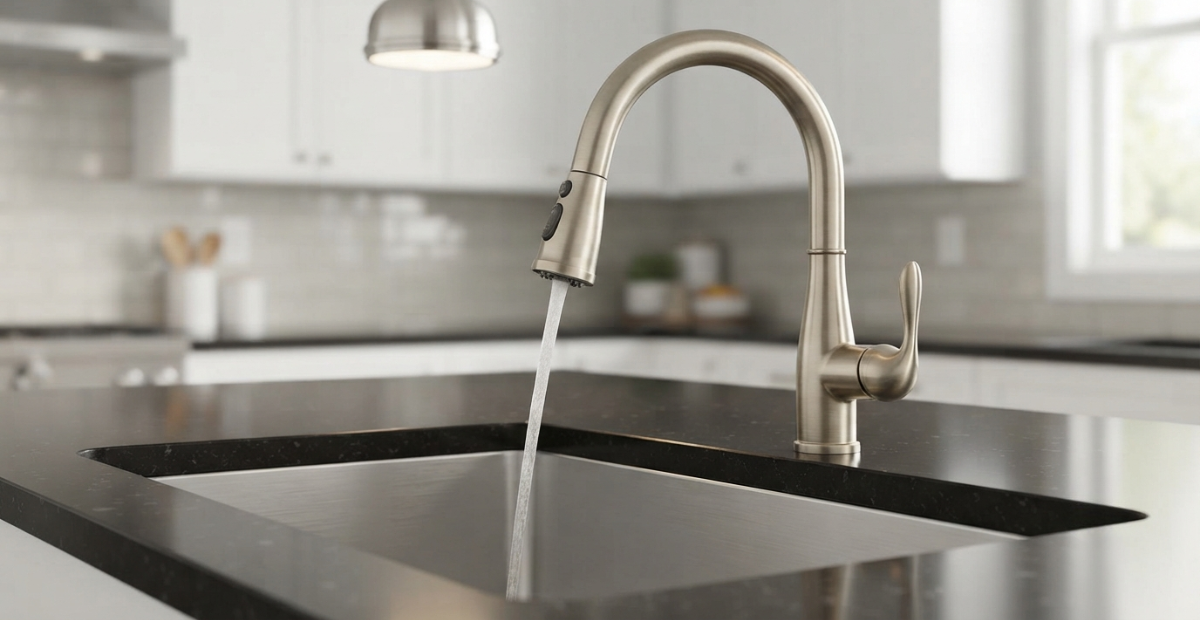
Selecting the right fixtures is the most critical decision you will make during a kitchen renovation or wet-bar upgrade. A high-quality brushed nickel kitchen tap acts as the functional anchor of your main work area, balancing everyday durability with a timeless, muted metallic aesthetic. This comprehensive guide reviews the top faucet configurations, critical technical specifications, and key organizational accessories needed to build an efficient, beautiful culinary workspace in 2026.
Direct Comparison of Key Kitchen Upgrades
Before diving deep into technical faucet features, it is helpful to understand how a premium faucet pairs with other essential modern kitchen upgrades. The table below outlines how different layout additions optimize different zones of your kitchen, emphasizing how a top-tier tap functions as your main sink station companion.
| Accessory Type | Best For | Key Benefit | Ideal Kitchen Size |
| Pull-Out Basket | Deep base cabinets | Eliminates bending and searching | Small to Medium |
| Wall-Mounted Rack | Empty backsplash areas | Frees up premium counter space | Small Apartments |
| Modular Drawer | Cutlery and small tools | Prevents clutter and protects tools | All Sizes |
| Premium Kitchen Tap | Main sink station | Long-term leak and spot prevention | All Sizes |
Why Brushed Nickel Reigns Supreme in 2026 Kitchen Design
Brushed nickel remains the gold standard for homeowners seeking a balance between high-end aesthetics and low-maintenance upkeep. Unlike high-shine chrome, which acts as a magnet for fingerprints and water spots, brushed nickel features a soft, textured finish that naturally diffuses light. This brushed quality makes it incredibly forgiving in busy households where the faucet is touched dozens of times per day.
Modern manufacturing processes in 2026 have introduced advanced Physical Vapor Deposition (PVD) coatings to brushed nickel finishes. This industrial process bonds the finish to the brass core at a molecular level, making it virtually immune to scratches, corrosion, and tarnish. When shopping for a spot resistant kitchen faucet, checking for a PVD-treated brushed nickel finish ensures your investment will look pristine for decades.
Furthermore, brushed nickel is an incredibly versatile neutral metal. It coordinates flawlessly with stainless steel appliances, dark granite countertops, and both warm and cool cabinetry color schemes. Whether your home leans toward rustic farmhouse charm, industrial minimalism, or classic transitional styling, a brushed nickel kitchen tap brings cohesive warmth without clashing against other hardware finishes.
Core Technical Specifications to Evaluate Before Buying
An attractive finish is only skin-deep; the true value of a faucet lies in its internal engineering and functional dimensions. To choose the best brushed nickel kitchen faucet for your specific sink layout, pay close attention to these critical construction elements.
Valve Technology: Ceramic Disc Cartridges
The valve is the mechanical heart of any faucet, controlling both water flow and temperature mixing. Cheap faucets often utilize plastic or rubber compression sleeves that degrade rapidly under constant friction, leading to irritating drips. Modern, high-performance faucets rely on ceramic disc cartridges.
Two diamond-hard ceramic discs slide against one another to block or permit water flow with absolute precision. Ceramic is virtually impervious to wear, ensuring a lifetime of leak-free performance and ultra-smooth handle operation. Always verify that your chosen faucet model explicitly features a ceramic cartridge before purchasing.
Spout Reach and Arc Height
Your faucet must comfortably clear your deepest pots while keeping water contained within the basin. High-arc faucets, often referred to as gooseneck designs, typically stand 15 to 18 inches tall, offering ample clearance for filling large stockpots or washing deep baking sheets.
However, you must balance high-arc aesthetics with physical space limitations. If you have low-hanging upper cabinets or a heavy window sill directly above your sink, a high-arc faucet may not fit. Ensure you measure the vertical clearance from your deck plate to the bottom of your cabinets, and double-check the spout reach to make sure water lands directly over the drain of your kitchen sink to prevent splashing.
Flow Rates and Aerators
In 2026, environmental standards and municipal water codes dictate faucet flow rates. Most premium kitchen faucets operate at a highly efficient flow rate of 1.5 to 1.8 gallons per minute (GPM).
Advanced multi-flow aerators allow you to toggle between a aerated stream for gentle handwashing and a high-velocity spray for clearing stubborn food debris from plates. High-end aerators mix air into the water stream, producing a full, pressurized feel while using significantly less water.
Top Configurations for Modern Kitchen Sinks
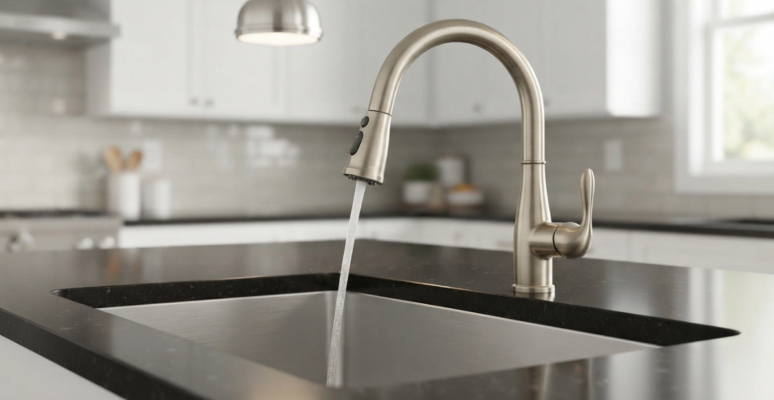
Every kitchen has unique workflow requirements. Choosing the right physical configuration dictates how efficiently you can prep meals and clean up afterward.
Single-Handle Pull-Down Faucets
The single handle pull down faucet is the most popular style in contemporary kitchens, and for good reason. It combines temperature and flow control into a single, intuitive lever that you can easily operate with an elbow or wrist when your hands are dirty.
[Deck Plate] —> [Single Handle Lever] —> [High-Arc Spout] —> [Pull-Down Spray Head]
The integrated spray head pulls down on a flexible, braided hose, allowing you to direct water into the furthest corners of your sink basin. High-quality systems feature magnetic docking systems that snap the spray head securely back into the spout when you release it, preventing unsightly drooping over time.
Pull-Out Faucets
If your kitchen has overhead cabinetry restrictions, a pull-out faucet is an excellent alternative. These models feature a lower profile, with a spout that pulls straight out toward you rather than down. While they offer slightly less clearance for massive pots, they provide incredible flexibility for medium-sized basins and are ideal for compact urban kitchens.
Touchless and Smart Faucets
Smart kitchen technology has evolved dramatically. Touchless brushed nickel faucets feature motion sensors near the base or spout, allowing you to activate water flow with a simple wave of your hand.
This hands-free operation dramatically reduces the transfer of germs and raw food pathogens to your faucet handle, keeping your brushed nickel finish cleaner for longer. Advanced smart models can even be integrated with voice assistants to dispense exact measurements of water, such as two cups of warm water, directly into your cooking vessels.
Step-by-Step Installation & Maintenance Guide
Installing a new faucet is a highly manageable DIY project if you follow the correct sequence and prepare your workspace beforehand.
Pre-Installation Preparation
- Clear the Under-Sink Cabinet: Remove all cleaning supplies, water filters, and organizer bins to give yourself plenty of physical room to work.
- Shut Off the Water Supply: Locate the hot and cold shut-off valves beneath your sink and turn them clockwise until they are fully closed. Turn on your old faucet to drain any residual water from the lines.
- Use a Bucket: Place a small bucket or shallow pan directly beneath the supply lines before disconnecting them to catch any trapped water.
Step-by-Step Installation Sequence
- Step 1: Mount the Faucet Body. Feed the hot and cold water lines through the sink mounting hole. If you are converting a three-hole sink to a single-hole faucet, place the decorative deck plate (escutcheon) over the holes first.
- Step 2: Secure Underneath. From beneath the cabinet, slide the rubber washer and metal retaining nut onto the threaded shank. Tighten the nut securely using a basin wrench, ensuring the faucet body remains aligned correctly above the sink.
- Step 3: Attach the Pull-Down Hose. Connect the pull-down spray hose to the faucet outlet pipe. Clip the counterweight onto the designated spot on the hose so it retracts smoothly.
- Step 4: Connect Water Supply Lines. Thread the hot and cold supply lines onto your home’s shut-off valves. Tighten them firmly with an adjustable wrench, but avoid over-tightening, which can damage the rubber gaskets.
- Step 5: Flush the System. Unscrew the aerator from the spray head, turn on the water valves, and let the water run for one minute to flush out any manufacturing debris. Reattach the aerator and check all connections for leaks.
Pro Tip: Never use plumbers putty on natural stone countertops like granite or marble, as the oils can permanently stain the stone. Use the silicone gaskets provided by the manufacturer instead.
Maintaining Your Brushed Nickel Finish
While brushed nickel is highly durable, maintaining its warm luster requires proper cleaning techniques. Avoid using abrasive scrubbing pads, steel wool, or harsh chemical cleaners containing bleach, ammonia, or acid, as these can strip away the protective PVD coating.
Instead, clean your faucet using a soft microfiber cloth dampened with warm water and a mild dish soap. For stubborn mineral buildup or hard water spots around the base, create a mixture of equal parts warm water and white vinegar. Wrap a soaked cloth around the affected area for fifteen minutes, then gently wipe away the deposits and dry the faucet thoroughly with a clean towel.
Organizing Your Sink Area for Maximum Efficiency
An elite brushed nickel kitchen faucet deserves a clean, organized backdrop. Clutter around the sink basin not only detracts from your kitchen’s aesthetic design but also creates pools of standing water that breed bacteria and cause hard water stains on your countertops.
To keep your countertops immaculate, integrate designated drying solutions near your sink. Installing a dedicated glass plate rack next to your basin allows hand-washed glassware to drip directly into an integrated tray rather than pooling on your stone counters.
Furthermore, you can clear heavy cookware off your main surfaces by keeping a dish holder nearby, keeping your prep zones clear of damp drying mats. By designing a functional flow from the wash station to the drying zone, you protect your premium fixtures and streamline your daily cleanup routine.
Common Pitfalls When Buying a Kitchen Faucet (And How to Avoid Them)
Avoiding common design and mechanical oversights will save you time, money, and installation headaches.
- Ignoring Deck Hole Requirements: Faucets come in single, double, triple, or quadruple hole configurations. Ensure your chosen faucet matches your sink’s pre-drilled holes, or buy a model that includes an escutcheon plate to cover unused holes.
- Neglecting Cabinet Clearance: A beautiful high-arc faucet can block cabinet doors or hit low shelves. Always measure all clearances beforehand.
- Buying Cheap Plastic Construction: Many budget faucets use plastic bodies covered with a metallic finish. These lightweight units wear out rapidly; always choose solid lead-free brass or stainless steel core construction.
Next Steps & Resource Directories
Browse Full Directories
Related Articles
- Premium Stainless Steel Sink Options
- Optimizing Cabinetry with Single Drawer Baskets
- Multi Tiered Fruit Basket: Smart Kitchen Storage Guide 2026
- Kitchen Sink Waste Strainers | Durable Sink Accessories
