
Kitchen Storage Ideas
Best Grain Storage Container for Fresh Food Storage
Aug
High relative humidity and seasonal dampness in Bangladeshi homes cause rapid grain spoilage, flour clump formation, and pest infestation when food is kept in flimsy plastic bags.
Upgrading to a dedicated, airtight grain storage container safeguards essential dry goods while transforming cluttered cabinetry into streamlined cooking space.
Core Grain Storage Solutions: Features, Capacity & Best Use Cases
Grain storage container Selecting the ideal storage mechanism requires balancing household consumption, cabinet dimensions, and physical access preferences.
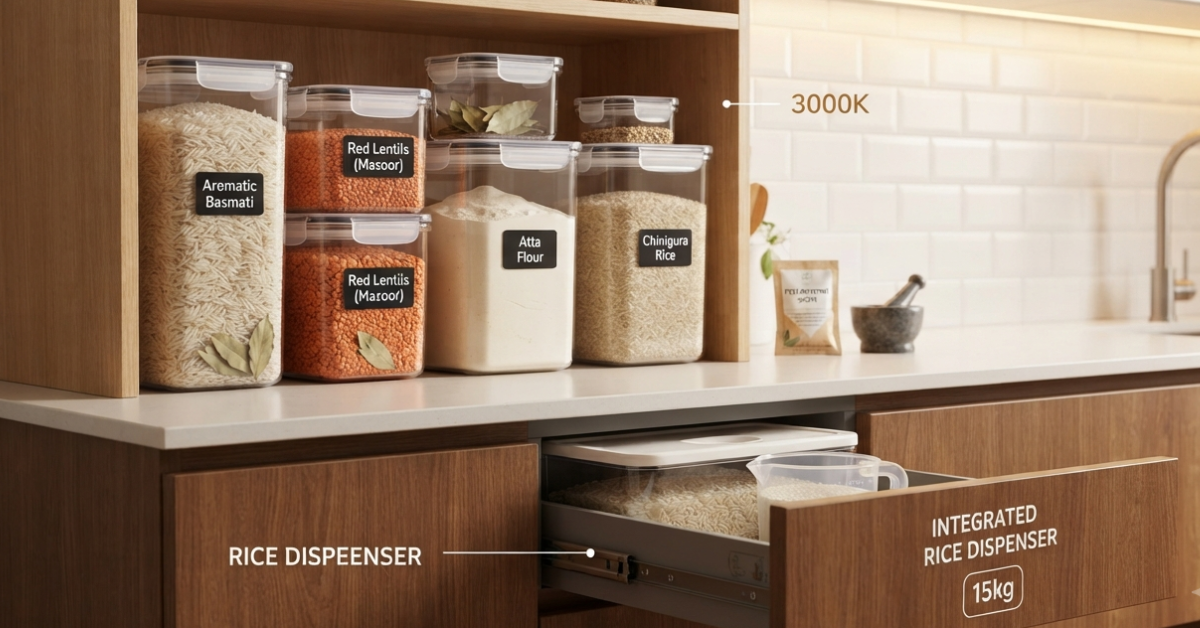
- Built-In Pull-Out Rice Dispenser
- Capacity Range: 10 kg to 25 kg bulk capacity
- Material Construction: Food-grade ABS polymer casing with high-density internal hopper
- Moisture Protection: Dual-gasket rubber seals with integrated silica/desiccant top chamber
- Primary Advantage: Conserves floor and counter space while delivering precise portion measuring per button press.
- Recommended Use: Daily rice storage in apartment kitchens where cabinet depth allows base-unit installation.
- Countertop Airtight Polymer Containers
- Capacity Range: 1.5 L to 5 L individual unit size
- Material Construction: Crystal-clear BPA-free PET/SAN plastic with silicone locking lids
- Moisture Protection: Four-latch mechanical locking mechanism forming a complete airtight barrier
- Primary Advantage: Complete content visibility makes ingredient levels immediately readable without opening lids.
- Recommended Use: Lentils (dal), flour (atta/maida), sugar, semolina (suji), and small pulses.
- Stainless Steel Sealed Storage Drum
- Capacity Range: 15 kg to 50 kg heavy-duty storage
- Material Construction: Heavy-gauge SUS304 food-grade stainless steel body and lid
- Moisture Protection: Heavy-duty silicone ring seal with exterior side-latch clamps
- Primary Advantage: Complete resistance to impact, rodent chewing, UV light degradation, and structural warping.
- Recommended Use: Long-term bulk storage of aromatic rice varieties, un-milled grains, and bulk flours.
- Rotational Multi-Grid Grain Dispenser
- Capacity Range: 6 kg to 12 kg total split capacity
- Material Construction: Rotational polycarbonate central body with removable divider inserts
- Moisture Protection: Top-loading sealed cap with single-point bottom dispending valve
- Primary Advantage: Stores up to six distinct grain or pulse types in a single compact footprint.
- Recommended Use: Diverse grains, mustard seeds, mung beans, and small dry baking supplies.
Why Humidity and Pest Protection Demand Engineered Storage Solutions
Grain storage container Bangladeshi weather conditions bring extended monsoon periods where indoor relative humidity consistently exceeds 80 percent. Unsealed dry food absorbs ambient atmospheric moisture rapidly, triggering hydrolysis, starch breakdown, and accelerated mold growth.
Pro Tip: Never store newly purchased grains in open retail sacks inside lower wood cabinets. Hydroscopic absorption begins within 48 hours of exposure to humid air, raising moisture content past the safe 12 percent storage threshold.
Grain storage container Specially engineered containers combine airtight silicone gaskets with non-porous material walls to isolate contents from ambient airflow.
Integrating Grain Containers into Modular Kitchen Cabinets
Grain storage container Achieving efficient kitchen operations requires embedding dry food storage into structured cabinet layouts.
Tall Pantry Larder Units
Grain storage container Vertical space utilization is critical in compact urban kitchen footprints. Installing a six-layer tall unit basket creates a dedicated pantry column capable of organizing dozens of sealed storage jars.
Deep Base Drawer Systems
Grain storage container Base cabinets situated below primary food preparation counters provide optimal weight-bearing positions for bulky storage items. Equipping deep drawers with modular partition grids prevents heavy glass or stainless steel containers from tipping during rapid drawer movement.
Dedicated Spice and Condiment Pull-Outs
Grain storage container Cooking Bangladeshi cuisine requires fast access to a wide array of ground spices and whole aromatics.
Corner Cabinet Solutions
Grain storage container Blind corner cabinets often become underutilized areas where food packages gather dust. Integrating a magic corner pull-out brings deep storage trays smoothly into the main room light when cabinet doors open.
Comprehensive Material Comparison: SUS304 Stainless Steel vs. Food-Grade Polymers
Grain storage container Selecting the correct material grade determines container longevity, food safety, and resistance to environmental stress.
| Performance Attribute | SUS304 Stainless Steel | Food-Grade PET Plastic | High-Density ABS Polymer | Glass (Borosilicate) |
| Corrosion Resistance | Exceptional (Rust-proof) | High (Acid-resistant) | Moderate to High | Complete Chemical Inertness |
| Impact Durability | Indestructible | High (Shatter-resistant) | Very High | Moderate (Shatter Risk) |
| Content Visibility | Opaque (Needs window) | Crystal Clear | Opaque / Semi-Clear | Crystal Clear |
| Weight Profile | Medium Heavy | Lightweight | Medium Lightweight | Heavy |
| Heat Tolerance | Extremely High (>500°C) | Moderate (<70°C) | Moderate (<80°C) | Very High (>300°C) |
| BPA & Leaching Risk | Zero (100% Non-toxic) | Certified BPA-Free | Certified BPA-Free | Zero (100% Non-toxic) |
Stainless steel remains the gold standard for high-moisture zones located near washing sinks or cooking hobs. High-nickel chromium alloys resist pitting corrosion caused by ambient salt and humidity exposure.
Transparent PET polymers offer rapid inventory assessment, making them optimal choices for upper cabinet shelves where clear line-of-sight reduces search time.
Storage Capacity Planning for Urban Households
Grain storage container Choosing appropriate container sizes prevents cabinet overcrowding while ensuring food reserves match household consumption patterns.
Small Families (2 to 3 Members)
- Primary Rice Storage: 10 kg to 15 kg integrated dispenser
- Atta/Flour Storage: 5 kg airtight polymer bucket
- Pulse & Dal Storage: 1.5 L individual stackable containers (4 to 6 units)
- Spice Storage: 250 ml to 500 ml modular spice jar set
Medium Families (4 to 6 Members)
- Primary Rice Storage: 20 kg to 25 kg built-in lower cabinet unit
- Atta/Flour Storage: 10 kg sealed stainless steel drum
- Pulse & Dal Storage: 2.5 L stackable containers (8 to 10 units)
- Secondary Grain Storage: 6 kg rotational multi-grid unit for polao rice, chinigura, and suji
Large Joint Families (6+ Members)
- Primary Rice Storage: 25 kg+ dual-hopper dispenser system
- Bulk Grain Reserve: 30 kg to 50 kg heavy-duty stainless storage unit inside a dedicated larder column
- Flour & Sugar Storage: 15 kg individual locking containers
- Daily Pantry Items: Full-height 12-layer pull-out larder system
Critical Installation & Maintenance Mistakes to Avoid
Grain storage container Installing kitchen storage fittings without proper preparation leads to mechanical failure, premature wear, and compromised food safety.
- Ignoring Internal Hardware Clearances
Measuring only outer cabinet frames rather than net internal clearances causes interference with door hinges, magnetic catches, and slide rails. Always deduct 25 mm to 35 mm from raw internal width to accommodate side-mounting runners. - Neglecting Seal Cleaning Routines
Flour dust and fine grain debris accumulate inside silicone gasket grooves over time. This micro-layer prevents full compression, breaking the airtight seal and letting ambient air leak inside. Remove and wash silicone gaskets in warm soapy water monthly. - Exceeding Weight Ratings on Slide Rails
Overloading drawer baskets or pull-out dispensers beyond rated dynamic capacities causes ball-bearing deformities and rail sagging. Standard runners handle up to 30 kg, whereas heavy-duty larder slides support up to 70 kg. - Washing Plastic Containers in High-Heat Dishwashers
Exposing PET containers to water temperatures above 70°C deforms structural walls and ruins precision lid locking tolerances. Hand-wash clear polymer containers using soft micro-fiber sponges and mild detergent. - Placing Rice Dispensers Next to Heat Sources
Installing grain containers adjacent to built-in ovens or gas stoves exposes stored starch to continuous heat cycles. Temperature fluctuations cause condensation on inner container walls, fostering localized mold growth.
Warning: Never add fresh rice or grain batches on top of older remaining stock. Pour remaining grains into a temporary bowl, clean and dry the container thoroughly, refill with new stock, and place older grains on top for immediate consumption.
Step-by-Step Cleaning and Sanitization Protocol
Grain storage container Maintaining pristine hygienic conditions inside grain containers requires a structured cleaning process every six to eight weeks.
- Complete Depletion & Inspection
Empty all dry goods into temporary holding trays. Inspect container interiors for fine flour web lines or larvae micro-signatures. - Gasket Removal & Wash
Carefully peel flexible silicone seals out of lid channels. Wash seals in warm water mixed with food-grade liquid soap. - Interior Sanitization
Wipe interior walls using a 1:1 mixture of warm water and distilled white vinegar. Vinegar neutralizes mold spores and eliminates stale grain odors without leaving chemical residues. - Complete Thermal Drying
Allow components to air-dry completely in a well-ventilated area for at least two hours. Never pour dry grains back into a container holding residual moisture droplets. - Natural Repellent Placement
Place two or three dried bay leaves (tejpatta) or neem leaves inside a breathable cotton sachet at the bottom of the container before refilling. Natural essential oils deter weevils without altering grain taste.
Modern Aesthetic Trends in Bangladeshi Modular Pantries
Grain storage container Kitchen design preferences in urban Bangladesh have shifted toward integrated, seamless architectural spaces. Visible clutter on countertops is replaced by concealed hardware systems that keep work surfaces completely clear.
Upgrading to an engineered grain storage container transforms daily kitchen workflows while ensuring your family enjoys clean, fresh food every day.
-
Next Steps & Resource Directories
- Sink Care & Plumbing > Sink Support Racks
- Ventilation Systems > Kitchen Hood Collection
Related Articles
