Kitchen Hood
Kitchen Wall Hook: Smart Storage Ideas for Every Home Today
Aug
Maximize your modern kitchen by transforming blank walls into efficient storage zones with strategic kitchen wall hooks. Keep countertops clutter-free and daily essentials within arm’s reach. This smart vertical solution turns unused space into a functional layout, perfect for hanging utensils, mugs, and tools while elevating your overall organization effortlessly.
Understanding the Power of Vertical Kitchen Storage
When floor and cabinet spaces reach maximum capacity, walls remain an underutilized asset. Introducing a versatile kitchen wall hook changes how you interact with your cooking space by lifting items off counters. This simple adjustment improves workflow, reduces visual clutter, and protects your favorite tools from accidental damage.
Vertical storage shifts the focus from cramped drawers to accessible display-style organization. By organizing items according to frequency of use, you save precious seconds during meal preparation. Modern kitchens thrive on this kind of efficiency, making vertical installation a staple of smart interior design.
Choosing the Right Wall Hook for Your Kitchen Layout
Not all kitchen hooks serve the same purpose or handle the same weight loads. Selecting the correct accessory depends entirely on your wall material, available space, and the items you plan to hang.
- Single Hooks: Perfect for lightweight items like hand towels, oven mitts, or individual mugs.
- Double or Multi-Hooks: Ideal for grouping sets of cooking spoons, spatulas, and whisks together.
- Adhesive vs. Screwed Hooks: Adhesive options work well on smooth tiles without drilling, while screw-mounted options provide heavy-duty security for cast iron pans or heavy pots.
Evaluating your storage needs before purchase prevents wasted space and ensures long-term durability. Always check weight capacity ratings to guarantee safety when hanging heavier culinary equipment.
Small Kitchen Organization: Maximizing Compact Spaces
Small kitchens require creative solutions to avoid feeling cramped and chaotic. When counter space is scarce, a reliable wall hook acts as an instant relief valve for overcrowded drawers.
By suspending everyday tools right where you use them,such as next to the stove or prep station,you eliminate unnecessary reaching and bending. This layout strategy optimizes movement triangles, keeping your cooking rhythm smooth and uninterrupted. Furthermore, minimal hardware keeps the aesthetic clean and open.
Pro Tip: Position your most frequently used items at eye level to minimize physical strain and speed up your cooking workflow during busy weeknight dinners.
Creative Placement Ideas Around the Kitchen
Expanding your storage potential goes beyond traditional utensil hanging. Smart homeowners find unexpected yet functional spots to install hooks for maximum convenience.
1. The Backsplash Zone
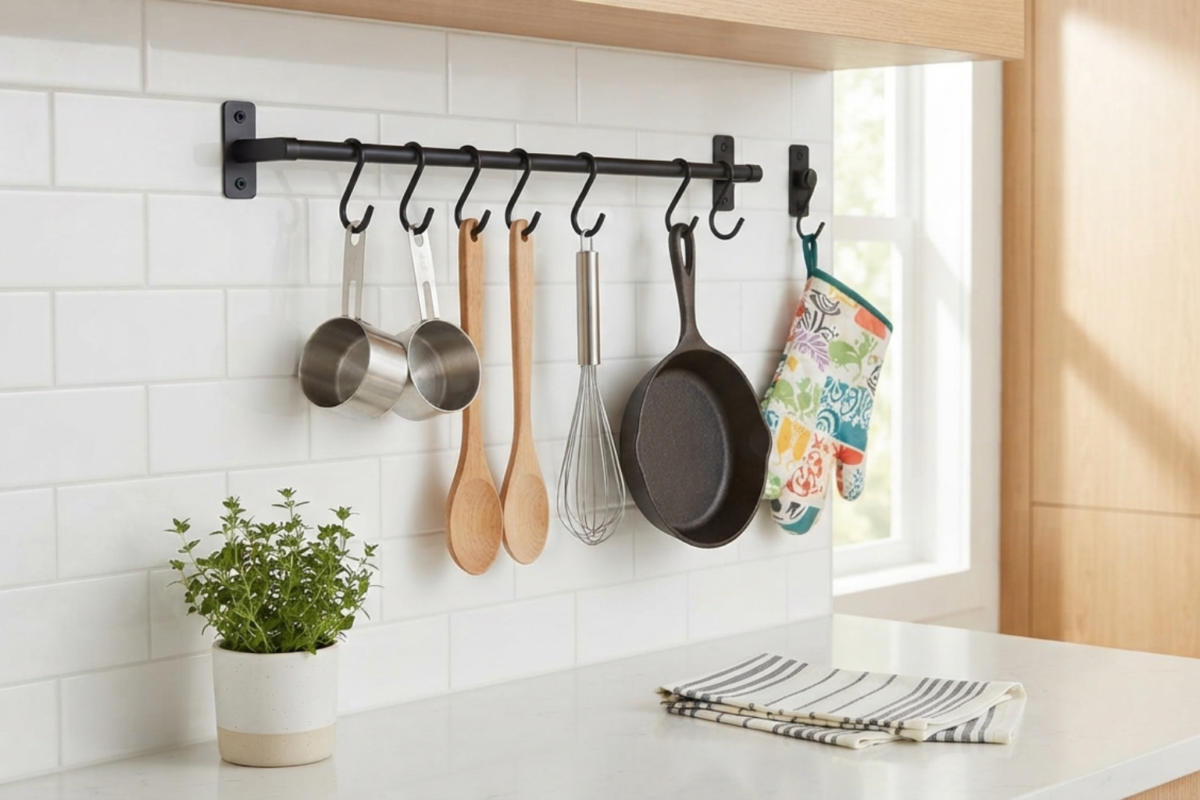
The wall space between your upper cabinets and countertops is prime real estate. Installing a slim rail or individual hooks here keeps spatulas, ladles, and measuring cups instantly accessible.
2. Inside Cabinet Doors and Pantries
If you prefer a clean external aesthetic, hidden hooks inside pantry doors or under cabinets keep clutter out of sight while still providing quick access to lightweight items.
3. Coffee Station Integration
Create a dedicated morning ritual zone by mounting decorative hooks near your coffee maker to suspend mugs, small filters, and stirrers.
Essential Companion Accessories for Complete Kitchen Flow
While hooks solve immediate hanging needs, a truly organized kitchen integrates multiple storage layers. Pairing your hooks with complementary hardware creates a cohesive ecosystem. For instance, incorporating a sturdy double rack nearby can handle larger plates or spice jars that aren’t suited for hanging.
Balancing hanging storage with shelf organization ensures that every category of item finds a proper home. Mixing open hardware with hidden compartments provides a visually balanced and deeply functional kitchen environment.
Step-by-Step Installation Guide for Secure Mounting
Improper installation can lead to loose hardware or damaged walls. Follow these technical steps to ensure your hooks stay secure under daily use.
- Assess the Surface: Determine whether your wall is made of tile, drywall, or concrete, as this dictates your anchor type.
- Measure and Mark: Use a pencil and a level to mark exact drilling or placement points before fixing anything permanently.
- Pre-Drill Holes: For masonry or drywall, drill pilot holes and insert appropriate plastic wall anchors for maximum grip.
- Secure the Hardware: Tighten screws firmly, ensuring the hook remains completely stable under pressure.
- Test Weight Capacity: Hang a moderate weight first to verify stability before loading heavy items.
Taking time during the installation phase prevents future accidents and maintains the structural integrity of your kitchen walls.
Common Mistakes to Avoid When Organizing Walls
Even the best storage accessories can fail if implemented incorrectly. Avoiding common pitfalls ensures your kitchen remains both safe and visually appealing.
- Overloading Weight Limits: Hanging heavy cast-iron skillets on lightweight adhesive hooks often leads to sudden detachment and property damage.
- Cluttering Eye-Level Spaces: Hanging too many items in one cluster creates visual noise rather than clean organization.
- Ignoring Traffic Flow: Placing hooks too close to swinging doors or narrow walkways results in snagged clothing and bumped elbows.
Mindful placement and realistic weight management keep your storage system running smoothly for years to come.
Maintenance and Care for Long-Lasting Hardware
Kitchen environments expose hardware to moisture, grease, and heat. Regular maintenance keeps your wall hooks looking polished and functioning flawlessly.
Wipe down metal hooks weekly with a damp microfiber cloth and mild soap to prevent grease buildup. For stainless steel finishes, dry thoroughly after cleaning to avoid water spots. Periodically check mounting screws to ensure they haven’t loosened from constant daily vibration and lifting motion.
Future Trends in Kitchen Wall Storage (2026 and Beyond)
Modern kitchen design increasingly focuses on modularity, sustainability, and smart integration. Innovations in 2026 feature interchangeable magnetic rail systems, allowing users to snap hooks on and off instantly without tools.
Additionally, eco-friendly materials like bamboo and recycled aluminum are gaining popularity, matching the demand for sustainable home improvement options. These flexible systems adapt as your cooking habits and kitchen inventory evolve over time.
Maximizing Efficiency with Multi-Functional Racks
Sometimes a single hook isn’t enough to handle complex storage demands. Upgrading to a multi-tier solution or a triple rack allows you to manage larger collections of jars, lids, and towels in a unified footprint.
Combining hooks with multi-functional racks creates a layered storage strategy that handles both large and small kitchen accessories seamlessly. This integrated approach minimizes wasted wall space and maximizes overall utility.
Real-World Scenarios: Transforming Different Kitchen Sizes
Different kitchen footprints require tailored organizational approaches to achieve optimal results.
Small Apartments and Studios
In compact urban apartments, vertical space is your primary asset. Utilizing high-reaching hooks and magnetic strips frees up every square inch of precious counter space for actual food preparation.
Medium-Family Kitchens
Busy households benefit from dedicated zones. Assigning specific hooks to individual family members for aprons or lunch bags reduces morning chaos and keeps communal areas tidy.
Large Culinary Spaces
Even in spacious kitchens, strategic wall hooks near prep islands streamline cooking by keeping tools close to where ingredients are chopped and mixed.
-
Final Footer Block
Kitchen Museum > Kitchen Storage Accessories
Related Articles:
