
Kitchen Cabinet
How to Increase Corner Cabinet Capacity
Jul
TL;DR: Transform dead kitchen Corner Cabinet Capacity into high-efficiency storage zones using specialized hardware like magic corners and revolving baskets. This guide covers local accessories, layout strategies, and hardware selection to optimize compact apartment kitchens in Bangladesh.
Understanding the Hidden Corner Cabinet Capacity
Urban apartments across Bangladesh feature compact footprints where every square inch matters. Traditional kitchen layouts often result in blind corners—deep, dark architectural dead zones that swallow pots, pans, and dry goods, rendering them completely inaccessible.
When lower and upper cabinets meet at a 90-degree angle, standard stationary shelving creates an ergonomic nightmare. Homeowners are forced to crouch, reach blindly, and unload front-row items just to find a single pot buried in the back.
This spatial inefficiency leads to cluttered countertops, frustrating cooking workflows, and wasted storage potential. Modern modular solutions eliminate these pain points by introducing dynamic engineering hardware designed specifically to convert awkward geometry into seamless, reachable storage zones.
Essential Modular Hardware for Bangladeshi Kitchens
Upgrading your kitchen’s storage capacity requires moving away from static wooden planks and investing in specialized pull-out mechanisms. High-grade stainless steel components ensure longevity, especially given the seasonal humidity and monsoon moisture characteristic of the region.
The Magic of Swing-Out Systems and Carousels
Corner spaces require active mechanical movement to bring hidden contents into plain sight. Incorporating advanced mechanisms ensures that every item travels smoothly from the dark interior to your fingertips.
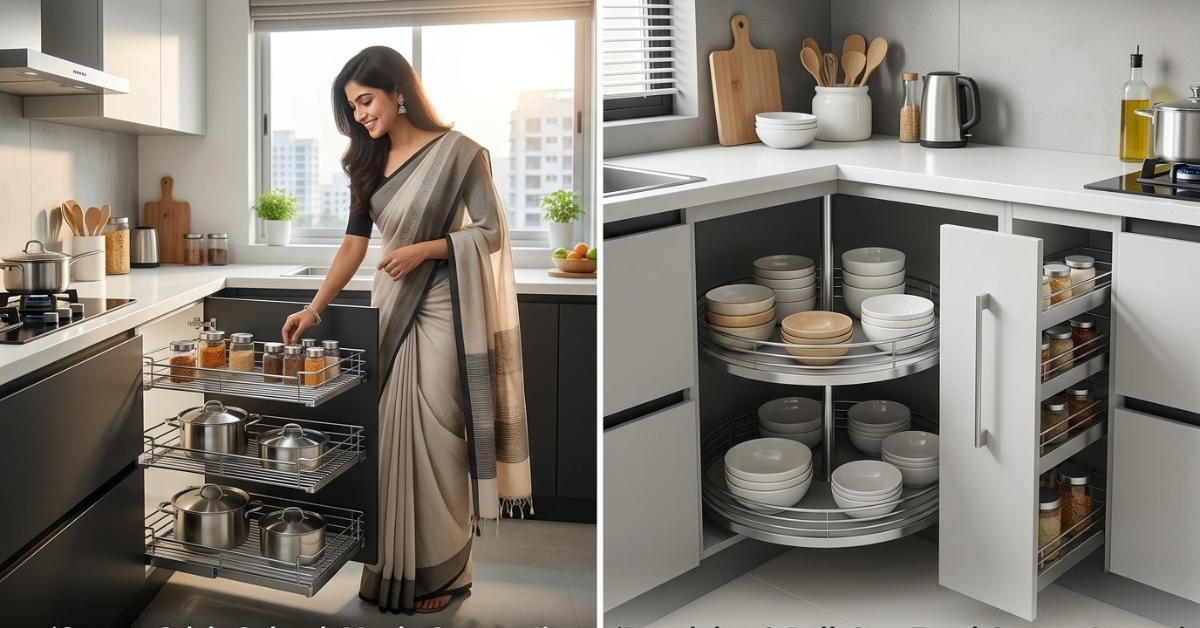
- Revolving Trays: Options like the 180-degree revolving basket and 270-degree revolving basket use pivoting poles to rotate stored items effortlessly.
- Full Rotation Units: A 360-degree revolving basket allows full circular access, making it ideal for heavier ceramic bowls and bulk dry goods containers.
- Articulated Pull-Outs: Systems like the magic corner right feature multi-tiered wire trays that slide forward in a sequence, completely clearing the cabinet opening.
Step-by-Step Implementation Guide for Corner Optimization
Transforming your kitchen corner requires a systematic approach, from accurate measuring to final hardware mounting. Follow these structured steps to ensure a flawless installation process.
Phase One: Assessment and Emptying
- Completely empty the target corner cabinet and wipe down interior wooden surfaces to check for structural dampness.
- Measure the exact door opening width, interior cabinet depth, and hinge clearance to verify component compatibility.
- Group your stored items by weight and frequency of use to determine which accessories are required.
Phase Two: Hardware Selection and Fitting
- Select a corner mechanism that matches your cabinet door swing direction, ensuring zero obstruction from adjacent walls or handles.
- Securely mount the base tracks and vertical support poles using rust-resistant stainless steel screws.
- Test the sliding or rotating track motion repeatedly before loading any heavy cookware onto the wire baskets.
Material Quality and Rust Resistance in Local Climates
The humid tropical climate of Bangladesh places extreme demands on kitchen hardware. Inferior iron or low-grade chrome coatings quickly oxidize, leading to unsightly rust stains, squeaky hinges, and structural failure within months of installation.
Investing in premium 304-grade stainless steel protects your investment against moisture and steam exposure. These rust-resistant fittings maintain their structural integrity and mirror finish even after years of heavy daily use.
Furthermore, easy-to-clean electroplated or polished finishes prevent grease buildup from cooking traditional oil-heavy dishes. A simple wipe-down with a damp microfiber cloth keeps your internal pull-out systems looking brand new.
Comprehensive Comparison of Corner Cabinet Capacity Storage Solutions
| Accessory Type | Best For | Key Benefit | Ideal Kitchen Size |
| Magic Corner Unit | Blind base corners | Pulls deep items entirely out | Medium–Large |
| Revolving Carousel | 90-degree turns | 360-degree item rotation | Small–Medium |
| Multi-Tier Pull-Out | Vertical cabinet gaps | Maximizes narrow heights | Compact Apartments |
| Swinging Trays | Pots and pans | Smooth gliding access | Any Size |
Common Mistakes to Avoid When Buying Kitchen Accessories
Many homeowners rush into kitchen renovations without accounting for critical spatial and mechanical limitations. Avoiding these frequent pitfalls saves both money and frustration.
- Ignoring Hinge Clearance: Failing to check cabinet door hinge thickness can block pull-out trays from sliding past the frame opening.
- Overloading Weight Limits: Exceeding the manufacturer’s rated load capacity strains mounting brackets and warps the gliding tracks.
- Prioritizing Price Over Material: Buying cheap, unbranded wire racks invites rapid rusting and structural sagging under heavy cast-iron cookware.
Pro Tip: Always double-check your internal cabinet clearance dimensions with a professional fitter before purchasing specialized corner mechanisms to guarantee a seamless fit.
Integrating Secondary Storage: Beyond the Corner
While maximizing corner capacity solves a major spatial puzzle, a truly functional culinary space relies on a cohesive ecosystem of modular accessories. Combining Corner Cabinet Capacity units with vertical pantry pull-outs and specialized drawer inserts creates an optimized workflow.
Utilizing wall space for hanging racks keeps frequently used tools within arm’s reach while clearing precious countertop real estate. Similarly, investing in dedicated sink and dish management solutions streamlines post-meal cleanup routines for the entire family.
Modern minimalist design principles emphasize hidden storage, keeping countertops free of visual clutter. This approach merges high-end aesthetic appeal with maximum daily utility for urban households.
Future Trends in Modular Kitchen Design
As apartment floor plans continue to shrink, kitchen hardware engineering focuses heavily on multi-functional, space-saving innovations. Future-proof kitchens utilize automated soft-close tracks, motion-activated interior lighting, and customizable wire dividers.
Homeowners increasingly demand sleek, handle-less cabinet designs paired with internal push-to-open mechanics. This shift maintains a clean, unbroken aesthetic while drastically improving accessibility in compact cooking zones.
Embracing these modern innovations ensures your kitchen remains efficient, stylish, and adaptable to changing lifestyle needs for years to come.
Maximizing your storage potential makes everyday meal preparation smoother, cleaner, and significantly more enjoyable for your entire household.
Final Footer Block
Next Steps & Resource Directories
- Browse Full Directories:
- [Main Hub] > [Kitchen Accessories]
Related Articles
- Top Bowl Storage Rack Designs for Small Kitchen Spaces Home
- 10 Smart Kitchen Storage Ideas for Small Kitchens Space
- Adjustable Kitchen Rack BD: Smart Storage for Small Homes!
- Cutlery Divider for Drawer: Smart Kitchen Storage Solutions
