
Kitchen Products
Automatic Soap Dispenser for Better Kitchen Hygiene
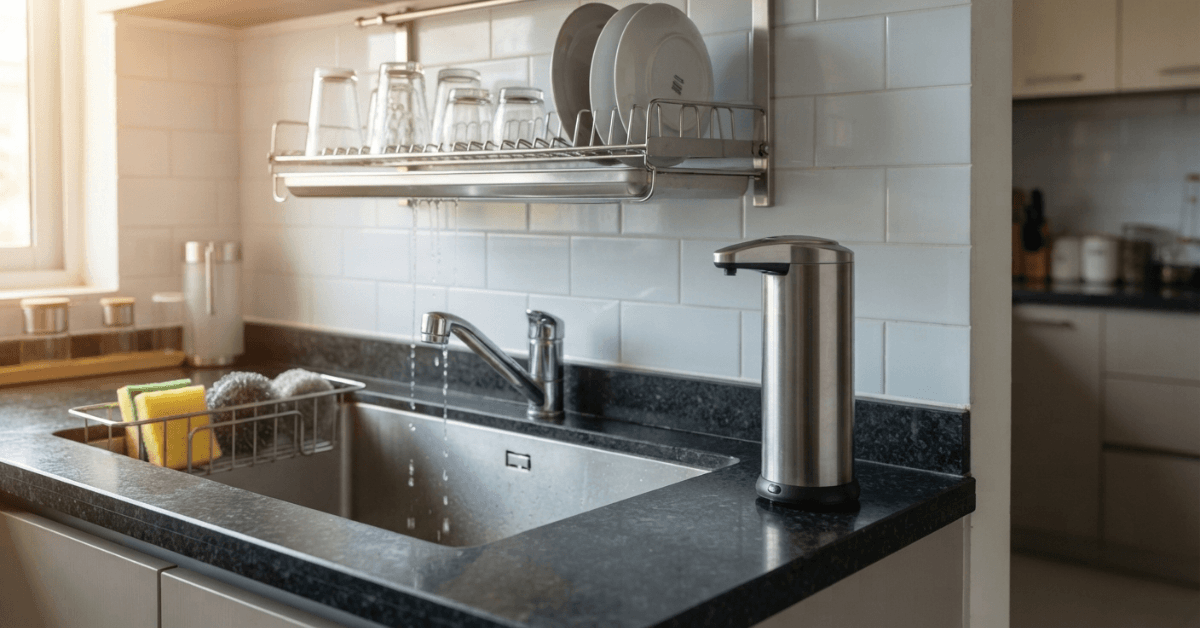
Aug
TL;DR: Installing an automatic soap dispenser eliminates cross-contamination caused by handling pump bottles during raw fish, poultry, and heavy spice prep in high-humidity Bangladeshi kitchens. Modern infrared sensor models cost between BDT 700 and BDT 3,500, offering instant 0.25-second activation, precise foam control, and IPX4 water resistance.
1. How Touchless Soap Dispensing Eliminates Kitchen Cross-Contamination
Automatic soap dispenser Handling raw mustard oil, turmeric pastes, and raw fish or poultry leaves stubborn grease and bacteria on hands. Pressing a traditional manual liquid pump or grabbing a bar of soap transfers pathogens directly onto the fixture surface.
An automatic soap dispenser utilizes near-infrared motion sensors or micro-optical sensors to detect hand proximity within a 2 cm to 7 cm range. When hands enter the detection zone, an internal micro-pump dispenses a pre-metered volume of liquid or aerated foam without physical touch.
Primary Hygienic Benefits in BD Kitchens
- Zero Touch Surface Transfer: Eliminates the need to touch pump heads with oily or spice-coated hands during active meal preparation.
- Controlled Soap Consumption: Dispenses a calibrated 0.8 ml to 1.2 ml dose per cycle, preventing liquid waste and reducing runoff into sink basins.
- Dry Countertop Maintenance: Keeps liquid soap containers off wet counter edges, preventing dark mildew rings and soap scum buildup on granite or tiles.
- Rapid Handwashing Workflow: Speeds up hand cleaning between preparation steps without stopping to wipe down soap bottles.
2. Technical Feature Breakdown & Sensor Architecture
Automatic soap dispenser Understanding the internal mechanics of a touchless soap dispenser helps homeowners select reliable devices that withstand frequent daily use and high humidity.
| Technical Component | Specification Standard | Functional Impact in BD Kitchens |
| Sensor Type | Passive Infrared (PIR) / Time-of-Flight (ToF) | Detects motion within 0.25 seconds under ambient light variations |
| Waterproof Rating | IPX4 to IPX7 sealed housing | Protects internal circuit board from sink splashes and humidity |
| Dispensing Mechanism | Aerated Peristaltic Pump | Creates 12:1 air-to-liquid ratio for dense, fast-rinsing foam |
| Power Source | 4x AA Alkaline or 1200mAh USB-C Lithium | Provides 6 to 12 months of operational power per charge/cycle |
| Reservoir Capacity | 250 ml to 700 ml clear container | Minimizes refill frequency and allows visual monitoring of liquid level |
3. Touchless Soap Dispenser Price in Bangladesh & Market Tiers (2026)
Automatic soap dispenser When reviewing the touchless soap dispenser price in Bangladesh, models fall into three distinct categories based on sensor precision, build material, power source, and waterproof rating.
[Entry-Level Desktop Models] ——> BDT 700 – BDT 1,200
[Mid-Range Wall/Counter Units] —> BDT 1,500 – BDT 3,500
[Premium Smart/Built-In Systems] -> BDT 4,000 – BDT 20,500
Entry-Level Models (BDT 700 – BDT 1,200)
- Material: Lightweight ABS plastic.
- Power: 4x AAA or AA battery operated.
- Sensor: Basic optical sensor with manual dose selection.
- Best For: Rental apartments or small secondary washing basins.
Mid-Range Performance Models (BDT 1,500 – BDT 3,500)
- Material: High-density ABS or brushed stainless steel finish.
- Power: Rechargeable USB-C lithium battery or sealed AA compartment.
- Features: IPX4 waterproofing, dual-stage foam adjustment, infrared micro-sensor.
- Best For: Daily home kitchen preparation areas and main prep sinks.
Premium & Built-In Fixtures (BDT 4,000 – BDT 20,500)
- Material: Solid brass, Grade 304 stainless steel, or tempered accents.
- Installation: Under-sink concealed tank with countertop sensor spout.
- Features: Direct AC power adapter options, high-volume 1000 ml reservoirs, multi-gear dispensing.
- Best For: Modern modular kitchen layouts, luxury apartments, and commercial prep zones.
4. Integrating Touchless Dispensing with Modern Kitchen Accessories BD
Automatic soap dispenser A touchless kitchen sink dispenser works best when integrated into a fully planned sink and cabinet workflow. Combining touchless washing devices with structured modern kitchen accessories BD maintains clear working zones and keeps water off surrounding cabinets.
Building an Ergonomic Sink Zone
To maximize hygiene and efficiency around the primary kitchen basin:
- Mounting Position: Place the dispenser 10 cm above the countertop or 5 cm from the inner sink rim to prevent false triggers from dishware.
- Drip Management: Pair the touchless unit with a dedicated sink support rack to store damp sponges and scrubbers above the basin floor.
- Drying Workflow: Install a elevated glass plate rack with drip tray directly over the sink so washed items drain straight into the basin without pooling water on counter surfaces.
- Organized Storage: Utilize a under-sink cutlery basket or 3 shelf pull out system to keep bulk soap refill containers, cleaning agents, and dish towels concealed yet accessible.
5. Step-by-Step Installation & Calibration Guide
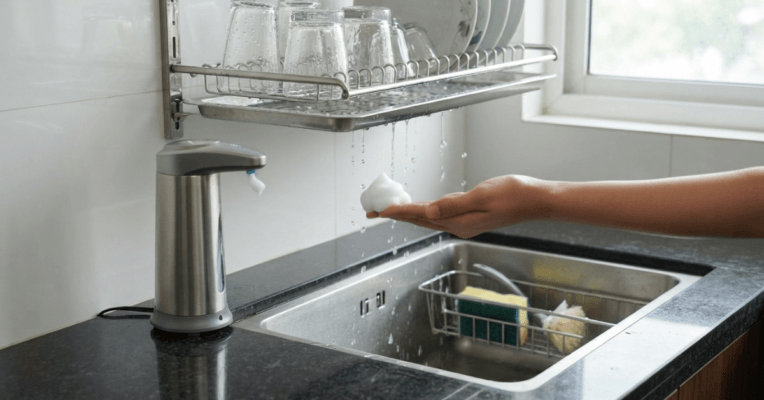
Automatic soap dispenser Proper placement and liquid dilution ensure reliable sensor response and prevent pump clogging over long-term use.
1.Mounting & Placement Selection:Maintain 15 cm clearance above light-reflecting surfaces.
Choose a flat countertop position or wall mount location within reach of the primary sink basin. Ensure the infrared sensor lens is angled away from direct stainless steel reflections or intense overhead sunlight, which can cause phantom triggers.
2.Soap Formulation & Dilution:Crucial for automatic foaming models.
If using standard liquid dish soap or hand wash in a foaming dispenser, dilute the liquid using a 1:4 or 1:5 ratio of soap to clean distilled water. Mix thoroughly by gentle stirring to prevent air bubbles and thick sediment clogging the intake nozzle.
3.Battery Sealing & Power Activation:Verify water-resistant gasket alignment.
Insert fresh alkaline batteries or fully charge the USB-C module. Ensure the silicone water sealing ring on the battery door is completely seated flush to maintain IPX4 moisture protection in humid splash zones.
4.Prime the Pump & Adjust Dose Volume:Run 3 to 5 test cycles.
Pass your hand under the sensor 3 to 5 times to purge trapped air from the internal tubing. Use the top adjustment button to set the foam volume (0.6g for light washing, 1.0g for heavy grease cleaning).
6. Smart Storage & Layout Optimization for Compact BD Kitchens
Automatic soap dispenser Space limitations in Dhaka, Chittagong, and urban apartment kitchens require efficient vertical storage and clear countertop management.
Pro Tip: Wall-mounting your automatic soap dispenser and primary spice racks frees up to 35% of usable counter space around small single-bowl sinks.
Maximizing Countertop Efficiency
- Vertical Space Utilization: Hang modular wall brackets for tools and sponges rather than leaving items on sink edges.
- Concealed Appliance Bays: Keep oil containers and heavy spice jars inside lower cabinet pull-out baskets to eliminate sticky counter film.
- Concealed Waste Systems: Mount slide-out bin holders under the sink cabinet to keep organic waste away from clean dish drying areas.
7. Common Mistakes to Avoid When Buying & Maintaining
Automatic soap dispenser Avoiding frequent setup and maintenance errors extends device lifespan and maintains optimal performance.
1. Using Undiluted Thick Liquid in Foaming Dispensers
Automatic soap dispenser High-viscosity dish liquid overloads the micro-motor in foaming units, causing motor burnout within weeks.
2. Ignoring Waterproofing (IPX) Ratings
Automatic soap dispenser Kitchen sink areas experience constant water splashing. Installing a non-waterproof dispenser leads to shorted circuit boards and battery terminal corrosion.
3. Cleaning Sensors with Abrasive Pads
Automatic soap dispenser Wiping the infrared sensor lens with coarse scrubbers scratches the optical window, reducing proximity detection sensitivity.
4. Overfilling the Reservoir
Automatic soap dispenser Filling soap containers above the max line forces liquid into the air pressure chamber when sealing the cap, blocking airflow and causing weak foam generation.
8. Maintenance Protocol for High Humidity Environments
| Task | Frequency | Recommended Method |
| Sensor Lens Wipe | Weekly | Soft microfiber cloth with warm water |
| Hot Water Flush | Every 2 Months | Run warm water (40°C) through pump cycle to clear internal soap residue |
| Battery Terminal Check | Every 3 Months | Check silicone gaskets for moisture; wipe contacts with isopropyl alcohol |
| Reservoir Sanitization | During Refills | Wash container with mild detergent and dry completely before refilling |
9. Future Trends in Smart Kitchen Gadgets BD (2026 & Beyond)
Automatic soap dispenser The landscape of smart kitchen gadgets BD continues to evolve toward connected, energy-efficient home appliances:
- Rechargeable LiFePO4 Power: Replacing single-use alkaline batteries with long-life rechargeable lithium cells built into waterproof housings.
- Dual-Sensor Multi-Dose Tech: Sensor arrays that adjust soap volume based on how close or far your hand is positioned from the spout.
- Integrated UV-C Sanitization: Built-in micro UV LEDs inside the soap reservoir to destroy bacteria present in stored tap water.
- Touchless Eco-System Synergy: Syncing automated faucets, touchless soap systems, and sensor-driven trash receptacles for a completely hands-free prep station.
Upgrading to an automatic soap dispenser brings modern convenience, improved sanitation, and cleaner countertops to Bangladeshi kitchens.
Next Steps & Resource Directories
Browse Full Directories
Related Articles
